
Ava DuVernay makes Netflix’s 14th amendment documentary as Trump targets birthright rights
A major nonfiction return: DuVernay’s new Netflix film reframes the 14th Amendment’s legacy amid fresh legal pressure from Trump.
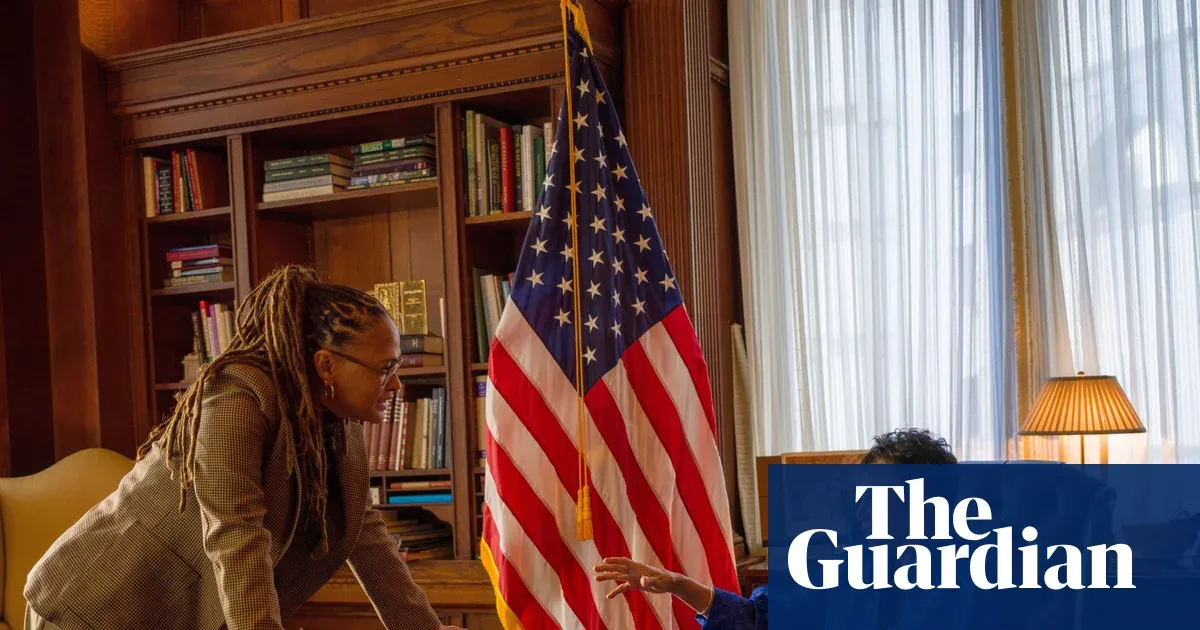
Ava DuVernay, the filmmaker behind Selma and 13th, announced on Thursday that she has made a Netflix documentary on the 14th amendment. The release is set for later this year, turning the political/legal fight over birthright citizenship into a mainstream cultural release cycle.
Ava DuVernay just made Netflix a flashpoint. On Thursday, the filmmaker behind Selma and 13th announced that she has made a documentary for Netflix focused on the 14th amendment, and Netflix said it will release 14th later this year.
The timing matters because the 14th amendment is not just a history lesson right now. The announcement comes as Donald Trump targets people protected by the amendment, and the amendment has “come under legal attack from Donald Trump,” according to the report. In other words, DuVernay is dropping a civil-rights artifact into the middle of a live policy and legal controversy over what birthright citizenship means and who gets to benefit from it.
For executives and strategists, this is a rare moment where media programming, legal risk, and public narrative all collide at once. Netflix is the distribution engine, and it is committing to release later this year. That puts the title on a predictable calendar while the underlying legal debate is actively moving. When a platform backs a nonfiction project built around constitutional protections, it is not just buying content. It is choosing a side in the cultural attention economy, whether or not the project takes a partisan stance. And “nonfiction return” is doing real work here: this film marks a return to nonfiction for DuVernay, the report notes.
DuVernay’s track record explains why Netflix is leaning into this. The film maker is known for Selma and Origin, and she has a documented pattern of using film to examine American history and its political aftershocks. The new documentary is also positioned as a follow-up to her 2016 film 13th, which examined the legacy of the 13th amendment, the constitutional change that abolished slavery. The through line is clear: the 14th amendment extends civil rights and legal personhood protections to formerly enslaved people after the civil war, and this new film is built to connect those origins to the amendment’s modern meaning.
Now add the legal and regulatory backdrop. The report frames the 14th amendment as “which gave liberty and rights to formerly enslaved people following the civil war.” That is the historical foundation. But current legal attacks, especially those described as coming from Donald Trump, are a reminder that constitutional rights are continuously interpreted through court decisions, enforcement priorities, and government positions. In practice, that means the subject can become both more technical and more consequential the closer it gets to active litigation. A documentary can translate that complexity for a mainstream audience, but it can also heighten scrutiny from interest groups and political actors who want the story told in a particular direction.
For Netflix, the operational question is not whether the topic is important. It is how the topic travels through regulation-adjacent environments: publicity cycles, advertiser sensitivity, platform responsibility debates, and legal exposure related to content distribution. The company statement, as summarized in the report, is simple and logistics-focused: Netflix said it will release 14th later this year. The more interesting part is the strategic signal. Platforms have learned that when a project is clearly anchored to constitutional controversy, it can dominate attention regardless of marketing budgets. Attention is the currency, and timing is the exchange rate.
For boards, investors, and media executives at other platforms, this creates a competitive prompt. If Netflix can turn a live legal dispute into a major release event anchored by an acclaimed director, competitors have to decide whether to ignore that play and risk seeming out of sync with cultural demand, or to create their own nonfiction slate that touches current governance. Either choice has second-order effects. Ignore it, and you may lose relevance in the conversation. Match it, and you inherit the same political heat, plus the scheduling pressure of tying releases to fast-moving legal and policy developments.
DuVernay is also entering the market as a repeat producer of high-impact nonfiction. Her return to nonfiction with a constitutional focus suggests Netflix is prioritizing credibility and seriousness, not just provocation. But the story also underlines a harsh reality: constitutional meaning can be contested, and when it is, the contest spills into everyday life for people trying to understand what protections they actually have. The 14th amendment sits at that junction, and this documentary is arriving while Donald Trump targets those protected by it and the amendment faces legal attack.
That is the stakes for decision-makers reading this. The series slate you fund, the tone you choose, and the timing you schedule can all become part of a broader governance narrative. Netflix is taking a clear step: releasing a DuVernay documentary later this year that centers the 14th amendment’s legacy. For executives in media, tech, and adjacent policy ecosystems, the question is not just whether the documentary will perform. It is whether mainstream platforms are now expected to act like amplifiers for constitutional debates in real time, and whether your strategy can keep up with that pace without compromising your risk posture.
This story's Key Insights and Take-aways are locked.
Create a free account to unlock Executive Actions for one credit.
Register to UnlockAlways free for Executives Club members. Join the Club
More in Entertainment

12TB Steam 'teraleak' goes beyond Valve: GTA 3, Mafia 2 prototypes exposed
A 12-terabyte dump of Steam data reveals prototypes and builds of third-party classics like GTA 3 and Mafia 2, plus unreleased Valve content, rewriting game history.

LinkedIn's romance problem: 1 in 4 workers say dating on it is fair game
A new survey shows a quarter of U.S. employees treat the professional network as fair game for romance, even as LinkedIn bans it and removes hundreds of thousands of offending posts.

Enhypen's first No. 1 album breaks K-pop's Billboard 200 streak
The K-pop group's 98,000-unit debut tops the chart while Dolly Parton's catalog reentry shows how death reshapes streaming.