

Bain's Yuji Sugimoto says Samsung and SK Hynix win because Japan can't commit
The Bain dealmaker behind Kioxia’s buyout argues chaebol speed beats Japanese corporate governance in semiconductors.
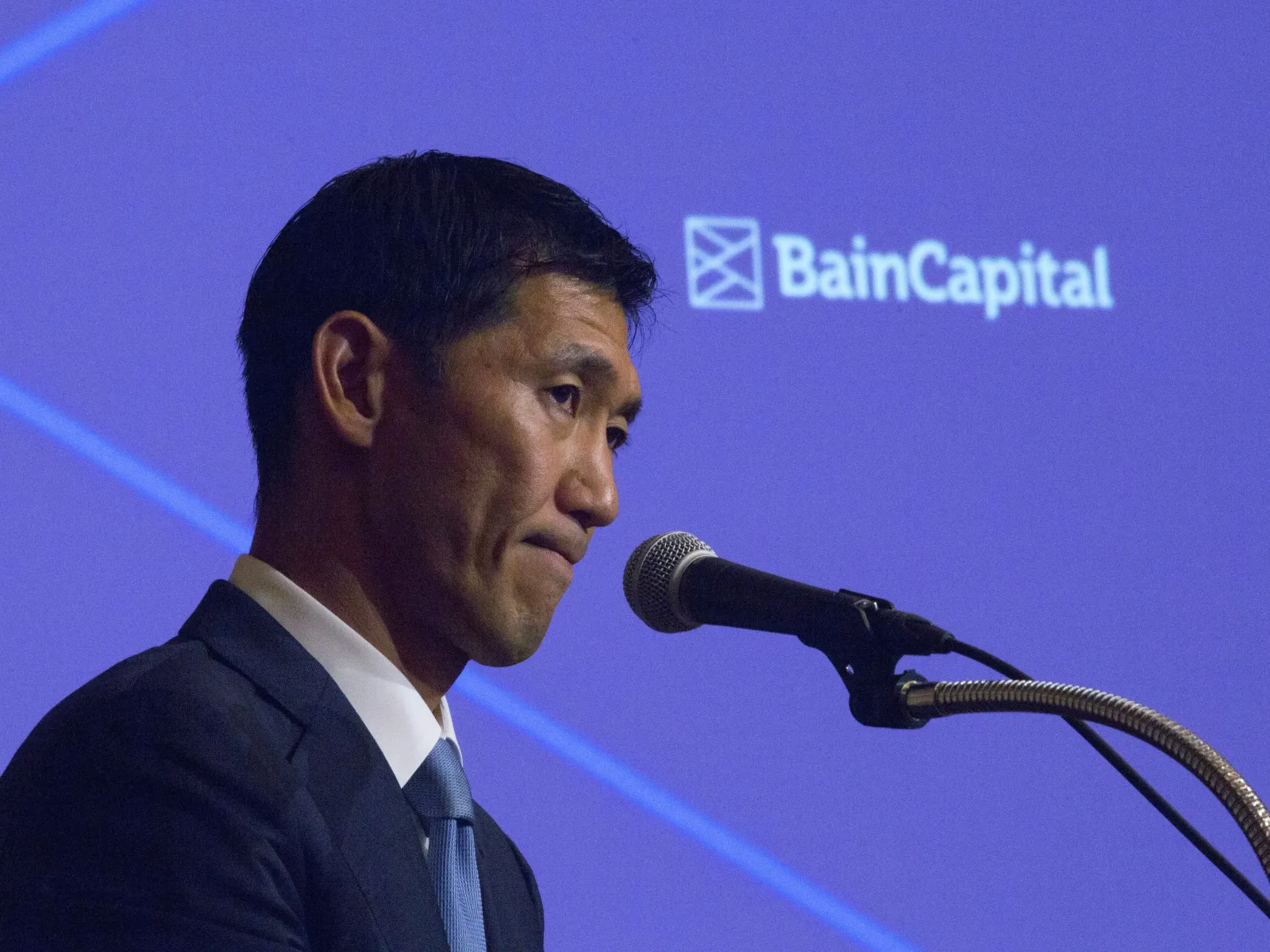
Yuji Sugimoto, Bain Capital's Japan representative, says Samsung and SK Hynix benefit from “powerful top-down leadership and ownership structures” of chaebols. His comments explain why he believes Kioxia could never have scaled under Toshiba, as shares have soared since its December 2024 listing.
Yuji Sugimoto, the Bain Capital executive who led the acquisition of Toshiba Memory (now Kioxia), says South Korea’s semiconductor winners still have one advantage Japan can’t match: the ability to commit fast, and the structure that forces decisions through.
In an interview with Nikkei published on Wednesday, Sugimoto argued that chaebol conglomerates like Samsung and SK move quickly because leadership and ownership are more “top-down.” “The reason South Korean companies are so successful in the semiconductor industry is the powerful top-down leadership and ownership structures of the chaebol conglomerates like Samsung and SK,” he told the outlet. And he followed it with the harsh version of the rule for this business: “In semiconductors, if you can't commit, you fall behind and it's game over.” In his view, the opposite governance style makes it “difficult to manage that kind of business under the governance of large Japanese corporations.”
This is not abstract corporate theory. Sugimoto’s claim is tied to the exact timeline of Kioxia, a memory company that went from being spun out, to being bought, to being renamed, and then to becoming Japan’s most valuable listed company during the AI memory boom.
The backstory starts with Toshiba. Toshiba Memory was spun off from Toshiba in 2017. Then a Bain-led consortium bought it for about 2 trillion yen in 2018. The following year, the company was renamed Kioxia. Sugimoto, who led that Bain acquisition, now says Kioxia’s turnaround would not have been possible under Toshiba’s ownership. His reasoning is blunt: it would have been “impossible to keep making massive investments while also posting huge losses.” He added that other divisions within the company would have opposed it.
That gets to the heart of why semiconductor memory is a different kind of industry. Memory chips can swing brutally between oversupply and shortage. Building capacity and scaling technologies requires long lead times and sustained funding. If a parent corporation treats each unit like a separate kingdom, internal politics can slow decisions right when the market is demanding big bets. Sugimoto’s argument is that a centralized structure is not just faster. It is more willing to eat losses while waiting for demand to arrive.
Bain, according to his account, kept investing through the memory downturn even as Kioxia’s losses mounted. Sugimoto said AI demand was the catalyst that ultimately changed everything, but that Bain could not have predicted the specific wave at the time. “Back in 2018, the term 'AI' was not widely used, and we certainly didn't foresee or fully understand the kind of demand we're seeing today,” he told Nikkei. The point is not that they predicted AI. It is that the governance allowed them to keep funding through a period that looked like it would keep hurting.
The payoff is visible in the stock. Kioxia became Japan’s most valuable listed company as the AI memory boom pushed shares soaring. The company’s shares have risen more than 4,000% since its December 2024 listing. And even though Bain later exited its investment, the market reaction suggests the thesis played out: the capital structure and commitment mattered when the industry turned.
Here’s where the real-time market picture matters for decision-makers. On Thursday, Kioxia’s shares were 8.5% higher by midday, helping the Nikkei 225 gain 2%. Meanwhile, South Korea’s Kospi was 1.7% lower as index heavyweight Samsung Electronics fell 2.3%, while SK Hynix traded 2.3% higher. That mix is a reminder that semiconductor leadership does not move as one block; it shifts with investor sentiment, quarterly performance, and what each company is positioned to deliver. But Sugimoto is arguing that structurally, the ability to commit can tilt the odds over time.
This is also a story about who holds the steering wheel. Bain’s Sugimoto said the “difficult” part under Japanese corporate governance is managing a business where the investments and losses do not line up neatly with short-term departmental priorities. In contrast, his description of chaebols implies fewer bottlenecks when big decisions must be made, especially when the industry is unforgiving and capital is locked for years.
The second-order implication for executives and boards is straightforward: when capital is scarce and outcomes are uncertain, governance determines whether you survive long enough to be right. If your structure makes it hard to commit through loss periods, your strategy can be correct and still fail on timing. Sugimoto’s underlying warning to Japanese conglomerates and any parent-company model is that semiconductor cycles punish hesitation, and “if you can't commit,” as he put it, “you fall behind and it's game over.”
This story's Key Insights and Take-aways are locked.
Create a free account to unlock Executive Actions for one credit.
Register to UnlockAlways free for Executives Club members. Join the Club
More in Business

BioWare shuts down, Mass Effect 5 dead after $55B EA buyout
The legendary RPG studio's closure lands months after a $55 billion investment group buyout of EA, raising tough questions for gaming's biggest acquirers.
Musk barred from the room as Tesla, SpaceX boards weigh $3.5 trillion merger
The CEO of both companies is a 'conflicted party' watching independent directors negotiate a tie-up that would create a $3.5 trillion giant he would own about a third of.

Elon Musk just showcased a flying car - and it wasn't at Tesla
The Tesla CEO's latest reveal came at SpaceX, not Tesla, signaling where vertical mobility is headed.