

Balerion Lava Field defies volcano models, hinting at a new kind of undersea volcanism
The Atlantic’s dragon-named lava field does not match existing eruption models, forcing scientists to rethink how volcanoes work.

Researchers have studied the Atlantic Ocean’s Balerion Lava Field, which, according to Science (AAAS) News, does not fit any established model of volcanic eruptions. The implication for decision-makers is straightforward: when a foundational model breaks, it can ripple into everything from exploration assumptions to risk frameworks for marine operations.
The Atlantic Ocean has a lava field named after a dragon, and it may be telling scientists that the textbooks are missing a chapter. Science (AAAS) News reports that the Balerion Lava Field does not fit any established model of volcanic eruptions. In other words, the patterns researchers expect to see when lava moves and releases heat underwater are not lining up with what Balerion shows.
That mismatch matters because volcanic models are not just academic. They are used as the mental scaffolding for how we interpret seafloor processes, how we compare one eruption system to another, and how we make sense of what we might find next in remote, data-scarce environments. If the Balerion Lava Field does not fit existing models, then the scientific community has to ask whether the discrepancy is a one-off anomaly or evidence of a new type of volcanism. Either way, the headline fact is the key: the field does not match established eruption frameworks.
Why does a name matter? It does not change the physics, but it changes the attention. Calling it the Balerion Lava Field, after a dragon from Game of Thrones, is a reminder that this is unusual enough to be memorable. Most undersea volcanic features are described with technical labels. When a site becomes famous for not behaving, it tends to pull in researchers from multiple specialties: geochemistry, geophysics, remote sensing, and modeling. That multi-disciplinary pull is often what turns a puzzling observation into a broader re-think. The Science (AAAS) report frames Balerion as a challenge to established models, which is the first step in turning a curiosity into a new scientific baseline.
In practical terms, “models” are how organizations reduce uncertainty. Even outside pure science, people build plans around expectations, and those expectations come from the best-available interpretations of how systems behave. In the ocean, that can intersect with marine energy planning, underwater construction, shipping risk assumptions, and environmental monitoring strategies. None of those domains are explicitly detailed in the source excerpt you provided, but the general link is real: if our understanding of undersea volcanic activity is incomplete, then the assumptions that rely on it may require updating when new evidence arrives.
There is also a regulatory and governance angle to consider, especially for companies and institutions operating in jurisdictions where environmental review and monitoring are tied to hazard characterizations. Regulators often lean on scientific consensus when they set conditions, require monitoring, or define thresholds for acceptable risk. When consensus is challenged by a specific field like Balerion that “doesn’t fit any established model,” it can create a short-term scramble for interpretation. Even if the immediate regulatory text does not change overnight, the evidence can influence how agencies and operators think about what they need to measure, how they interpret anomalies, and how they document residual uncertainty.
Now zoom out to second-order effects. When a named field becomes a clue to “a new type of volcanism,” it can shift how scientists search for similar features, which can change how data is collected and prioritized. More targeted surveys, re-processed datasets, and revised modeling approaches can follow. The effect for decision-makers is that time horizons for research readiness can compress: what used to be considered well-characterized may become a frontier. That can influence budgets, staffing for technical teams, and coordination between research partners.
For boards, investors, and leadership teams in industries connected to marine science and ocean operations, the broader lesson is about model risk. Balerion’s key property is not just that it is interesting. It is that it breaks a fit. In risk management, “does not fit” is a signal worth respecting. If established models are missing a type of volcanism, then the historical way of categorizing seafloor activity may need revision. Today the development is in the scientific realm, but the stakes are the same everywhere: when a foundational framework fails to explain observations, organizations need to decide whether to treat it as an outlier or update their assumptions.
So the strategic bottom line is this. Science reports that the Atlantic Ocean’s Balerion Lava Field does not fit any established model of volcanic eruptions, and that may reveal a new type of volcanism. For decision-makers, the immediate action is not to panic. It is to recognize that model breaks happen, and when they do, the ripple effects can reach planning, monitoring, and risk assumptions well beyond the seafloor.
This story's Key Insights and Take-aways are locked.
Create a free account to unlock Executive Actions for one credit.
Register to UnlockAlways free for Executives Club members. Join the Club
More in Science
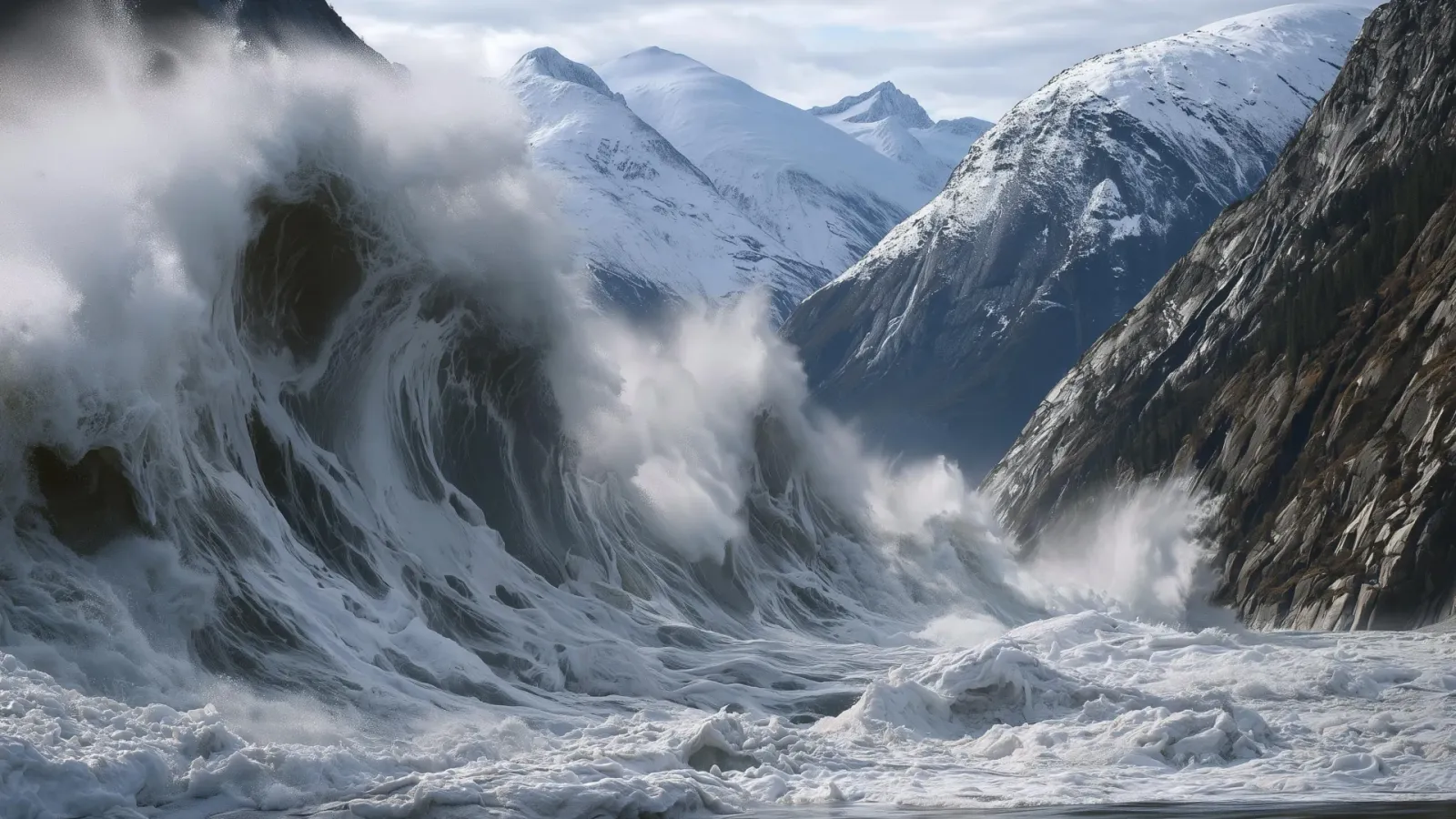
Alaska's 1,580-foot tsunami had warning signs. Scientists just found them.
Rapid glacier retreat, heavy rainfall, and thousands of tiny tremors preceded Alaska's 1,580-foot tsunami, a warning for every coastal community in a warming world.

The rare mutation that lets high-risk brains dodge Alzheimer's
Scientists found a natural defense against protein buildup, opening a new path to preventive treatments.

3,000 steps a day may halve Alzheimer's decline, study finds
New research links a modest daily walk to less tau buildup and nearly half the cognitive and functional decline, even for those with early signs.