

Bangladesh's 202,000 measles cases are a 'real warning' to other nations
The world's worst measles outbreak is spreading as routine vaccination falters. Here is why every country's immunization program should pay attention.
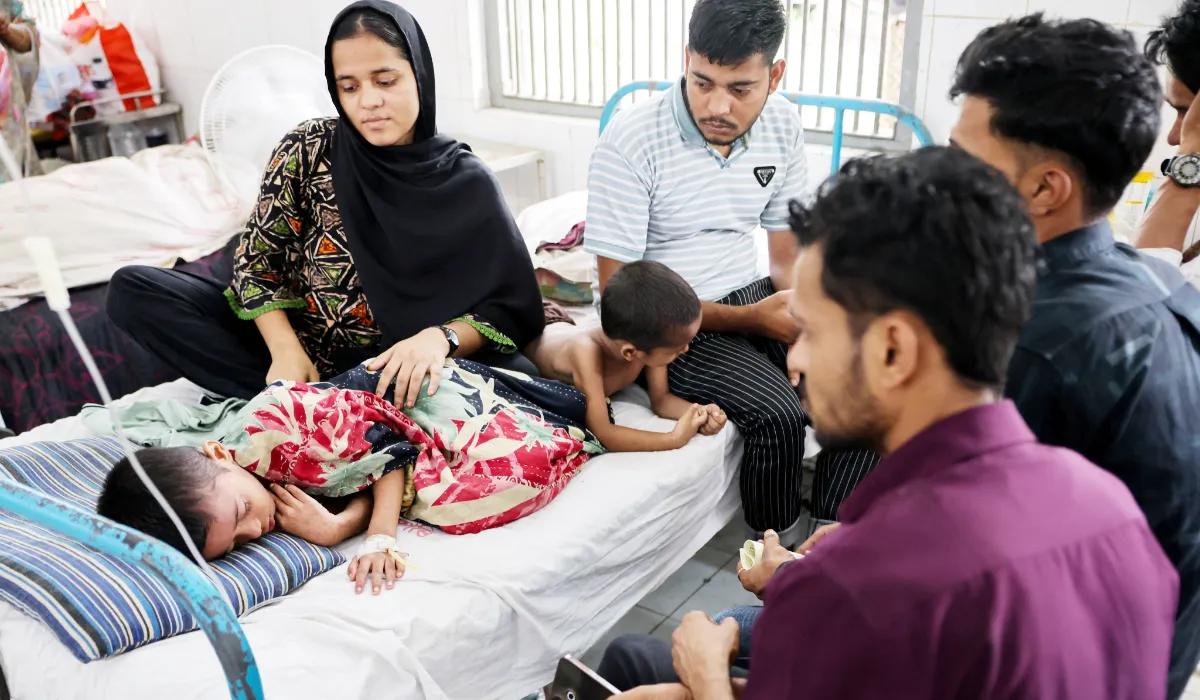
Bangladesh's health authorities and the WHO are battling the world's worst measles outbreak, with 202,000 suspected cases and 22,000 laboratory-confirmed infections since mid-March. For decision-makers, the crisis is a warning that slipping immunization rates, weak data, and inadequate outreach can quickly turn a preventable disease into a national emergency.
The number that should jolt every public health official: 202,000 suspected measles cases in Bangladesh since mid-March, including 22,000 laboratory-confirmed infections. That makes it the world's worst measles outbreak, and experts are calling it a 'real warning' to other nations about the deadly risk of falling immunization rates. The warning is not just about Bangladesh. It is about what happens when the basic machinery of vaccination weakens anywhere.
The mechanics behind the crisis are as important as the case count. Bangladesh's routine vaccination program faltered in 2025, according to WHO reporting, and the outbreak has been worsened by weak data, inadequate outreach, and vaccination gaps. In other words, the virus did not simply appear. It exploited cracks in the system that many countries share, and once measles starts moving, it moves fast.
Measles is one of the most contagious viruses known, which is why it is typically the first disease to resurge when immunization coverage dips. Public health guidance often cites a herd immunity threshold of around 95%, meaning the virus needs very few unprotected pockets to spread. Bangladesh's outbreak shows how quickly those pockets can expand into a nationwide crisis when routine vaccination loses momentum.
The global context makes the warning sharper. Many countries saw routine immunization coverage slip during the pandemic, and health systems are still rebuilding outreach capacity. Bangladesh's experience demonstrates that the cost of those gaps is measured not just in case counts but in hospitalizations, missed school and work, and pressure on already stretched health facilities. For governments and funders, the arithmetic is sobering: outbreak response typically costs far more than prevention.
For decision-makers outside Bangladesh, the takeaway is about the plumbing of public health: data, outreach, and catch-up vaccination. Weak data meant officials were slow to see the outbreak's true scale. Inadequate outreach meant vaccines did not reach the children who needed them. And the 2025 faltering of routine vaccination meant immunity gaps had already opened before the virus arrived. Every one of those failures is fixable, but only if they are treated as priorities before an outbreak, not after.
There is also an operational lesson for leaders in any sector. The systems that protect a population are only as strong as their weakest link, and the weakest links are usually the unglamorous ones: accurate records, trained community health workers, and supply chains that keep vaccines cold and available. Bangladesh's outbreak is a reminder that sustained success depends on continuous investment in the basics, not one-time achievements.
The strategic stakes for other nations are clear. Immunization is not a finished project; it is a permanent operation that must be monitored, resourced, and improved. If a country with Bangladesh's history of vaccination progress can fall this far, any country can. The 'real warning' is that the next outbreak may already be forming in the gaps no one is tracking.
This story's Key Insights and Take-aways are locked.
Create a free account to unlock Executive Actions for one credit.
Register to UnlockAlways free for Executives Club members. Join the Club
More in Science

France euthanized Félicette, the first cat in space, two months after her flight
Félicette's 1963 flight made France a space-race player, but her euthanasia and a crowdfunded statue reveal how high-risk programs are remembered.

Ultracold atoms just created a 'fractional Fermi sea' that breaks quantum rules
A new quantum state challenges decades of theory and hints at 'super-Fermions,' with real stakes for quantum computing and materials science.

CEOs spend 75% of workdays in meetings. Science says talk less
A three-decade review of meeting science finds the most effective leaders listen more than they speak - and that cutting aimless meetings is the fastest productivity win.