
Bass and Pratt Lead LA Mayor Race; November Showdown Remains Unclear
Early returns show a tight race for Los Angeles' top political prize, but the path to the general election is still days away.
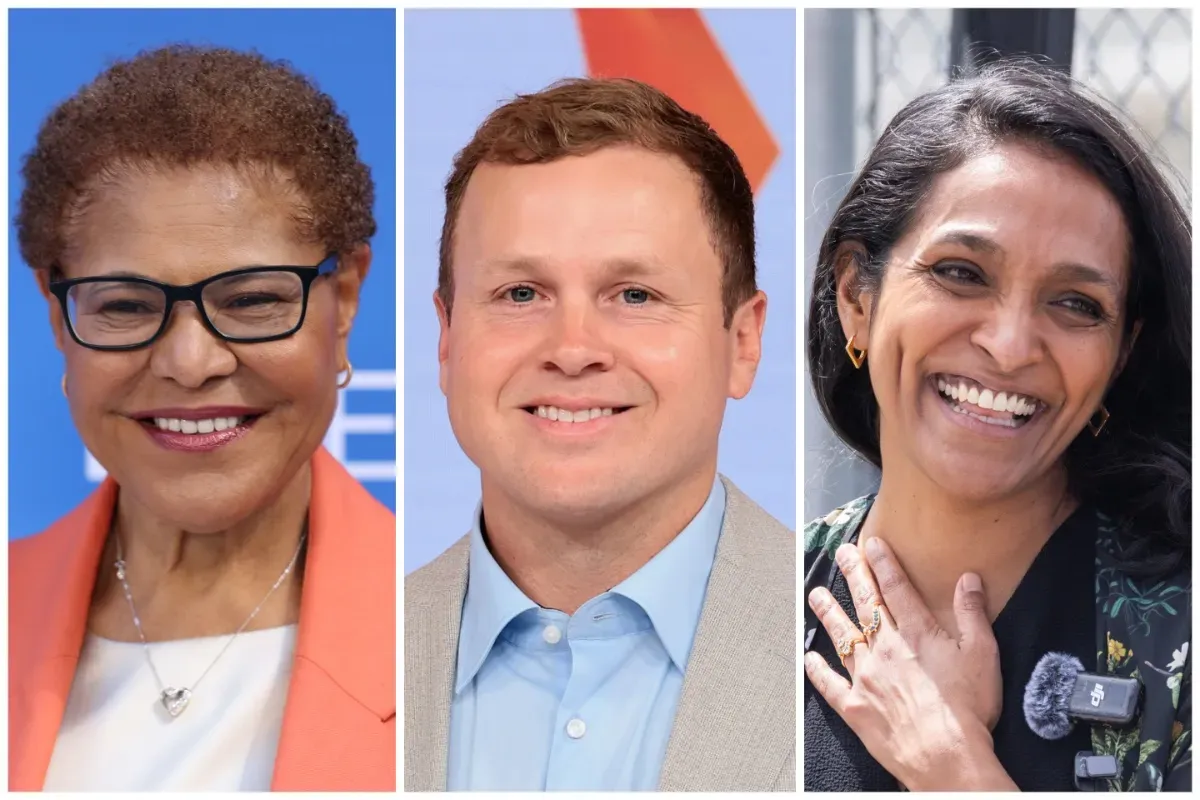
Karen Bass and Spencer Pratt are currently leading the early returns in the Los Angeles mayoral race. The immediate consequence for political operators is that the final field of candidates for the November general election remains undetermined, creating uncertainty and opportunity for late-stage campaigning.
Karen Bass and Spencer Pratt are currently leading the early returns in the race for Los Angeles mayor, with Councilwoman Nithya Raman trailing in third place. While these early numbers signal a clear frontrunner dynamic, the political landscape remains fluid, and it could still take days to definitively determine which two candidates will face each other in the general election this November. This early momentum suggests a highly competitive race, one that will require significant resources and strategic maneuvering from all involved parties as the campaign progresses.
Bass, speaking to supporters at her election party just after 9 p.m., used the moment to rally her base and frame the stakes of the election. Her address likely focused on key policy areas-such as housing, public safety, or economic development-that resonate deeply with the diverse electorate of Los Angeles. In a major metropolitan race like this, the initial polling numbers are often less important than the ability to mobilize voters and define the narrative. The early lead, therefore, is not a guarantee of victory, but rather a signal of current support and organizational strength.
For any operator or political strategist watching this race, the primary takeaway is the importance of the 'two-person' contest. The goal of the entire campaign cycle is to narrow the field to a head-to-head matchup. The dynamics of the primary election, which is what the early returns reflect, are merely the first act. The real battle for power and influence will be fought in the general election, where the stakes are exponentially higher, involving the entire machinery of city governance and the allocation of billions in public funds.
Los Angeles is not just a city; it is an economic engine, a cultural magnet, and a complex regulatory environment. The mayor's office wields immense power, influencing everything from zoning and development permits to public transit funding and police department budgets. A change in leadership means a massive shift in priorities, which immediately impacts every industry from tech to real estate. Therefore, the candidates are not just running for a title; they are running to set the economic and social policy agenda for the next four years.
The fact that the final matchup is still uncertain adds a layer of strategic complexity. Candidates must campaign not only to win the primary but also to build a broad coalition that can survive the general election gauntlet. This requires a sophisticated understanding of different voting blocs-the Latino community, the Asian American community, the LGBTQ+ community, and various working-class neighborhoods-and tailoring messages that appeal across these diverse lines. A candidate who dominates the primary but fails to build cross-community appeal risks being blindsided in the general election.
Furthermore, the political dynamics of Los Angeles often involve powerful, non-elected stakeholders. These include labor unions, major business lobbies, and influential community organizations. These groups often exert pressure on candidates, sometimes more effectively than the voters themselves. For instance, a major labor union might quietly signal its support for one candidate, which can instantly shift the political calculus and provide a massive, unexpected boost in turnout for that specific candidate. Understanding these secondary power structures is critical for any decision-maker looking to predict the outcome.
In the context of modern urban politics, the narrative often revolves around a tension between growth and sustainability. Do voters prioritize rapid economic development and attracting tech giants, or do they prioritize climate resilience, affordable housing, and social equity? The candidates' platforms must navigate this inherent conflict. The early returns, while informative, only capture a snapshot of voter sentiment on a single night. The sustained effort to build a durable, multi-faceted coalition that can withstand intense media scrutiny and policy attacks is what truly determines the winner. The race is far from over, and the strategic focus must remain on building deep, lasting political capital, not just maximizing early-night enthusiasm.
Ultimately, the race for the mayor's office is a masterclass in political messaging and resource allocation. The early leads set the stage, but the true measure of a candidate's viability will be their ability to maintain momentum, adapt to unexpected policy crises, and build a unified, resilient political machine that can survive the grueling weeks leading up to the general election. The stakes are the future direction of one of America's most vital and complex cities, making this a high-stakes political drama for every observer watching the money, the power, and the policy shifts in Los Angeles.
This story's Key Insights and Take-aways are locked.
Create a free account to unlock Executive Actions for one credit.
Register to UnlockAlways free for Executives Club members. Join the Club
More in Entertainment

Christopher Nolan’s “The Odyssey” posts his biggest Tuesday haul, surpassing “The Dark Knight’s” record
The film’s Tuesday breakout reframes Nolan’s box-office ceiling and forces competitors to rethink timing, budgets, and release strategy.

Kacey Musgraves cancels Aug. 20, 29, Sept. 2 Middle of Nowhere shows
Ticketmaster emails are telling fans refunds are coming, while the tour still starts Aug. 21 in Chicago.

Billie Joe Armstrong launches Epiphone Les Paul Junior and Marshall 1959BJA signature gear
Two limited releases turn decades of Green Day’s tone into branded hardware, including Marshall’s first artist amp in 14 years.