
Bedouine's Azniv Korkejian turns childhood safety into a Palestine and Lebanon alarm
Her new album, Neon Summer Skin, uses 70s soft pop to grapple with displacement, identity, and the cost of insecurity.
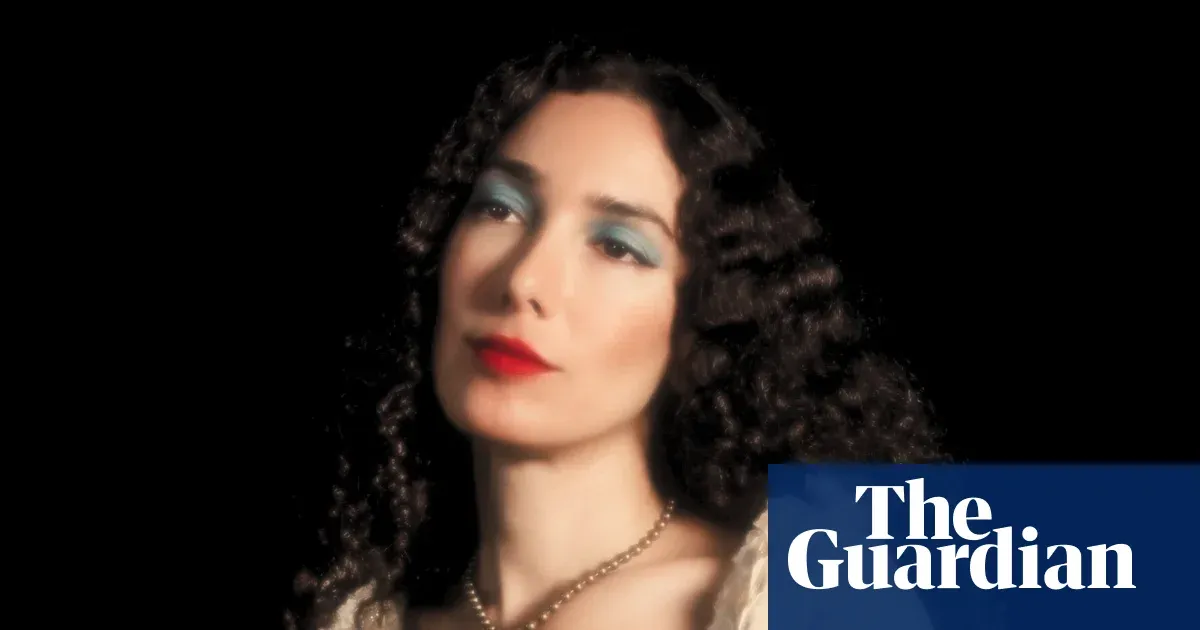
Azniv Korkejian, recording as Bedouine, released her fourth album Neon Summer Skin and calls her title track a portrait of feeling safe as a child. For decision-makers, it is a reminder that soft-power culture can carry hard realities, shaping how audiences and institutions process conflict and displacement.
Azniv Korkejian, the musician behind Bedouine, wrote Neon Summer Skin as a deliberately gentle lullaby that still sounds like an alarm. The title song recreates “a perfect day from childhood,” including being taken to the pool and later washed in the tub, but Korkejian says the point is not nostalgia. She calls it “what it’s like to feel safe,” then underlines what that safety costs when it is not guaranteed, especially for children in Palestine and Lebanon.
Korkejian is explicit about the emotional math: “So much of the record is about not having the luxury to not consider your own safety.” She is speaking from Los Angeles as she recounts the track, and the album’s deceptively soft 70s-style MOR pop becomes a vehicle for a sharper theme: displacement, identity, and insecurity. In other words, the music is calm on the surface, but the underlying story is about survival instincts living permanently in the background.
That tension runs deeper than the lyrical mood. Korkejian has roots in Armenia, Syria and Saudi Arabia, and that geography is not just biography, it is the album’s weather system. Her family is Armenian, but she and her parents were born in Syria, while her brothers were born in Saudi Arabia. The family lived “on a US compound that was like a gated community” until 1995, which is a striking detail because it captures a kind of temporary insulation, a bubble of safety that still sits next to larger regional risks.
Then the bubble punctured. In 1995, unnerved by the proximity of the recent Gulf war, the Korkejian family successfully applied for the green card lottery and relocated to the US. Korkejian says “thank God” because they would “eventually have had to return to Syria,” and she adds, “I don’t know what would have happened to us then.” That is not a vague personal reflection, it is the clearest possible stake-setting: a migration path determined by lottery mechanics, triggered by geopolitical proximity, and haunted by uncertainty about what would follow if the path failed.
If you are an operator, investor, or board member, the second-order lesson is that cultural products can translate security to audiences who do not experience it daily. Neon Summer Skin takes the recognizable structure of soft pop, then threads through it an argument about attention. The record suggests that when safety is not a default, people constantly simulate threat in real time, including children. That is a powerful lens for decision-makers because it reframes “risk” from purely financial language into lived experience. When institutions talk about displacement and conflict, they often default to policy terms. Korkejian’s approach turns policy into a human timescale, like the interval between a child being carried away from a pool when the sun is setting.
It also matters that Korkejian is not presenting this as abstract sociology. She places conflicts that have “ravaged the Middle East” as context for the album, while keeping the themes personal. The conflicts are not background wallpaper; they are part of the logic that makes a “long tail of sadness,” even after a moment that looks like escape. For boards and leadership teams, there is a parallel here to how organizations manage reputational risk and stakeholder trust. The public-facing story is often the safest part, the headline beat. The longer story is what happens to people after the headline, and whether your systems protect them or just move them.
Finally, consider the strategic stake for peers in similar roles: how audiences interpret softness versus content. Korkejian uses “dreamy 70s soft pop” and “1970s-style MOR pop” not to dilute the message, but to widen its reach. That is a distribution strategy disguised as an artistic one. If you lead a media company, a nonprofit, a brand, or an cultural institution, your job is not only to communicate. It is to decide what emotional entry point you offer. Neon Summer Skin suggests that “feeling safe” can be an effective doorway, but only if the door opens into truth about who gets to walk through safely, and who does not.
In the end, the album becomes a case study in how identity and insecurity travel across borders. Armenia, Syria, Saudi Arabia, Los Angeles. A green card lottery win in 1995. A gated-compound upbringing that felt like safety. Then the reminder that even escape does not erase the long tail. Korkejian captures that contradiction with a sound that is easy to love and a message that refuses to stay in the background.
This story's Key Insights and Take-aways are locked.
Create a free account to unlock Executive Actions for one credit.
Register to UnlockAlways free for Executives Club members. Join the Club
More in Entertainment

Entertainer Russell Brand denies 7 sex charges amid accuser's 'couldn't breathe' claim
The alleged victim's account sharpens the reputational and legal stakes for Brand, his platforms, and any business tied to a public figure under criminal scrutiny.

Russell Brand's accuser 'bewildered and confused' as he denies 7 sex charges
The criminal case against the comedian is a live test of how media companies manage talent risk when serious allegations go public.

'It's a Magic Trick': Ballet Experts Say Rosalía's SNL Pose Is Impossible
Three ballet experts tell Rolling Stone Rosalía's gravity-defying SNL stillness shouldn't be possible - and why the debate is now part of the show.