
Beijing pumps US$8.86b into stocks via state buys as China’s market drops
Two state-backed firms deploy about 60 billion yuan to cushion equity declines, signaling direct policy support during turbulence.

China Reform Holdings spent more than 50 billion yuan buying mainland-listed stocks and said it will keep increasing holdings of companies owned by the central government. China Chengtong Holdings Group also bought Chinese stocks, as two state-backed firms together spent about 60 billion yuan (US$8.86 billion) to stem the decline in equities.
Beijing is leaning on state balance sheets to slow the slide in Chinese equities. Two state-backed firms bought Chinese stocks for about 60 billion yuan, or US$8.86 billion, aiming to stem the decline in equities in the middle of market turbulence.
The clearest number came from China Reform Holdings. In a statement on Sunday night, the firm said it spent more than 50 billion yuan buying mainland-listed stocks, and added that it would continue to increase holdings of companies owned by the central government. In parallel, China Chengtong Holdings Group said it bought Chinese stocks in a separate statement, underscoring that this is not a single-actor “rescue” but a coordinated state-backed effort.
Why this matters is simple: when equities fall, the market does not just price future earnings. It prices confidence, and confidence is fragile. State purchases can act like a backstop. Even if they do not erase macro worries overnight, they can reduce the immediate pressure on prices, buying time for policy and for the market to recalibrate. For executives, that time window is valuable. It can be the difference between investors waiting through volatility and investors fleeing to cash.
There is also the governance angle. China Reform Holdings framed its strategy around increasing holdings of companies owned by the central government. That phrasing signals an approach that is not merely about opportunistic trading. It points to a state objective where portfolio construction aligns with central ownership, and where purchases are used to reinforce confidence in state-controlled assets during equity stress.
To understand how unusual this looks to market participants, it helps to remember what a typical equity decline means for sentiment. When markets drop, sellers often accelerate. Liquidity can thin, bid prices can fall, and momentum can pull more participants into the exit. In that environment, state-backed buying can change the micro-dynamics of supply and demand. It creates a buyer who is less dependent on short-term market psychology. That does not guarantee a rally, but it can alter the path of the decline.
From a board-level perspective, this kind of intervention can have second-order effects on capital planning. If share prices stabilize or stop falling as quickly, companies may find it easier to manage investor communications, debt refinancing windows, and employee compensation linked to equity performance. On the flip side, executives at less state-linked firms may worry about relative valuation gaps, because buying appears centered on mainland-listed stocks and, in China Reform Holdings’ case, companies owned by the central government.
There is also the signaling problem. Market participants interpret government involvement as a message about how serious policymakers consider the downturn. That can shift expectations about what comes next, including whether authorities will expand support measures. Even without additional details in the statements referenced here, the mere scale and timing are a signal: two state-backed firms deploying about 60 billion yuan together, with one spending more than 50 billion yuan, is a loud move relative to normal market behavior.
For executives at firms that are owned by the central government, this is especially relevant. China Reform Holdings explicitly said it would continue increasing holdings of companies owned by the central government. That suggests the support is not necessarily one-off. It also suggests that company ownership structure could influence where demand concentrates during turbulence.
For leadership teams across China’s listed universe, the practical stakes are immediate. If state buying becomes a recurring tool during drawdowns, investors may reprice certain categories of risk, and management teams will need to update how they think about market resilience. The strategic question for peers is not only whether prices will recover, but whether the “floor” investors believe in is changing. In markets, beliefs move fast. And when Beijing’s state-backed institutions step in with US$8.86 billion in stock purchases, those beliefs are now on the move.
This story's Key Insights and Take-aways are locked.
Create a free account to unlock Executive Actions for one credit.
Register to UnlockAlways free for Executives Club members. Join the Club
More in Business

Uber buys Delivery Hero for nearly $15B, vaulting to top food delivery outside China
The deal doubles Uber's dual-services footprint and pushes a ride-and-eats bundling play into 50 more markets.

Epic and Google drop settlement bid, forcing rival Android app stores by July 22
Google told the court it is ready to carry third-party app stores starting Wednesday, July 22.
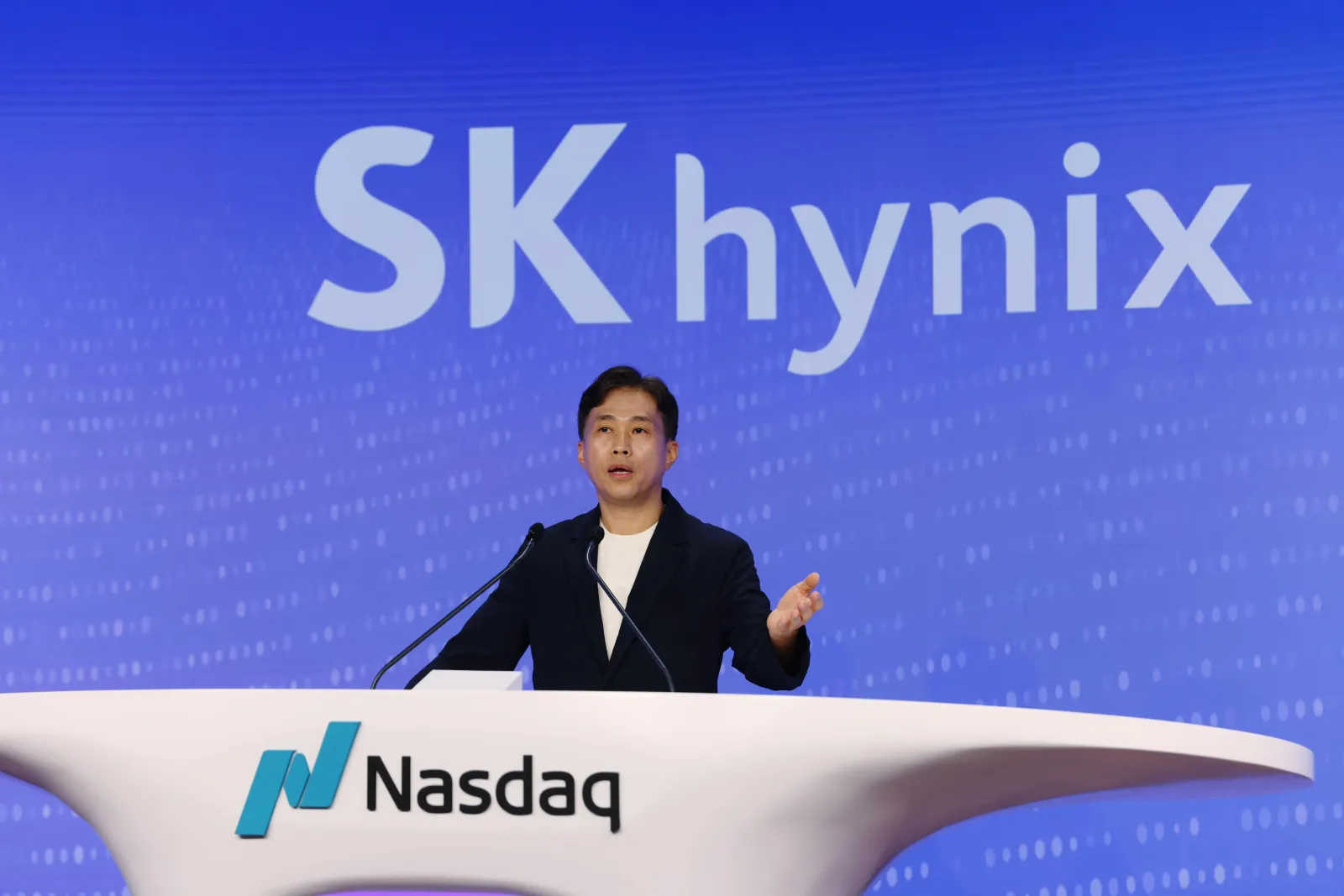
SK Hynix opens at $170, raises $26.5B, and tops foreign IPO records
In Friday's Wall Street debut, SK Hynix turns AI RAM demand into a $26.5B fundraising moment that rewrites comps.