

Belgium rolled out CPVS nationwide in 2020, after a one-door model proved itself in pilots
A centralized care center approach for minors helps victims get medical, forensic, and police support in one stop.
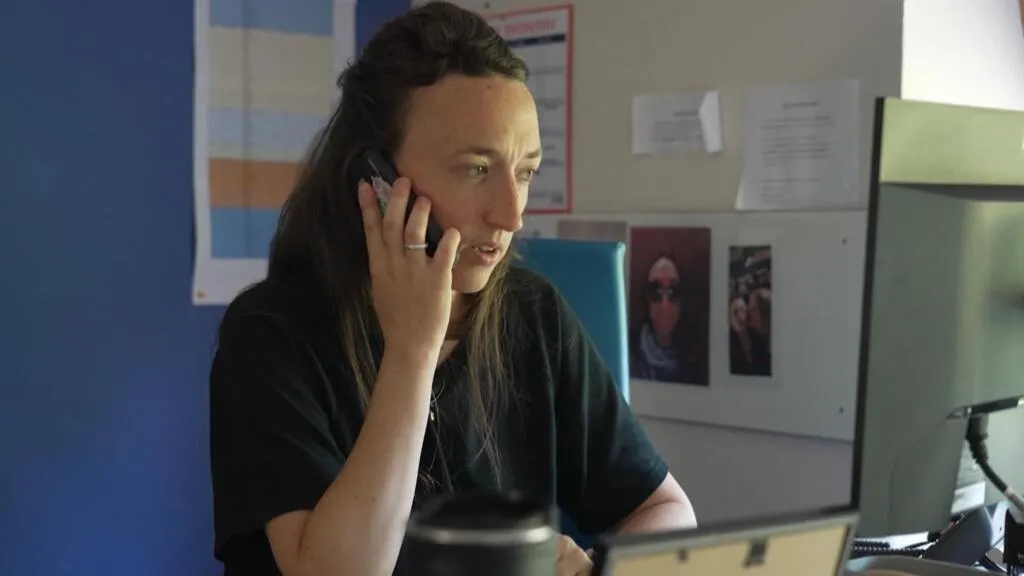
Belgium expanded its Centres for the Care of Sexual Violence (CPVS) nationwide in 2020, building on a pilot across three hospitals. The move matters because it counters the real-world damage of fragmented systems for sexual violence cases involving minors.
Belgium is treating the system design problem in sexual violence cases the same way you would treat any critical operational bottleneck: reduce the handoffs. In 2020, the government decided to roll out its Centres for the Care of Sexual Violence (CPVS) nationwide, after an earlier pilot in three hospitals showed convincing scientific results from the first evaluation. The core idea is almost annoyingly simple: a victim only has to walk through one door to get the entire chain of help in one place.
What does “entire chain” mean here? Under the CPVS model, victims are connected in a single location to a doctor, a forensic nurse, a psychologist, and a specialized police officer. That one-stop setup is exactly what the Lyhanna case in France spotlighted as a failure point: when the system is fragmented, the victim and investigators can end up dealing with multiple doors, multiple timelines, and multiple gaps. CPVS tries to eliminate that fragmentation by centralizing both care and evidence-related expertise.
To understand why 2020 is more than a policy milestone, it helps to see what usually goes wrong in practice. In a fragmented system, care and investigation often live in different lanes: healthcare providers may focus on medical stabilization and treatment, forensic work may get handled elsewhere, and law enforcement may operate through separate procedures. Each “separate procedure” is also a delay, a coordination problem, and another moment where sensitive information can be misrouted or missed. For sexual violence against minors, where time, trauma-informed handling, and procedural continuity are especially important, those frictions are not minor. They can shape what evidence gets collected, what the victim experiences, and how smoothly cases move through the pipeline.
Belgium’s CPVS model was born from a pilot project across three hospitals. That matters because it answers a question leaders in any regulated system always face: does this work beyond a single site with champions? The source says the model proved convincing with scientific results from the first evaluation. In other words, Belgium did not just launch a new program on vibes. It ran a pilot, evaluated it, then decided to roll it out nationally.
Then comes the governance and incentive angle that decision-makers should pay attention to. Centralized initiatives like CPVS require coordination between institutions that might otherwise operate independently. That includes medical actors, mental health professionals, and specialized police capacity. Centralization can feel like a “process” change, but for boards and executives, it is also a structure change. When multiple stakeholders share the same location and workflow, you reduce the number of interfaces where responsibilities are blurred. You also create a single operational rhythm that can support consistent training, standardized protocols, and clearer accountability.
There is also a regulatory and oversight implication. Sexual violence response is not just clinical. It touches forensic evidence handling and specialized police work, which means the system must align with legal requirements while still meeting healthcare needs. A one-door model can reduce procedural variance, because the victim experiences one intake and the professionals operate within a shared framework. That is particularly relevant for cases involving minors, where specialized handling is not optional. The CPVS approach effectively bundles multiple roles that would otherwise be distributed across different systems.
Zooming out, the Lyhanna case in France is a reminder that failures in fragmented systems do not stay theoretical. They become public. They become political. They expose shortcomings that victims and families feel directly, and they pressure governments to rethink how care, forensics, and investigation are orchestrated. Belgium’s contrast is instructive: rather than waiting for another high-profile case to force change, it appears to have designed a centralized model, tested it in three hospitals, evaluated it scientifically, and then scaled it nationwide in 2020.
For executives and operators reading this from other sectors of public service, justice-adjacent healthcare, and regulated care models, the strategic stakes are clear. When systems are split across multiple doors, the “cost” is paid in delays, misalignment, and avoidable harm. CPVS offers a concrete alternative: centralize key roles into one place so victims can access medical, forensic, psychological, and specialized police support without navigating a maze. In 2020, Belgium chose to make that operational choice nationwide. The broader lesson is that in high-stakes environments, the biggest performance improvement may come less from adding more resources and more from redesigning the flow so fewer people fall through the cracks.
This story's Key Insights and Take-aways are locked.
Create a free account to unlock Executive Actions for one credit.
Register to UnlockAlways free for Executives Club members. Join the Club
More in Politics

Glacial collapse, not rain, killed 180 in Nepal's Himalayan flood
The Himalaya's extreme geography hid the true cause of Nepal's catastrophic flood, a glacial collapse that turned a geological battleground into a mass-casualty zone.

Iran’s Esmail Baghaei says Oman talks start shipping via Hormuz, not US talks yet
Temporary route plans with Oman aim to restart commerce while Tehran says Washington dialogue is not on the table.

Standards watchdog opens probe into Reform UK deputy leader Richard Tice over interests
The parliamentary standards commissioner says it began an investigation on 28 July into a possible undeclared interest.