
DOJ rejects more unredacted Epstein records, tells judge it already complied
In the final hours of a deadline, prosecutors argue they removed enough redactions from more than a dozen documents.
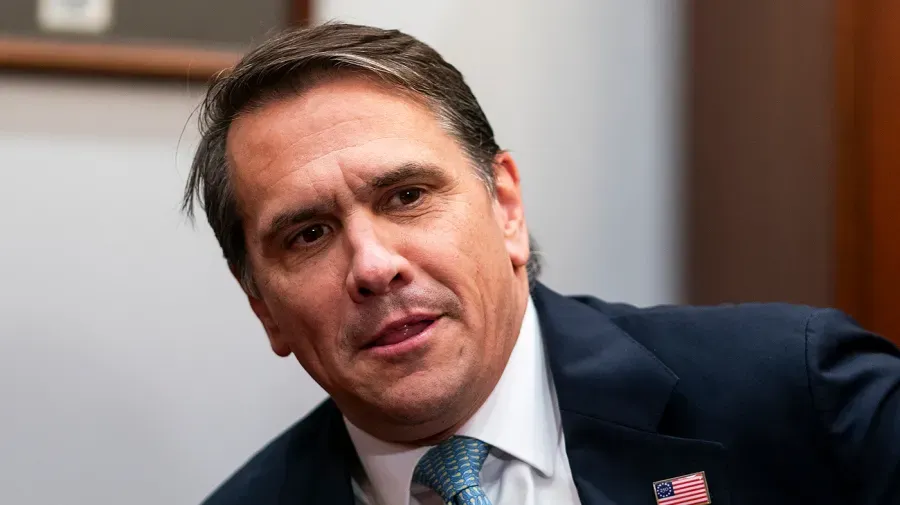
The Justice Department declined to release additional unredacted records tied to Jeffrey Epstein, responding to a federal judge at the end of a court-ordered timeline. The DOJ said it has already adequately complied with the law, shaping what plaintiffs and the public will see next.
The Justice Department (DOJ) refused Thursday to release additional unredacted records from its investigation into convicted sex offender Jeffrey Epstein, arguing to a federal judge that it has already adequately complied with the law. The key detail: this response landed in the final hours of a court-ordered deadline requiring the DOJ to remove redactions in at least a dozen documents.
Put differently, the DOJ is drawing a hard line on what counts as “enough” transparency for this specific record set. A judge ordered the DOJ to take action by a deadline, the DOJ moved near the end of that timeline, and then it defended its approach when asked to go further. For decision-makers watching how courts compel government disclosure, this is a reminder that compliance is not always a binary switch. It is a dispute over scope, interpretation, and what “adequately” means when the underlying documents contain sensitive information.
To understand why this matters beyond the headlines, you have to zoom out to how redactions and record production work in real life. In cases involving allegations, victims, witnesses, or ongoing legal sensitivity, government agencies often redact portions of documents to protect privacy, prevent undue harm, or avoid releasing information that could complicate related proceedings. But when a federal judge presses an agency to release unredacted or less-redacted records, the friction becomes procedural and practical: agencies must decide what they can safely disclose, what they must withhold, and how much work they can complete within the time the court gives them.
That is where the “final hours of a deadline” detail becomes more than drama. Deadlines drive staffing decisions, legal strategy, and risk tolerance. When an agency believes it has already met its legal obligations, it will often resist further disclosure requests because every additional unredacted record increases exposure, especially if the record includes personally identifying details or information that the agency believes could harm people who are not parties to the case. When an agency believes it has not met obligations, it typically scrambles to expand production or reduce redactions. In this instance, the DOJ framed its posture as already compliant, which signals that it does not see the judge’s order as a mandate to unredact everything possible.
The dispute also highlights the power courts wield over executive-branch disclosure. A court can order agencies to produce records, and the DOJ in turn must justify its actions to a judge. Even when the DOJ complies to a point, disagreements can persist about whether the remaining redactions are too broad, unnecessary, or inconsistent with the legal standard. This is a common pattern in records litigation: agencies deliver a set of partially redacted documents, request acceptance of that delivery, and then prepare for the next round of arguments if the other side claims the redactions go too far.
For boards, legal teams, and executives in heavily regulated sectors, the second-order implication is simple: disclosure disputes can become long-running even after an agency announces compliance. If you operate under a web of oversight, you learn quickly that “we responded” is not the same thing as “we settled the question.” Here, the DOJ is telling the court that it has already done enough by removing redactions in at least a dozen documents, but it is simultaneously refusing to go further with additional unredacted releases. That posture can matter to how other institutions interpret legal orders, estimate timelines, and decide how much to invest in expanded documentation before the next judicial checkpoint.
There is also a reputational and trust angle, even for executives not directly tied to this case. Public trust in transparency is shaped by what gets released and what remains redacted. When an agency cites compliance and declines additional disclosure, it can influence public perceptions and spark renewed scrutiny, including from media and advocacy groups. In a case as widely covered as Epstein’s, the expectations around information are especially high. Even if the DOJ is acting within legal boundaries as it understands them, the perception of withholding can create political and institutional pressure that does not vanish when the filing is submitted.
Finally, the procedural timing in this case is a bellwether for how agencies manage court-driven disclosure. Court-ordered deadlines compress decision-making, and the “final hours” context suggests the DOJ had to finalize its response while ensuring it could defend the record set in front of the judge. That makes the DOJ’s argument in its response even more important: it is not just explaining what it did, it is also setting a precedent for what it intends to do next if the issue is revisited.
For executives and directors, the strategic takeaway is not about litigating Epstein records. It is about anticipating how disclosure obligations play out when the government is the gatekeeper. In similar compliance environments, you can expect that the line between “adequate compliance” and “more is required” is often where disputes live. The DOJ’s refusal to unredact further, coupled with its insistence that it already complied, is a concrete example of how those disputes may unfold after a deadline passes.
This story's Key Insights and Take-aways are locked.
Create a free account to unlock Executive Actions for one credit.
Register to UnlockAlways free for Executives Club members. Join the Club
More in Politics

Glacial collapse, not rain, killed 180 in Nepal's Himalayan flood
The Himalaya's extreme geography hid the true cause of Nepal's catastrophic flood, a glacial collapse that turned a geological battleground into a mass-casualty zone.

Iran’s Esmail Baghaei says Oman talks start shipping via Hormuz, not US talks yet
Temporary route plans with Oman aim to restart commerce while Tehran says Washington dialogue is not on the table.

Standards watchdog opens probe into Reform UK deputy leader Richard Tice over interests
The parliamentary standards commissioner says it began an investigation on 28 July into a possible undeclared interest.