
Ben Shapiro says JD Vance sounded like a Democrat on Rogan: “Bernie economics.”
A pundit’s critique turns into a bigger question: who Vance is pitching to, and how it reshapes party messaging.
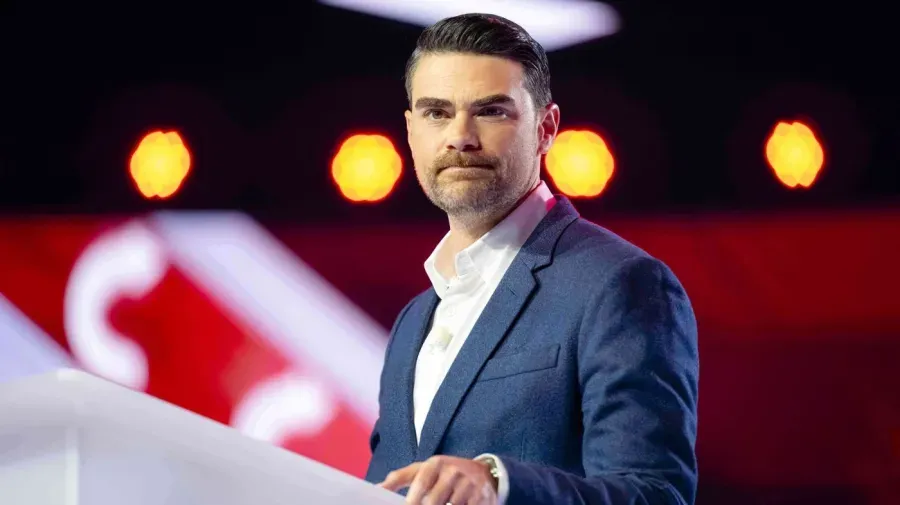
Ben Shapiro said Thursday that Vice President JD Vance sounded similar to a Democrat during a recent episode of Joe Rogan’s podcast. Shapiro claimed he heard “Bernie Sanders' economics,” “Barack Obama's foreign policy,” and “Ro Khanna's conspiracy theories” before realizing it was Vance.
Ben Shapiro didn’t just tune into Joe Rogan for the usual political sparring. On Thursday, he said he listened to a recent Rogan episode and initially thought he was hearing a progressive Democrat before he realized it was actually Vice President JD Vance.
Shapiro’s specific claim is the hook: he said he “tuned into Joe Rogan yesterday” and then heard “Bernie Sanders' economics,” “Barack Obama's foreign policy,” and “Ro Khanna's conspiracy theories.” Only after those references, Shapiro said, “I realized JD Vance was talking.” That moment matters because it goes beyond a vibes check. It is a direct accusation that a high-profile Republican figure was presenting ideas Shapiro associates with Democrats.
So what is happening here? On its face, it is a media feedback loop. Rogan’s platform is known for long-form, conversational interviews that reward messiness and personality over polished party talking points. When politicians show up there, they are not just chasing attention, they are testing whether they can translate their worldview into something that lands with a broad audience. For Shapiro, the test seems to have failed. He framed Vance’s message as a blend of left-leaning themes: economic views like Sanders, international posture like Obama, and the conspiracy-oriented style Shapiro attributes to Khanna.
This is also a messaging problem for the political coalition on both sides of the aisle. Conservative outlets and pundits typically operate with a shared map of what “counts” as Republican orthodoxy and what does not. When a figure like Vance appears on a mainstream entertainment platform, those gatekeepers often get nervous about drift. Shapiro’s critique is essentially an alarm bell to the conservative audience: if your message sounds like the other side, you might be losing your identity, or worse, confusing your base.
But there is another layer executives in media-adjacent industries and corporate policy watchers should notice: narrative control affects future persuasion, and persuasion affects decisions. Even if this is “just” commentary, it can influence how donors, activists, and internal party stakeholders interpret Vance’s public posture. In politics, interpretations become incentives. If prominent voices suggest a candidate is adopting Democratic framing, strategists on the candidate’s side may either double down on their chosen audience or recalibrate to reassure the core. That recalibration can show up later as changes in how policy details are described, which issues are emphasized, and how quickly a politician pivots back to familiar ideological language.
And while the source does not specify any policy proposals, the comparisons Shapiro named are not random. Sanders is often associated with economic populism. Obama is associated with a particular style of foreign policy framing. Khanna is associated, in Shapiro’s telling, with conspiracy-style claims. The key point is that Shapiro is categorizing Vance’s statements by theme, then concluding that those themes map to Democratic identities. Whether listeners agree or not, the strategic consequence is that Vance’s Rogan appearance becomes a symbol. Symbols are powerful because they are portable. They get repeated in headlines, recycled in clips, and used as shorthand in conversations among political staff and supporters.
Zoom out and you get why this sort of exchange is more than a headline. Modern campaigns are fought in two arenas at once: policy and narrative. Policy moves on timelines; narrative moves on algorithms. Rogan is an algorithm amplifier. When politicians appear there, the content becomes fodder for partisan commentators who will extract the most provocative lines and repack them for audiences that were not in the room. Shapiro’s framing turns Vance’s appearance into a clear narrative contrast, one meant to be easy to remember: “I heard Bernie economics, Obama foreign policy, and Khanna conspiracy theories, then realized it was Vance.”
For decision-makers in politics and for board-level strategists who watch political risk to markets and regulation, this matters because messaging volatility can spill into policy expectations. If the party base believes a candidate is drifting, it can pressure leadership teams to align messaging more tightly with the governing faction’s preferences. That can affect what gets prioritized, how confidently certain regulatory approaches are defended, and how quickly new proposals are packaged. If the other side believes the rhetoric is converging anyway, they may adjust their own strategy to capitalize on perceived overlaps. Either way, the reputational framing can create second-order effects that are hard to reverse.
In other words, Shapiro’s critique is not only about who sounded like whom. It is about how quickly public meaning forms when prominent leaders step outside traditional channels and try to speak to broader audiences. If Vance is trying to persuade beyond his coalition, this is the kind of pushback that will test how flexible his messaging really is, and how much political identity matters when the microphone is on and the conversation runs long.
This story's Key Insights and Take-aways are locked.
Create a free account to unlock Executive Actions for one credit.
Register to UnlockAlways free for Executives Club members. Join the Club
More in Politics

LA County: DOJ's 20,000 'noncitizen' voter list is 'unreliable,' includes U.S.-born
Preliminary review by Los Angeles County election officials finds errors in the federal list, raising the stakes for voter roll integrity ahead of November.

Trump's $1.5B Pentagon chip investment lands in North Carolina
A $1.5 billion defense infusion for North Carolina chipmaking signals a new era of Pentagon-backed reshoring - here's what it means for the industry.

Nigeria confirms first Ebola case in Abuja, a woman just off a Uganda flight
Health Minister Muhammad Ali Pate says the patient flew in from Uganda, putting Africa's latest outbreak on Nigeria's doorstep.