
BIGBANG’s 31-date 2026 stadium tour starts Aug. 21, reuniting G-DRAGON, TAEYANG, DAESUNG
The 20th-anniversary run spans Korea, the U.S., Europe, Asia, and ends Feb. 28 in Kaohsiung.
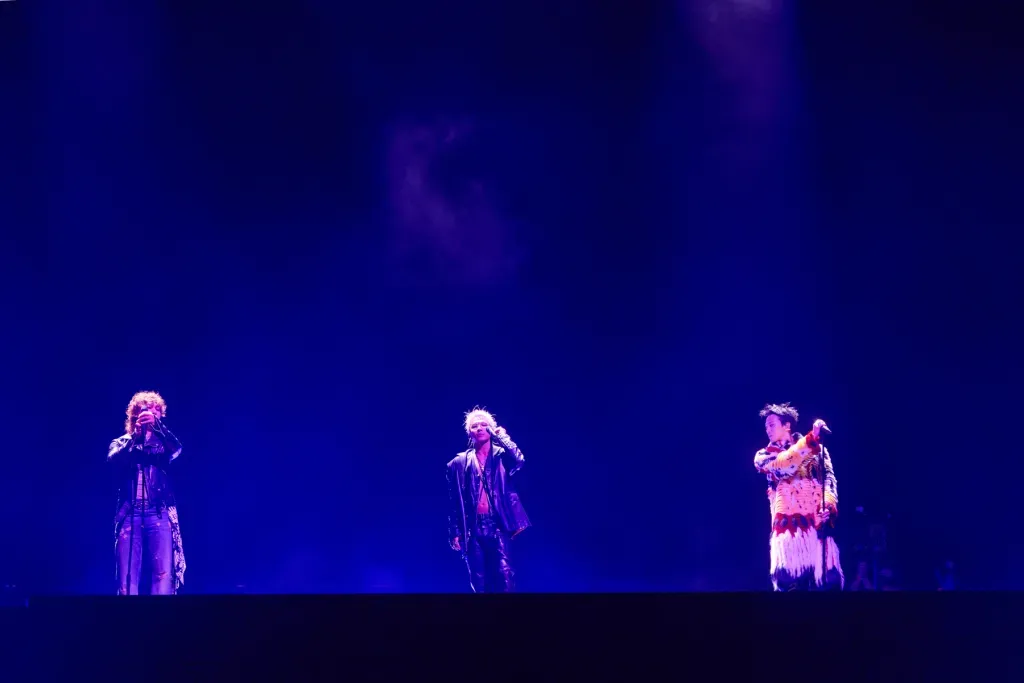
BIGBANG, made up of G-DRAGON, TAEYANG, and DAESUNG, will reunite for a 31-date stadium tour that kicks off Friday, Aug. 21, 2026, at Goyang Stadium. For decision-makers, it is a major test of global demand for legacy K-pop at stadium scale, with tour details still pending.
BIGBANG is officially back on the world tour track. The 31-date stadium run launches Friday, Aug. 21, 2026, with the first of three shows at Goyang Stadium, and it is framed as a global celebration of the group’s 20th anniversary.
The lineup matters, too. Announced Thursday, June 11, the reunion pairs G-DRAGON, TAEYANG, and DAESUNG, marking BIGBANG’s first stadium tour since 2017. The tour will then push beyond South Korea with a handful of dates in the United States, the United Kingdom, and Europe, before going deep through Asia and Australia, wrapping Sunday, Feb. 28, 2027 with the second of two nights at Kaohsiung National Stadium.
Here is why this is more than a nostalgia victory lap. Stadium tours are expensive bets on fan demand, production scale, and resale performance across multiple markets. When a legacy act returns after a long gap, it is effectively running a real-time stress test on two things simultaneously: the strength of the existing fan base (BIGBANG’s V.I.P.s) and the ability to convert attention into ticket-buying behavior in new regions.
Promoter AEG Presents is already signaling the event’s expected weight, describing it as one of the most significant live music events of 2026 for global fans and a “historic new chapter” for one of modern music’s most influential groups. BIGBANG’s broader momentum also supports why promoters and venues would lean in. The group launched by YG Entertainment exploded in August 2006, later breaking new ground for the Korean-pop scene by winning the inaugural best worldwide act trophy onstage at the 2011 MTV Europe Music Awards.
The group’s track record with crossover visibility is also unusually specific for K-pop acts in the global mainstream. In 2012, BIGBANG became the first K-pop group to send an album to the Billboard 200 chart, when “ALIVE” reached No. 150. And on the live side, they flexed their stadium-level muscles with two world tours, including multiple U.S. arenas in 2012 and 2015.
If you want the “metrics” version of the argument, it is stacked. To date, BIGBANG has five No. 1s on Billboard’s U.S.-based World Digital Song Sales chart. It also scored its first Top 10 hit on the Billboard Global 200 with the 2022 reunion single “Still Life,” which marked T.O.P’s final release with the group.
For executives tracking culture as an economic signal, there is an additional timing layer. The reunion tour announcement comes on the heels of the pop veterans’ return to the stage at the 2026 Coachella Valley Music and Arts Festival. That kind of high-visibility performance often functions like a demand rehearsal for later touring, especially when the act has to re-prove relevance to casual global audiences, not just long-time fans.
Still, not everything is locked. Fans will have to wait for the official tour title and ticketing information, which reps say will be announced at a later date. In an industry where pricing power can swing with messaging, ticketing terms, and partner bundling, delayed clarity can impact early buying curves. The upside is that it keeps a pressure point open for later announcements.
In the meantime, BIGBANG is pointing V.I.P.s toward updates via BIGBANG’s official b.stage platform for sign-ups. And the published schedule gives a clear shape to the journey: Aug. 21-23 in Goyang; Sept. 5 in Oakland, Calif.; Sept. 11 in East Rutherford, N.J.; Sept. 19 in Paris at Stade de France; Sept. 26 in London at Tottenham Hotspur Stadium. From there it continues with Taipei (Oct. 10-11, Taipei Dome), Singapore (Oct. 17, National Stadium), Hanoi (Oct. 24-25, Mỹ Đình National Stadium), Sydney (Oct. 31, Accor Stadium), Bangkok (Nov. 7, Rajamangala National Stadium), Hong Kong (Nov. 13-15, Kai Tak Stadium), Osaka (Nov. 27-29, Kyocera Dome Osaka), and more through December, January, and February, culminating in Kaohsiung on Feb. 27-28, 2027.
Strategically, peers across the live music ecosystem should treat BIGBANG’s return as a real-world benchmark. It tests whether stadium-sized scale is back for legacy global talent at the exact moment fans expect more frictionless access to information, clearer ticketing mechanics, and a stronger narrative around anniversary-era reunions. In other words, this is not just a band reunion. It is a multi-market, multi-month demand experiment in public, with every city serving as a datapoint for the next wave of global tours.
This story's Key Insights and Take-aways are locked.
Create a free account to unlock Executive Actions for one credit.
Register to UnlockAlways free for Executives Club members. Join the Club
More in Entertainment

Entertainer Russell Brand denies 7 sex charges amid accuser's 'couldn't breathe' claim
The alleged victim's account sharpens the reputational and legal stakes for Brand, his platforms, and any business tied to a public figure under criminal scrutiny.

Russell Brand's accuser 'bewildered and confused' as he denies 7 sex charges
The criminal case against the comedian is a live test of how media companies manage talent risk when serious allegations go public.

'It's a Magic Trick': Ballet Experts Say Rosalía's SNL Pose Is Impossible
Three ballet experts tell Rolling Stone Rosalía's gravity-defying SNL stillness shouldn't be possible - and why the debate is now part of the show.