

Bill Cassidy grills ASPR nominee Sean Kaufman over false hepatitis B vaccine post
In a confirmation hearing, the Senate Health chair challenged the nominee on a misleading claim, testing how ASPR handles public trust.
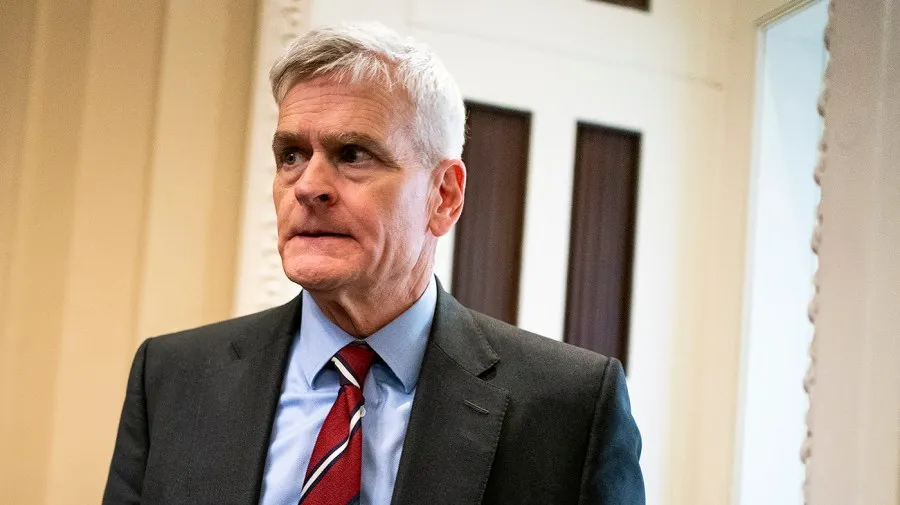
Sen. Bill Cassidy, chair of the Senate Health Committee, pressed President Trump's nominee for ASPR leadership, Sean Kaufman, during his Wednesday confirmation hearing over a misleading social media post about the hepatitis B vaccine. The exchange matters for decision-makers because ASPR credibility and communication can directly shape adoption and preparedness outcomes.
Sen. Bill Cassidy (R-La.), chair of the Senate Health Committee, didn’t just ask softball questions during Sean Kaufman’s Wednesday confirmation hearing to lead the Administration for Strategic Preparedness and Response (ASPR). Cassidy grew angry with the nominee over a misleading social media post about the hepatitis B vaccine, explicitly challenging the decision-maker at the top of a high-stakes public health response shop.
For executives and operators who live and die by trust, this is the headline risk hiding inside a confirmation hearing. When the Senate Health chair is publicly calling out “damn lies” in real time, it signals that the committee is not only judging policy plans. It is testing whether the person likely to set the tone for national preparedness can handle scientific communication without blurring or repeating misinformation.
To understand why this matters, zoom out for a second on what ASPR does and why it sits at the center of modern U.S. health response. ASPR is a federal pillar for strategic preparedness and response, meaning it helps coordinate how the government thinks about threats, readiness, and the operational machinery used in outbreaks. In practice, that includes everything around countermeasures and the public-facing guidance that follows when something goes wrong. The higher the profile of the role, the more the person’s messaging becomes part of the system, not an accessory.
That’s also why Cassidy’s anger is a governance signal, not just a one-off moment. A confirmation hearing is where committees pressure nominees to demonstrate alignment with how Congress expects agencies to operate, including how they communicate with the public. If a nominee has a pattern of repeating misleading health claims, lawmakers can interpret it as a leadership risk. And leadership risk does not stay contained. It flows downstream into staff behavior, public messaging, and how quickly communities decide to follow guidance when the pressure spikes.
This hearing also highlights the incentives around public health communication in an era of instant virality. A “misleading social media post” might start as one line, one screenshot, one uncorrected assumption. But by the time it reaches a committee chair, the damage has already occurred in the public mind, even if the science was never on the nominee’s side. In health, those gaps between claim and evidence can create real-world delay, lower willingness to get vaccinated, and complicate outbreak response, because people do not separate politics from medicine when they are making personal decisions.
From a boardroom perspective, the second-order effect is reputational and operational. ASPR leaders are not just technocrats. They become the public face of preparedness in moments when uncertainty is high. If a top official is perceived as repeating incorrect claims, even unintentionally, it can trigger skepticism among providers, community organizations, and partners who rely on federal guidance. That skepticism then shows up as friction: slower uptake, more questions that require additional explanation, and more time spent on message repair rather than response.
There is another implication here for decision-makers across the health ecosystem. Vaccine confidence is not only a public health metric. It is a planning variable for hospitals, payers, employers, and vaccine manufacturers. If messaging becomes inconsistent, organizations have to spend more effort on education and outreach to keep utilization on track. That means more cost, more coordination overhead, and a heavier lift during surge periods.
So when Cassidy challenges Kaufman over a hepatitis B vaccine claim during a confirmation hearing, the stakes are bigger than one post. It is a test of credibility, and credibility is operational capacity. ASPR leadership has to manage scientific evidence, rapid response choices, and public communication, often simultaneously. If the committee believes the nominee’s approach to misinformation is weak, the agency’s ability to execute smoothly during a crisis could come under a cloud even before the nominee takes the job.
The strategic takeaway for leaders in adjacent roles is straightforward: public trust is a core input to preparedness. In the same way supply chain resiliency reduces downtime, communication resiliency reduces hesitation. Cassidy’s intervention tells you what Congress will pressure on, and what the public will remember: in high-profile health roles, the line between policy and messaging is thin. And in a world where misinformation travels faster than corrective guidance, that thin line can decide how well the entire system holds under stress.
This story's Key Insights and Take-aways are locked.
Create a free account to unlock Executive Actions for one credit.
Register to UnlockAlways free for Executives Club members. Join the Club
More in Politics

LA County: DOJ's 20,000 'noncitizen' voter list is 'unreliable,' includes U.S.-born
Preliminary review by Los Angeles County election officials finds errors in the federal list, raising the stakes for voter roll integrity ahead of November.

Trump's $1.5B Pentagon chip investment lands in North Carolina
A $1.5 billion defense infusion for North Carolina chipmaking signals a new era of Pentagon-backed reshoring - here's what it means for the industry.

Nigeria confirms first Ebola case in Abuja, a woman just off a Uganda flight
Health Minister Muhammad Ali Pate says the patient flew in from Uganda, putting Africa's latest outbreak on Nigeria's doorstep.