
Billie Joe Armstrong helps Marshall launch 100-watt 1959BJA amp from the 'Dookie' era
The handwired, artist-signature Marshall debuts with Green Day input, turning a defining punk tone into a purchasable flagship.
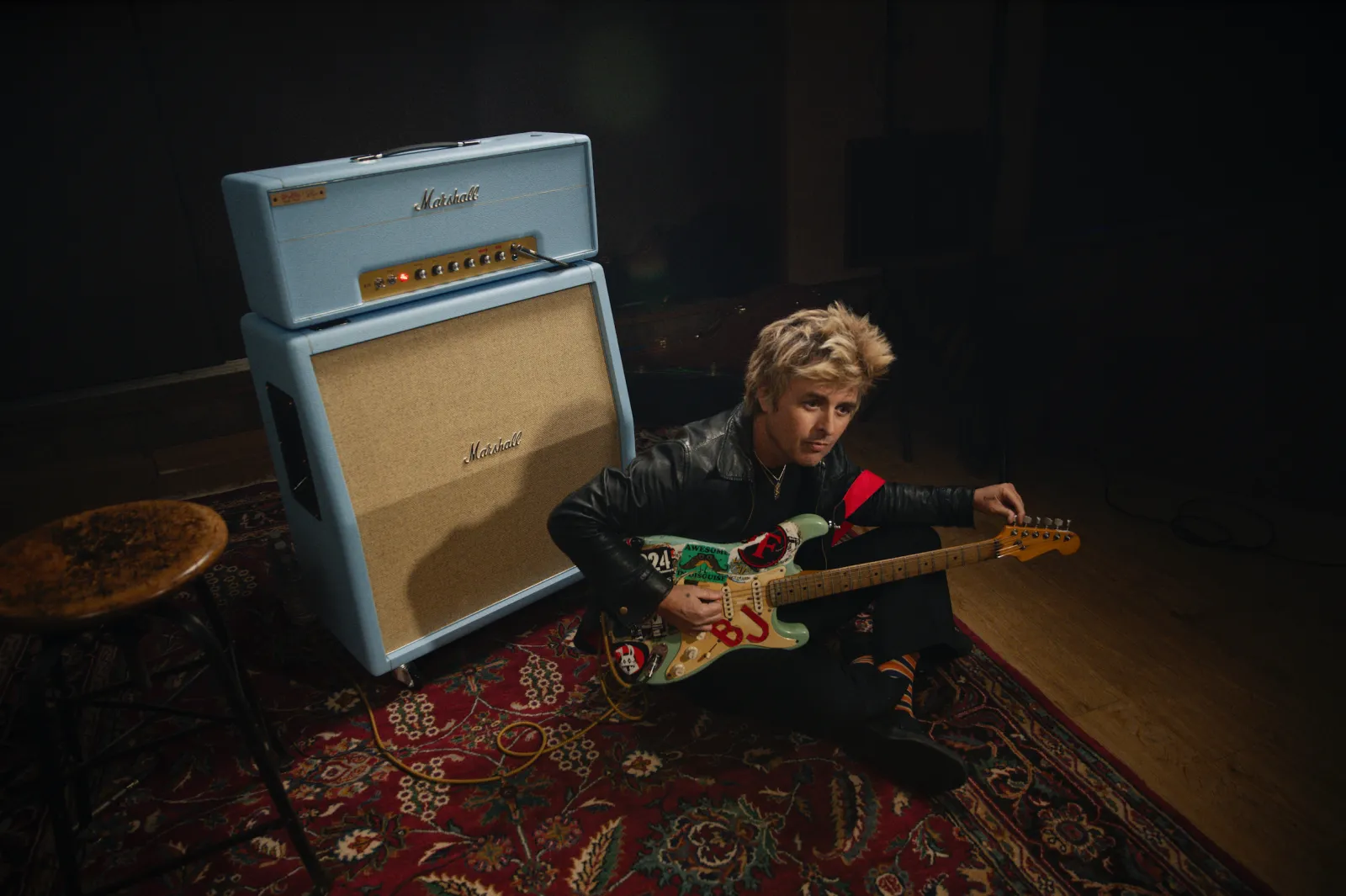
Marshall has unveiled the 1959BJA Artist Signature, a handwired, 100-watt amp developed with Green Day frontman Billie Joe Armstrong. It is modeled in part on the guitar tone heard during the band’s “Dookie” era, marking Marshall’s first artist-signature release.
Billie Joe Armstrong is officially stepping from punk icon to amplifier co-designer. Marshall has unveiled the 1959BJA Artist Signature, a handwired, 100-watt amp developed with the Green Day frontman and modeled in part on the guitar tone heard during the band’s “Dookie” era. For anyone who has spent time in guitar-world forums, this matters because it is not just a branded box. It is an attempt to bottle a specific moment in sound into a single, repeatable product.
This is also a “first” for Marshall, which makes the launch feel bigger than a typical celebrity accessory. The 1959BJA release marks Marshall’s first artist-signature amplifier. That combination, Armstrong’s creative fingerprints plus Marshall’s brand discipline, signals that the company wants artist partnerships to do more than decorate the spec sheet. It wants them to sell a story people can plug into.
So why does this land with decision-makers and not just musicians? Because artist-signature products sit at the intersection of three high-stakes markets: fandom, high-intent hardware purchases, and premium brand licensing. A lot of products can be “inspired by” something. Far fewer are engineered as an actual handwired amp with a defined power rating, and then positioned as a flagship-level statement. Marshall is effectively treating Armstrong’s era-defining tone like an asset that can be productized.
The “Dookie” tie-in is doing real work here. In most guitar ecosystems, tone is not abstract. Players chase it through pickups, speakers, circuits, and settings that have names and rituals attached to them. Modeling an amp “in part” on a specific era’s tone is a way of converting cultural memory into technical expectation. Buyers are not only paying for the amp. They are paying for the promise that their rig can nod toward the sound they associate with that album’s energy.
Marshall’s handwired angle also matters for positioning. Handwired products typically imply more craftsmanship, more attention to component-level decisions, and a narrower gap between the amp’s behavior and the designer’s intent. That is the kind of differentiation premium buyers notice quickly. It is also the kind of differentiation brand partners want, because it reduces the risk that an artist signature becomes just a logo-driven SKU.
From a broader industry standpoint, the first artist-signature move suggests Marshall is testing how far it can push this strategy. If the category works, you get a multiplier effect: more artist collaborations, more limited drops, and more ways to bring new customers into the “Marshall” ecosystem without changing the company’s core identity. If it does not, the cost is not only financial. It is trust. Guitar buyers are notoriously sensitive to authenticity, and they tend to notice when a partnership feels like a cash grab rather than a tone-focused collaboration.
There is also a second-order implication around market signaling. When a legacy hardware company releases its first artist-signature amplifier, it tells the market it is comfortable being less purely institutional and more artist-forward. That can influence how other brands and labels think about partnership timing, contract structure, and the level of creative control. Even without details from the release, the structure itself is informative: Armstrong is not simply lending his name. The amp was developed with him, and it draws specifically from the “Dookie” era tone.
For executives and boards watching brand and product strategy, the 1959BJA launch is a case study in how culture becomes a capital asset. It demonstrates a method for translating a recognizable sound into a high-ticket hardware proposition, with enough specificity to feel earned. If you are evaluating premium consumer tech, music-adjacent hardware, or any product category where identity drives purchase intent, this is the kind of play that can reshape both demand and competitive expectations. Marshall is betting that “handwired” plus a defining artist era equals more than nostalgia. It equals a repeatable product story customers will want to own and amplify.
This story's Key Insights and Take-aways are locked.
Create a free account to unlock Executive Actions for one credit.
Register to UnlockAlways free for Executives Club members. Join the Club
More in Entertainment

12TB Steam 'teraleak' goes beyond Valve: GTA 3, Mafia 2 prototypes exposed
A 12-terabyte dump of Steam data reveals prototypes and builds of third-party classics like GTA 3 and Mafia 2, plus unreleased Valve content, rewriting game history.

LinkedIn's romance problem: 1 in 4 workers say dating on it is fair game
A new survey shows a quarter of U.S. employees treat the professional network as fair game for romance, even as LinkedIn bans it and removes hundreds of thousands of offending posts.

Enhypen's first No. 1 album breaks K-pop's Billboard 200 streak
The K-pop group's 98,000-unit debut tops the chart while Dolly Parton's catalog reentry shows how death reshapes streaming.