
Birding forums are getting AI-altered images, and scientists fear fake sightings
Enhanced photos are rising on birdwatching platforms, risking credibility of the data tools researchers rely on.
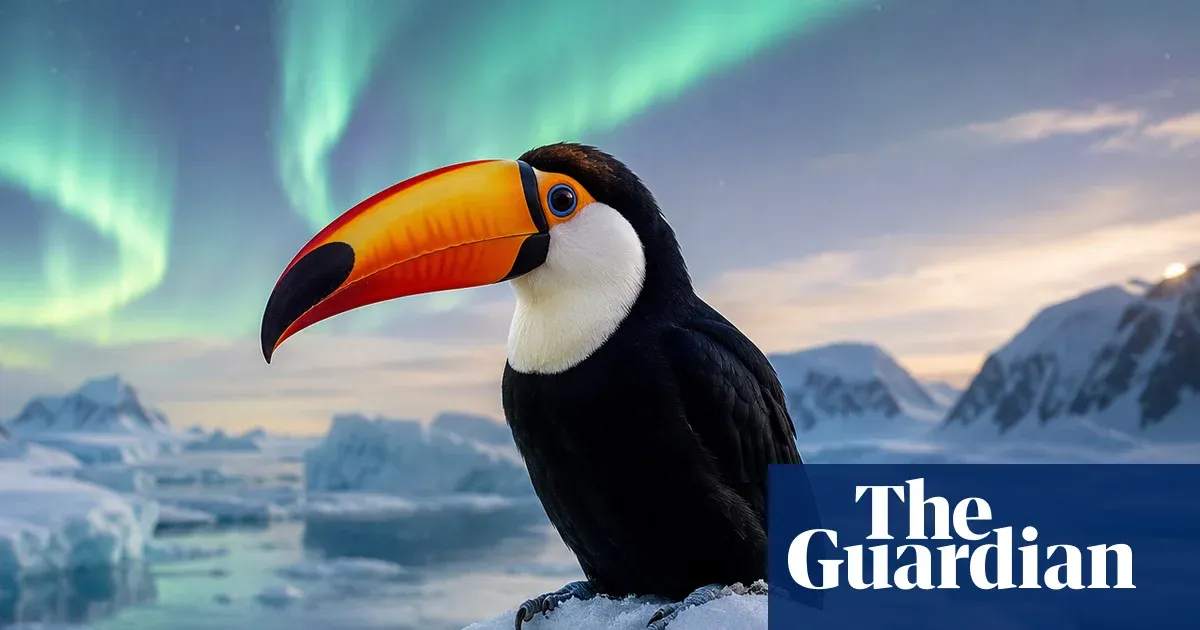
Experts warn that an increase in enhanced photos on birding platforms is producing fake sightings, putting research at risk. The consequence for decision-makers is clear: the more AI-manipulated submissions spread, the harder it becomes to trust and verify evidence that feeds scientific work.
For many birdwatchers, spotting a species outside its “normal range” is the holy grail. In the UK, those discoveries often go national. And a specific example shows why trust matters: the western reef heron, which is usually found in Africa and southern Europe, was spotted in a seaside town in north Wales in June, then widely celebrated on birding forums.
Now experts are warning that the excitement is getting crowded out by a new scourge: AI-altered images, sometimes enhanced or manipulated, appearing on birdwatching platforms. The fear is not just that a few people might be fooled. It is that these fake sightings can seep into a credibility layer that scientists and researchers depend on, even when the underlying tools are working as designed.
To understand why this threatens research, you have to understand how birdwatching data travels. Birding forums and platforms are built for rapid sharing. A rare sighting can go from “someone posted a photo” to “the community is talking about it” within hours, long before any formal verification process catches up. That speed is a feature when observations are authentic. It is a bug when images get altered, because the community’s social proof becomes part of the evidence.
AI “slop” is the catch-all threat experts point to: images that look more compelling than the original, images whose details can be massaged, and potentially images that are outright not what they claim to be. When the platform culture rewards attention, speed, and persuasive visuals, bad actors do not even need to be sophisticated. They can benefit from a world where “looks right” starts to beat “was it verified.” And once a false sighting is widely celebrated, it can create a second-order effect: researchers may spend time analyzing patterns that are based on faulty inputs.
The western reef heron case highlights the stakes because it is the kind of out-of-range record that can shape scientific discussion. In ecology and conservation, distribution questions matter. Where a species appears, and when, can influence how people think about migration, climate signals, and ecosystem change. That means that even a small contamination rate in observational data can have outsized consequences, especially if the platform-to-paper pipeline treats compelling images as sufficient evidence.
This is where the incentives get tricky. Birdwatching platforms are not built like scientific labs. They are built like communities. Users want recognition, and they want it quickly. Forums want engagement. Scientists want coverage, because real-world observations come from dispersed observers who never get lab-grade equipment or standardized workflows. The problem is that AI makes it easier to manufacture credibility without adding genuine information. Enhanced visuals can compress the verification timeline, and they can make it harder for experts to tell what they are seeing, even when they are trying to be careful.
There is also a governance angle. Platforms can add moderation, labels, and verification cues. But AI-altered media is a moving target. Even if a platform updates its tools, the next generation of enhancement can outpace the controls. That forces an ongoing arms race, with costs paid by platform operators, community moderators, and anyone downstream who has to validate data.
For decision-makers, the key is to treat this not as a quirky online problem, but as a data integrity risk that can ripple into research credibility. If scientists and research tools cannot rely on the authenticity of certain submissions, they may respond by tightening verification standards, which can slow workflows and reduce coverage. Or they may accept more uncertainty, which can weaken conclusions. Either way, the cost is real, and it hits the whole ecosystem, from platform operators to institutions depending on observational inputs.
The strategic question now is simple: how much trust can be placed in images from birding forums if AI-altered content becomes normal? The western reef heron story shows how quickly a single out-of-range photo can spark public celebration. Experts are warning that the same mechanism can be exploited by AI-altered images, turning the “holy grail” of rarity into a credibility test for the data tools researchers use. If that test fails, it does not just ruin one forum thread. It undermines the foundation that helps science spot real change.
This story's Key Insights and Take-aways are locked.
Create a free account to unlock Executive Actions for one credit.
Register to UnlockAlways free for Executives Club members. Join the Club
More in Science

Alaska's 1,580-foot tsunami had warning signs. Scientists just found them.
Rapid glacier retreat, heavy rainfall, and thousands of tiny tremors preceded Alaska's 1,580-foot tsunami, a warning for every coastal community in a warming world.

The rare mutation that lets high-risk brains dodge Alzheimer's
Scientists found a natural defense against protein buildup, opening a new path to preventive treatments.

3,000 steps a day may halve Alzheimer's decline, study finds
New research links a modest daily walk to less tau buildup and nearly half the cognitive and functional decline, even for those with early signs.