

Blanchett-Led Coalition Challenges OpenAI's 'Impossible' Licensing Claim in NYT Suit
A 31-page amicus brief backed by CAA, Madonna, and Anne Hathaway argues the creative industries already have the infrastructure to license AI training data, undercutting OpenAI's core defense.
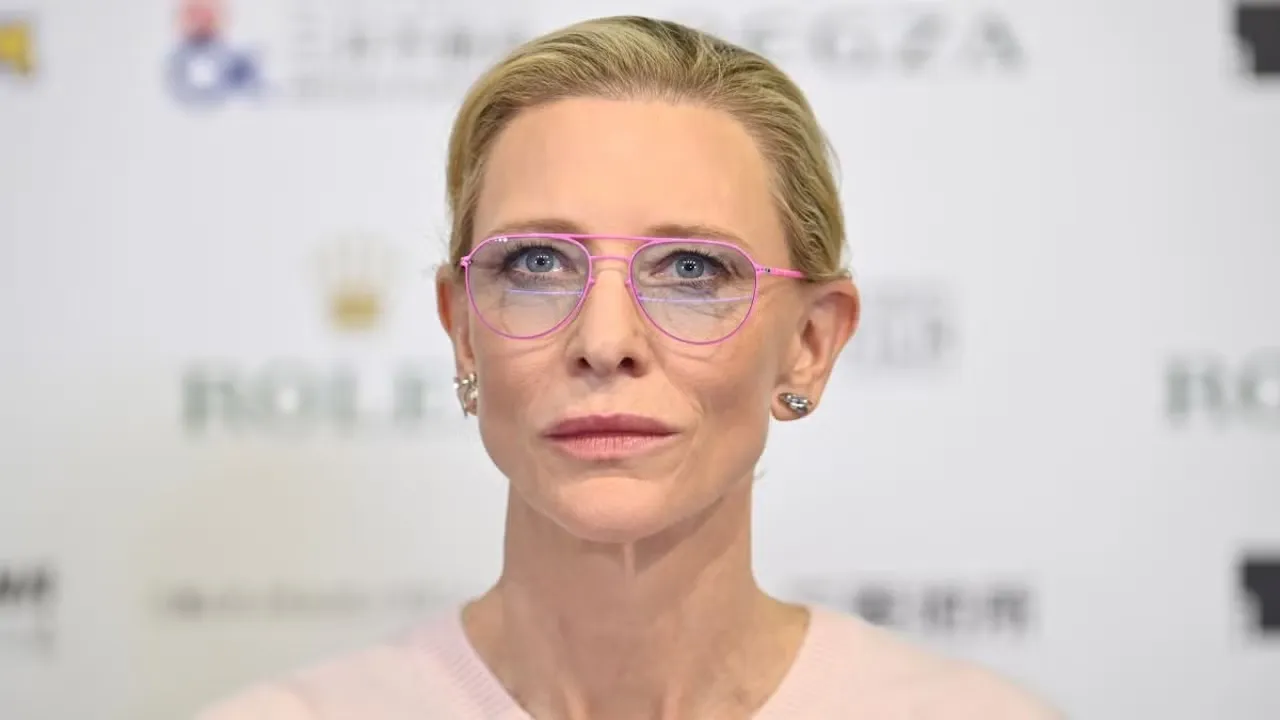
Cate Blanchett's Human Consent Foundation and a coalition of Hollywood artists filed an amicus brief Friday in the New York Times' copyright suit against OpenAI and Microsoft, challenging the claim that licensing creative works for AI training is impossible. The filing argues existing collective licensing frameworks already solve the transaction-cost problem, putting pressure on the tech companies' fair use defense.
Cate Blanchett's Human Consent Foundation, joined by CAA, the Music Artists Coalition, the National Association of Voice Actors, and the Creators Coalition on Artificial Intelligence, filed a 31-page amicus brief Friday in the Southern District of New York in the New York Times' copyright lawsuit against OpenAI and Microsoft. The brief directly attacks the tech companies' assertion that licensing creative works for AI training is 'impossible' or cost-prohibitive, arguing that the creative industries have run collective licensing frameworks for over a century that already solve the transaction-cost problem.
The filing, obtained by TheWrap, includes an appendix of prominent Hollywood figures voicing support: Anne Hathaway, Bette Midler, Emma Thompson, Helen Mirren, Dan Levy, Ron Howard, Madonna, and Olivia Wilde. The brief argues that 'the creative industries already have in place a proven infrastructure and workflows to clear rights for dispersed works at scale and cost-effectively.' That directly counters OpenAI's and Microsoft's defense that no settled means of valuing training data exists.
The underlying case dates to December 2023, when the New York Times sued OpenAI and Microsoft for copyright infringement, accusing them of 'unlawful use of The Times's work to create artificial intelligence products' that compete with the news outlet and threaten its ability to provide independent journalism. The Times alleged that the companies gave its content particular emphasis when building their large language models, revealing a preference that recognizes the value of those works. OpenAI responded at the time that it was 'surprised' by the suit, saying it respected content creators' rights and was committed to working with them.
This new brief follows a separate amicus filing from SAG-AFTRA, the Writers Guild of America, and the American Federation of Musicians, which urged the court to 'uphold the basic principles of copyright law and reject a categorical fair use exemption for AI training in accordance with court precedent.' The unions added that unauthorized appropriation of human-created works without consent, credit, and compensation severely harms creative professionals, devalues their labor, and undermines developing licensing markets.
Blanchett, in a statement within the brief, drew on her three decades in film and theater to emphasize that consent has always been the industry standard. 'If someone wants to use my face, my voice or my image, they ask me first. There is a contract. There is a conversation. This isn't a new idea or a complicated legal framework, it is simply how we treat each other in this industry. Consent isn't a barrier to creativity, it is the foundation of it.'
The legal argument hinges on the existence of collective management organizations like the International Confederation of Societies of Authors and Composers and Broadcast Music, Inc. The brief contends these organizations 'operate as centralized clearinghouses that manage rights for entire repertoires through blanket licenses and automated, meta-data driven systems, rather than requiring individual negotiations for each work.' That infrastructure, the coalition argues, directly addresses the 'dispersed owner' concern that OpenAI and Microsoft have raised.
For executives across media, AI, and entertainment, the stakes are significant. If the court accepts the coalition's framing, it could undercut OpenAI's fair use defense and force AI companies to negotiate licenses with rights holders before training on copyrighted material. That would reshape the economics of AI development, adding a new cost layer for training data and potentially slowing the release of large language models.
The brief also signals that the creative industries are organizing not just to litigate, but to build a licensing market. By pointing to existing infrastructure, the coalition is telling the court that a workable solution already exists - and that the tech companies' 'impossible' claim is a choice, not a constraint. For boards and CEOs, the message is clear: the era of unlicensed AI training may be ending, and the companies that prepare for a consent-based regime will have a strategic advantage.
This story's Key Insights and Take-aways are locked.
Create a free account to unlock Executive Actions for one credit.
Register to UnlockAlways free for Executives Club members. Join the Club
More in Business

Patrick Stewart, Star Trek's Picard, dies at 86 with one final role still to come
The beloved actor's last screen appearance lands Dec. 18 in 'Avengers: Doomsday' - a posthumous curtain call that will test the pull of a two-franchise icon.

Binance scrambles to claw back $6.3B stolen in North Korea-linked hack
The world's largest crypto exchange faces the biggest heist on record, and the recovery effort will test the limits of blockchain forensics.

North Korea's TraderTraitor unit blamed for Binance's record $6.3bn heist
The largest crypto theft on record has rattled markets, slashed billions from token values, and put Binance's security revamp under the spotlight.