

BNP Paribas banker says European rich are building family offices in Hong Kong
Lemuel Lee links the shift to two-way capital flows between Europe and mainland China, reshaping wealth competition.

BNP Paribas has found that an increasing number of wealthy European clients want to establish family offices in Hong Kong. Lemuel Lee, head of wealth management for BNP Paribas in Hong Kong, also said wealthy mainland clients are looking to invest in Europe, pointing to growing two-way capital movement.
BNP Paribas, France’s largest lender and the second-largest in Europe, is seeing a clear pattern: wealthy European clients are increasingly eyeing Hong Kong for family offices. Lemuel Lee, head of wealth management for BNP Paribas in Hong Kong, says the motivation is straightforward, and it matters for anyone running (or funding) wealth platforms in Asia. Clients want to capitalize on growing opportunities in the region.
Lee also flagged something else that makes the story bigger than “clients like a new address.” He said a growing number of wealthy mainland clients are also looking to invest in Europe. Put together, that is the kind of two-way capital flow that changes who gets the best relationships, what kind of cross-border products win, and where wealth managers build staffing and infrastructure.
So what is a family office, and why does Hong Kong keep coming up? A family office is essentially a private wealth management setup designed for a family’s long-term capital and governance needs. Instead of relying solely on a bank or wealth manager for every decision, families often want more direct control over portfolio strategy, succession planning, and how they structure investments. In the real world, that means firms compete to be the rails for these clients, whether the family is allocating to private markets, managing liquidity, or coordinating advisors.
Hong Kong has long marketed itself as a bridge location for cross-border wealth. For European clients, the “bridge” logic is amplified when the story is not just about Hong Kong assets, but about regional opportunities more broadly. Lee’s framing is about “capitalise on growing opportunities in the region,” which implies demand is moving from passive positioning to actual deployment. If more European wealth is establishing family offices in Hong Kong, wealth managers and banks that can support cross-border execution gain an advantage that is hard to quickly replicate, because family offices tend to stick around. They also bring recurring advisory and transaction flows, not just one-time deposits.
At the same time, Lee’s comment about mainland clients looking to invest in Europe signals another competitive front. When mainland wealth turns outward toward Europe, it pressures European private banks and wealth platforms to improve their Asia coverage and cross-border capabilities. It also encourages Asian firms to get deeper into European deal flow, whether through partnerships, local advisory teams, or custody and reporting arrangements. Even if your core business is in Asia, the money’s destination and the paperwork trail still define your operating model.
This is where the stakes get operational. Wealth management is not only about finding deals. It is also about regulatory comfort, risk controls, and how smoothly capital can move across jurisdictions. Family office setups often require banks to demonstrate robust compliance systems, clear reporting, and the ability to coordinate across multiple asset types. For boards and executives, the question is whether the firm can support the whole lifecycle: onboarding, ongoing governance, cross-border investment administration, and succession-oriented planning.
Regulatory and geopolitical framing is also unavoidable, because Hong Kong is not just another financial center on a map. It is part of a broader narrative of how global capital adapts to Mainland China and to Europe’s own market structure. When the market narrative shifts from “watching” to “moving,” that tends to force banks and wealth managers to upgrade their product sets and human coverage. In other words, the opportunity is not only in the client relationship. It is in the internal capability build-out required to serve that relationship.
For BNP Paribas, the banker’s comments suggest its Hong Kong wealth management effort is landing with a segment that wants more than standard private banking. The two-way theme also implies that Hong Kong is becoming a node, not merely a destination. For competitors, the second-order risk is complacency. If more European wealth is building family offices locally, rivals may find themselves losing the earliest relationship stage. And if mainland clients are accelerating investment in Europe, the firms that lag in cross-border orchestration could miss the most valuable referrals and recurring transaction volume.
Ultimately, Lee’s message points to a specific strategic reality: cross-border wealth is getting more structured. Family offices are a sign of commitment, not experimentation. If two-way capital flows between Europe and mainland China keep strengthening, executives in wealth management should treat Hong Kong as more than a marketing target. It looks like an operating hub where relationship moats, compliance readiness, and cross-region execution determine who wins when capital starts moving faster than marketing can adjust.
This story's Key Insights and Take-aways are locked.
Create a free account to unlock Executive Actions for one credit.
Register to UnlockAlways free for Executives Club members. Join the Club
More in Business

Uber buys Delivery Hero for nearly $15B, vaulting to top food delivery outside China
The deal doubles Uber's dual-services footprint and pushes a ride-and-eats bundling play into 50 more markets.

Epic and Google drop settlement bid, forcing rival Android app stores by July 22
Google told the court it is ready to carry third-party app stores starting Wednesday, July 22.
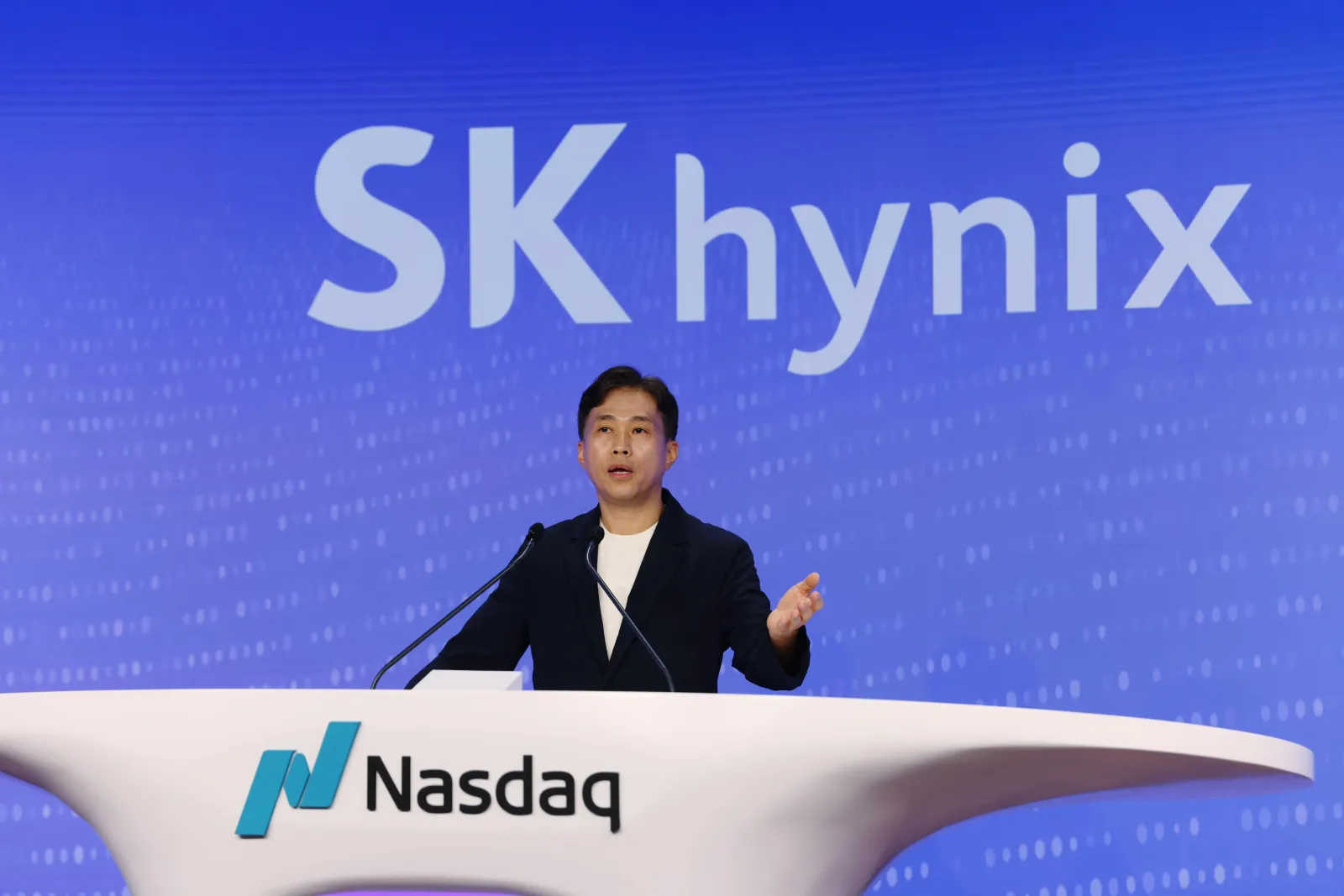
SK Hynix opens at $170, raises $26.5B, and tops foreign IPO records
In Friday's Wall Street debut, SK Hynix turns AI RAM demand into a $26.5B fundraising moment that rewrites comps.