
Boston Dynamics’ Atlas got a soccer-kick level-up, by adding a secret control superpower
The humanoid robot’s new “secret superpower” is the breakthrough Boston Dynamics says makes its soccer feat repeatable.
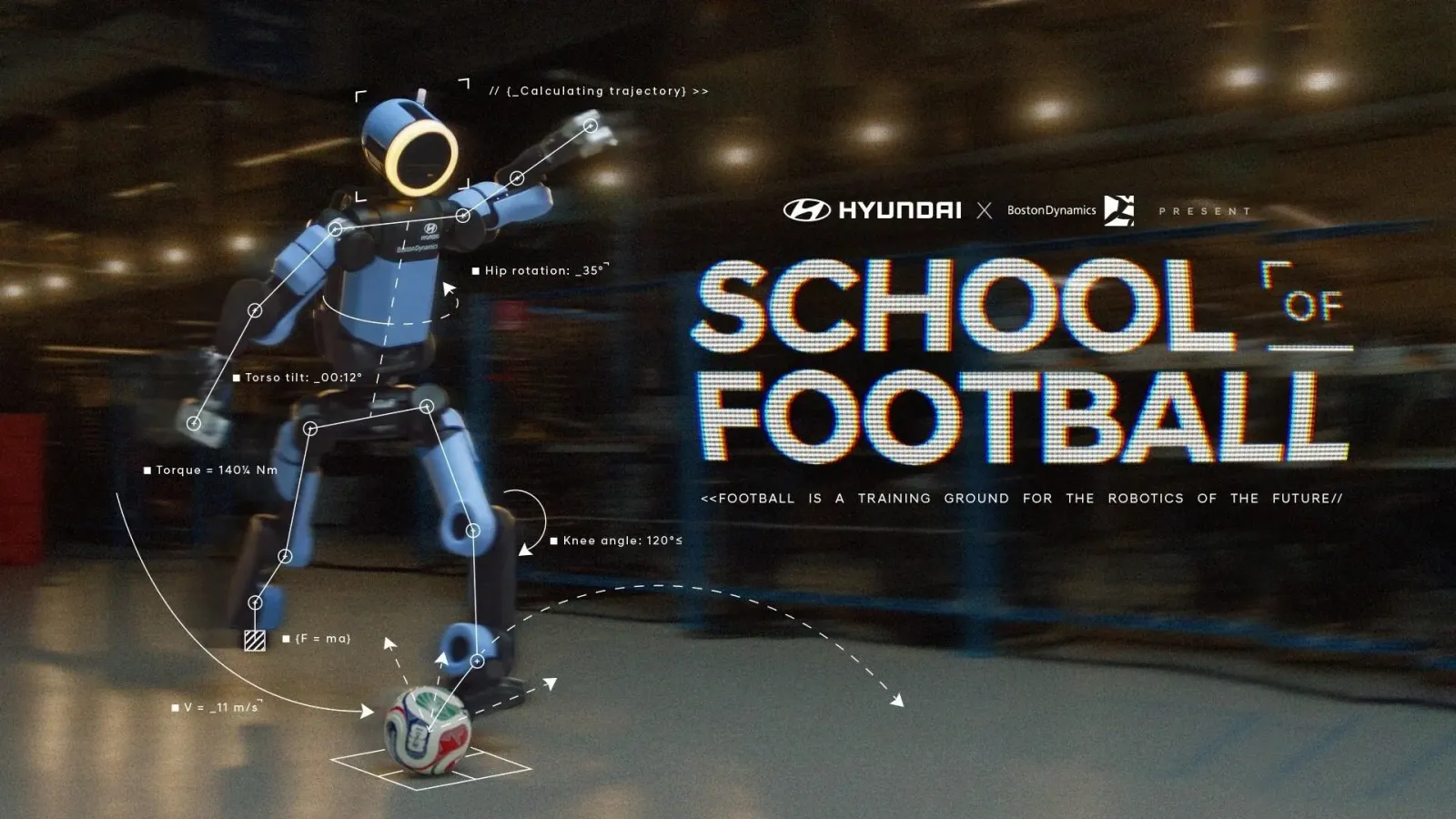
Boston Dynamics has unveiled a new Atlas humanoid robot that can kick a soccer ball in a way it claims is unmatched by other robots. The company says the key change is an engineered, “secret superpower” that it views as critical for success.
Boston Dynamics’ new Atlas can kick a soccer ball like no other robot. That is the headline claim, and it matters because it is not just about looking impressive in a video. Soccer is a deceptively brutal test for robotics. You need balance, timing, whole-body coordination, and the ability to recover when the real world refuses to behave. For decision-makers watching humanoids move from lab demos to product-grade systems, the interesting part is what Boston Dynamics says is different this time.
For the first time, Boston Dynamics has engineered in a “secret superpower” that it says is critical for success. In other words, the company is signaling that the soccer kick is not only a mechanical trick. It is the outward sign of an internal capability Boston Dynamics believes is what actually makes the performance work consistently. If you are an operator, investor, or board member tracking robotics, that is a big statement, because “secret superpower” is how teams usually describe the hard-to-design, hard-to-validate pieces that turn prototypes into repeatable systems.
To understand why executives should care, zoom out to how the humanoid market tends to unfold. Most robotics breakthroughs that look like magic videos eventually run into the same wall: reliability. Demos are typically controlled, and robots are often tuned to specific tasks, environments, or conditions. But once you ask a robot to move like an athlete in a chaotic setting, the gap between “it worked once” and “it will work when it matters” becomes the whole game. A soccer kick is a great proxy for that gap. The ball does not cooperate. Contact introduces forces. Timing shifts. Ground conditions vary. A robot that can still execute under those stresses is closer to the kind of autonomy and control you would need for broader real-world deployments.
This is where Boston Dynamics’ framing becomes strategically useful. The company is not just saying Atlas is better at soccer. It is telling you that, for the first time, it has engineered the missing capability that underpins success. That implies a maturation step: the system is no longer just assembling impressive motions, it is gaining a capability that Boston Dynamics considers fundamental. In executive terms, this is the difference between a marketing win and a technical platform shift.
There is also a board-level reason the “secret superpower” language is worth attention. When companies pursue advanced robotics, governance tends to hinge on risk: technical risk, safety risk, and timeline risk. Humanoids raise safety questions because they operate in spaces where humans exist. They also raise operational risk because complex control systems can behave unpredictably when reality deviates from training. The moment a robotics company emphasizes a core capability that was missing before, it is effectively sharing where it believes the major technical bottleneck sat. That can matter for how boards evaluate future milestones, and for how management communicates progress without overpromising.
Regulatory background is part of the context too, even when the source story does not dive into details. Humanoid robots live in a patchwork world of product safety expectations, workplace safety norms, and liability concerns. Even if a system is not yet deployed broadly, regulators and insurers care about repeatability and predictability. A capability that helps a robot execute reliably is, indirectly, the kind of thing that makes compliance and approvals less of a guessing game. You cannot regulate “cool,” but you can regulate risk and performance. If Atlas is demonstrating a capability Boston Dynamics believes is critical for success, it is reasonable to see why that could later influence how regulators and risk teams evaluate the system, whether in lab settings first or in wider trials later.
Second-order, this also shifts competitive dynamics for anyone building adjacent robotics or investing in humanoids. Boston Dynamics is one of the most visible brands in the category. When it claims a breakthrough framed as the addition of an engineered superpower, it raises the bar for the entire ecosystem. Competitors cannot just respond with better cinematography. They need to match the underlying control and autonomy improvements that enable complex interactions like ball kicks. Investors, meanwhile, may update their mental model of what “progress” looks like, from incremental motion upgrades toward core capabilities that unlock broader task performance.
So what is the strategic stake for decision-makers today? It is whether Boston Dynamics is moving Atlas closer to a system that can do more than the one thing it can currently demo. Soccer is the proof point. The “secret superpower” is the promise that the performance is grounded in a capability the company believes is necessary. If you lead robotics programs, fund autonomy companies, or steer platforms that depend on reliable physical interaction, you should watch whether this “secret superpower” shows up again in other tasks and environments, because that is where humanoids either become useful or remain impressive curiosities.
This story's Key Insights and Take-aways are locked.
Create a free account to unlock Executive Actions for one credit.
Register to UnlockAlways free for Executives Club members. Join the Club
More in Business

Comcast shares jump 25% as it plans to split NBCUniversal and Sky
The tax-free spin-off could reshape focus, funding, and competition across media and tech for years.

Bungie cuts most Destiny 2 staff as Sony says Marathon still matters
Herman Hulst confirms layoffs affecting most Destiny and some Marathon teams after Bungie admits Destiny fell short.

SK Hynix jumps 11% after seeking up to $29.4B in Nasdaq listing
The chip giant filed for a Nasdaq listing plan that could raise $29.4 billion, instantly reshaping investor expectations.