

Brazil court orders Xbox to restore hacked account and digital games after suspension
A gamer sued in Brazil after Xbox suspended an account and removed digital purchases. The court sided with him.
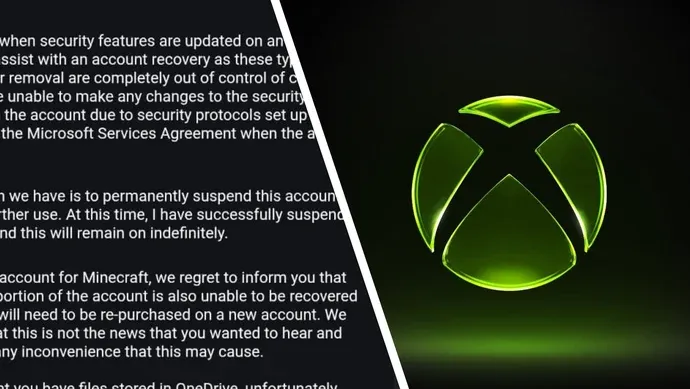
Xbox has lost a legal battle in Brazil stemming from the suspension of a hacked account and all associated digital games. The decision matters because it pressures how platform security incidents and account actions are handled under local consumer rules.
A gamer won a legal battle in Brazil against Xbox after the company suspended his hacked Xbox account and told him he had to re-buy all of his digital games. Eurogamer reports that Xbox lost the case, turning what likely felt like a “security incident” into a compliance and consumer-rights problem.
The core of the dispute is simple and brutal for decision-makers: the account was hacked, Xbox suspended it, and the result was not just an access lock but the loss of digital game entitlements. In other words, the user experience for the rightful owner looked like punishment for an attacker’s activity. The Brazilian court disagreed with that outcome, forcing the situation back toward restoration rather than re-purchase.
This is exactly the kind of scenario that platform executives fear because it combines three hot-button issues: cybersecurity, digital ownership, and consumer protection. When accounts get compromised, platforms typically focus on containment. You lock something down, rotate or invalidate access, and prevent further fraudulent purchases or gameplay. But once the response spills into removing purchased content or requiring users to pay again, the incident stops being purely operational and becomes an argument about fairness and obligations.
Digital storefronts like Xbox operate on a mismatch that matters in courtrooms. The company can say the account was suspended “for security.” The user can say their purchases were taken away despite being hacked. That distinction is often where legal fights are won or lost. In this Brazil case, the court ultimately sided with the gamer, which signals that local expectations around consumer rights and remedies can override the company’s internal security playbook.
For executives, the second-order implication is not just “more lawsuits.” It is the potential knock-on effect on policy design. If a court is willing to treat the removal of digital games after a hack as legally problematic, then customer support scripts, account suspension policies, and automated entitlement controls may need to be reviewed. The risk becomes systemic: the same workflow that handles fraud prevention may be the one that creates legal exposure when it interacts with purchased digital items.
There is also a reputational and commercial angle that decision-makers should not ignore. Even in a purely digital ecosystem, trust is a balance sheet asset. Users do not distinguish between “entitlement systems” and “customer recourse.” They experience one thing: they paid, they got hacked, then they were told to re-buy. When a court confirms that stance is untenable, it can change how customers interpret future outages, fraud events, or suspension notices.
Regulatory context matters too. Brazil has a track record of taking consumer disputes seriously, particularly where a vendor’s actions affect access to goods already paid for. Eurogamer frames this as a legal battle in Brazil, and the takeaway for boards is that geography changes the rules of the game. A security incident may play out differently depending on local consumer law, enforcement posture, and how judges view “security measures” versus “consumer harm.”
Finally, this case is a stress test for how platform companies manage the boundary between security controls and user entitlements. If the response to a hacked account includes suspending access and wiping the practical ability to use digital purchases, courts may treat that as a remedy failure. In practical terms, Xbox now has to account for the legal outcome and how it affects future incident handling, dispute resolution, and the design of “security first” policies that still respect user ownership.
For other executives and governance teams at gaming and digital subscription platforms, this is the message to take from the ruling: when a breach forces users into a pay-again scenario, the stakes jump from engineering to legal. The lesson is not to stop securing accounts. It is to ensure that security actions do not casually convert purchased digital rights into collateral damage.
This story's Key Insights and Take-aways are locked.
Create a free account to unlock Executive Actions for one credit.
Register to UnlockAlways free for Executives Club members. Join the Club
More in Entertainment

12TB Steam 'teraleak' goes beyond Valve: GTA 3, Mafia 2 prototypes exposed
A 12-terabyte dump of Steam data reveals prototypes and builds of third-party classics like GTA 3 and Mafia 2, plus unreleased Valve content, rewriting game history.

LinkedIn's romance problem: 1 in 4 workers say dating on it is fair game
A new survey shows a quarter of U.S. employees treat the professional network as fair game for romance, even as LinkedIn bans it and removes hundreds of thousands of offending posts.

Enhypen's first No. 1 album breaks K-pop's Billboard 200 streak
The K-pop group's 98,000-unit debut tops the chart while Dolly Parton's catalog reentry shows how death reshapes streaming.