
Brazil deep-sea mission finds 31 new species in 2 weeks using “Squid” tech
Ocean midwater off Brazil produced a near-record discovery sprint, pointing to a new baseline for how fast science can name life.
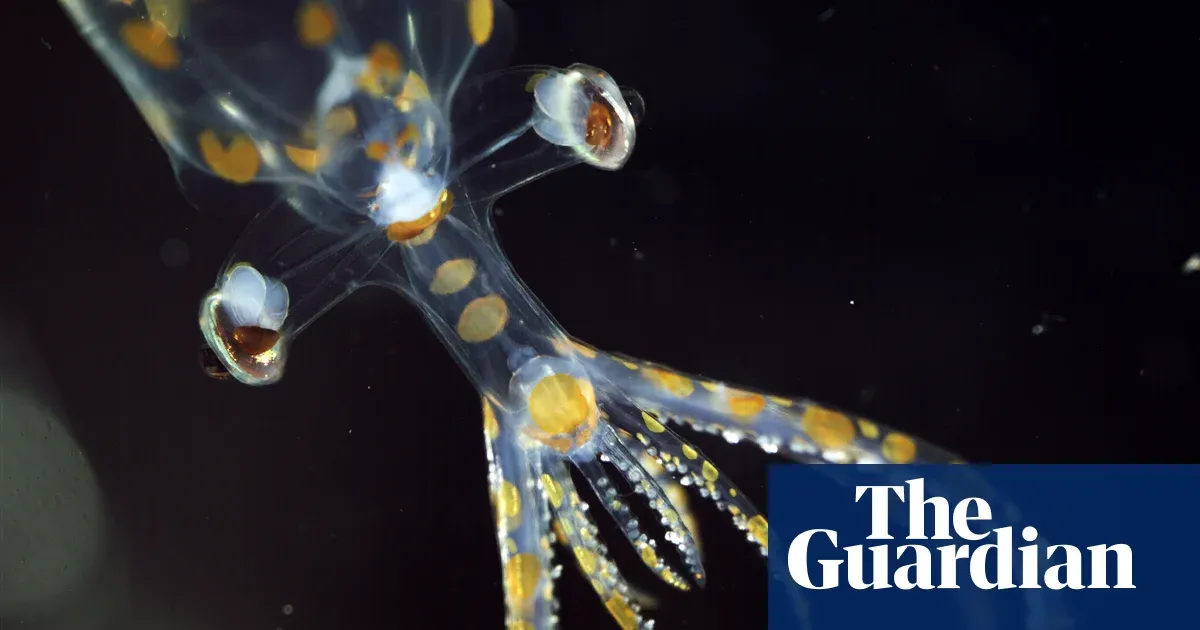
A marine expedition in international waters off Brazil discovered 31 new species in just two weeks, driven by cutting-edge science and engineering technology. Researchers on board used a breakthrough nicknamed “Squid” to observe living 3D cellular structures of microbial life in a first for the ship.
A marine biology expedition working in the ocean midwater off Brazil has discovered 31 new species in just two weeks. The researchers believe the speed of finding and identifying them may be a record, and they credit at least part of that pace to cutting-edge technology designed and built by the science and engineering team.
The headline number is the headline because biology at that scale usually moves at the speed of paperwork, sample logistics, and lab time. Here, the sprint came from a technological shift so concrete that the team could do something they had not been able to do before: on board the ship, researchers were able to observe the living 3D cellular structure of microbial life, enabled by a breakthrough nicknamed “Squid.” That matters because it turns “collect now, understand later” into “observe in real time,” which can collapse timelines between discovery, classification, and follow-up.
To understand why 31 species in 14 days is a big deal, zoom out to how marine science typically works. The ocean is large, dark, and hostile to slow workflows. Teams often rely on vessels to travel, deploy instruments, collect specimens or environmental samples, and then take them back to land for deeper observation and analysis. That pipeline is not just slow. It can also introduce uncertainty, because conditions during retrieval can change what researchers can confidently see. When the work includes microbes, the challenge multiplies: microbial life is abundant, but it is also structurally complex, and interpreting it requires more than a surface-level look.
This is where the “Squid” breakthrough earns its keep. The source says it enabled, for the first time on board, observation of living 3D cellular structure of microbial life. In plain terms, that is not a minor upgrade to imaging. It is a new window into biology with depth, dimension, and time on the same platform where organisms are encountered. If you can inspect 3D cellular structure directly at sea, you can better steer what gets prioritized, which can feed faster identification. That helps explain why the team believes the overall discovery speed may be a record.
There is also a systems and incentives story hiding in the technology. Cutting-edge platforms that reduce the “time to evidence” can change which projects win funding and attention. Boards and investors in life sciences, and operators in scientific instrumentation, care about throughput for a simple reason: it turns scarce expert time into more output, which can reduce the bottleneck between a promising signal and a validated finding. Even when this is “just science,” the competitive center of gravity shifts toward teams with hardware that accelerates observation and classification.
Regulatory and governance context is relevant even for exploratory expeditions. The work took place in international waters off the coast of Brazil, which puts it within a world of cross-border rules that govern how marine resources and biological samples are collected, handled, and shared. While the source does not specify permits or legal frameworks, the second-order implication for executives is clear: as discovery speed increases, so does the urgency for clear compliance processes. If you can generate results in days, you cannot afford compliance slippage that only becomes visible weeks later when paperwork catches up.
For organizations that support marine research, accelerants like “Squid” can also change operational planning. Faster identification can influence where ships spend time, how crews schedule dives and deployments, and how instrumentation teams configure scans. That can reduce waste and maximize the limited window researchers have in the field. It can also increase the volume of biological data generated per trip, which stresses data pipelines, storage, and curation. Speed is only an advantage if you can process the output with equal competence.
The broader strategic stake for leaders in adjacent roles is that discovery velocity is becoming a competitive variable, not just a scientific dream. If the team’s assessment is right and the two-week pace is near-record or record-level, it suggests a new benchmark for future expeditions and for how quickly the scientific community might update what it considers “known” in the midwater ecosystem. For executives, the question becomes practical: when tools can shorten the loop from observation to identification, who is positioned to capitalize on that loop, while staying compliant and operationally disciplined? The answer will shape not only which species get named, but how fast the industry learns what the ocean is actually doing beneath the surface.
This story's Key Insights and Take-aways are locked.
Create a free account to unlock Executive Actions for one credit.
Register to UnlockAlways free for Executives Club members. Join the Club
More in Science

Alaska's 1,580-foot tsunami had warning signs. Scientists just found them.
Rapid glacier retreat, heavy rainfall, and thousands of tiny tremors preceded Alaska's 1,580-foot tsunami, a warning for every coastal community in a warming world.

The rare mutation that lets high-risk brains dodge Alzheimer's
Scientists found a natural defense against protein buildup, opening a new path to preventive treatments.

3,000 steps a day may halve Alzheimer's decline, study finds
New research links a modest daily walk to less tau buildup and nearly half the cognitive and functional decline, even for those with early signs.