

Brazil’s “gold fingerprinting” lab uses spectrometry to expose illegally mined Amazon gold
Forensic analysis links seized gold to protected areas, tightening prosecutions while targeting mercury pollution in the Amazon.
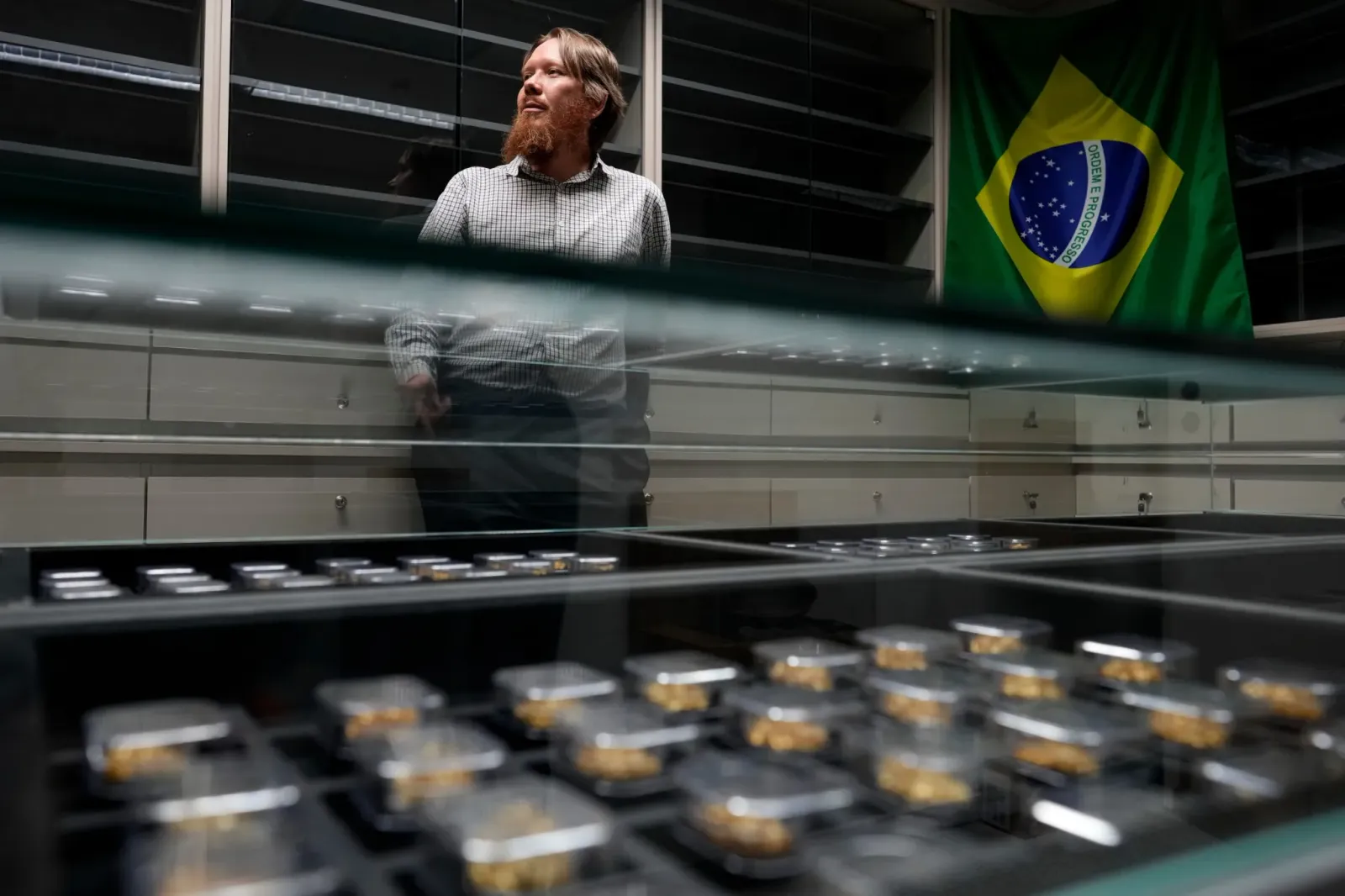
Brazil is using a forensic “gold lab” at the National Institute of Criminalistics in Brasilia to analyze seized gold and determine whether it came from protected land. The method relies on tools like X-ray fluorescence spectrometry, scanning electron microscopy, and laser ablation mass spectrometry, developed with universities since 2019.
Brazil has built something like a DNA test, but for gold. At the National Institute of Criminalistics in Brasilia, federal police have set up a “gold lab” that collects and analyzes samples from across the country, then checks whether newly acquired gold matches the profile of protected areas or protected lands where mining is banned.
The point is blunt: investigators want an answer to one question, “Where did this gold come from?” If the analysis shows the gold was mined illegally in an Indigenous territory or a protected area, the information can help police build a case and move toward charges. In other words, the lab is not just about science. It is about stopping fraud from turning environmental crime into “legitimate” product.
So how does “gold fingerprinting” work? In the lab, sparkling gold flakes are stored in tiny, coin-shaped vessels, but the real value is the data. Gold forms naturally inside rocks or riverbeds, and during that formation process it absorbs particles from the surrounding environment, including traces of silver and copper. That chemical mix becomes the fingerprint, unique enough that forensic tools can compare a seized sample against stored reference data tied to protected areas.
The procedure is designed for practical enforcement. A raid yields a gold sample, the sample gets analyzed, and then investigators test whether it matches the purported origin claimed by a seller. If it matches protected-area fingerprints, that supports legal provenance. If it does not, it can indicate the gold was sourced from a national forest or Indigenous land where mining is prohibited.
The lab’s technical stack reflects the seriousness of the job. Federal police forensics expert Gustavo Geiser says the method has been developed since 2019 in collaboration with Brazilian universities. Investigators use X-ray fluorescence spectrometry, scanning electron microscopy, and laser ablation mass spectrometry. Geiser also describes the work as increasingly complex “as we advanced,” but the objective stays consistent: determine whether seized gold is legally rooted or illegally extracted.
This matters more than it might sound, because the broader enforcement challenge is incentives and market entry. The source notes that environmental crime actors in the Amazon frequently use fraud to introduce their goods into legal markets, not only gold, but also cattle and timber. And there’s a macro pressure point: a worldwide surge in gold prices has spurred mining activity in the Amazon rainforest. The stakes are not academic. Amazon Mining Watch estimates about 496,000 hectares (1.2 million acres) of rainforest were cut down for mining since 2023, including some 223,000 hectares (551,000 acres) in the Brazilian Amazon.
Meanwhile, oversight bodies have raised concerns about how that gold gets laundered. Brazil’s Federal Court of Accounts said last year there was evidence indicating that mining permits granted by the National Mining Agency to small-scale miners were being used to pawn off gold extracted from protected areas in the Amazon. Greenpeace, in an independent report in May based on publicly available records, satellite imagery, and aerial surveillance, described a “ghost mine” scheme: on paper, a legally authorized mine declares tons of gold extracted, satellite and aerial imagery show no activity at the site, and instead neighboring Indigenous lands show large-scale operations.
In northern Para, where illegal mining is severely impacting the region, a federal court issued an order this month for institutions including the Central Bank and the National Mining Agency to enact effective control and traceability of gold from mines to markets. Federal prosecutors have also filed a lawsuit against the National Mining Agency for better oversight of permits. Prosecutor André Porreca, leading the case, said permits have become a front used to “launder gold extracted by criminal organizations from Indigenous territories and protected areas.” In that context, “gold fingerprinting” is a bridge between physical samples and the paperwork-and-permits world where fraud often hides.
But the enforcement urgency is not only about legality. It is about pollution with human consequences. Mercury is used to extract gold, and once separated, mercury is released into rivers, contaminating water sources and fish essential to Indigenous life. The Amazon is the world’s largest rainforest and a key regulator of global climate, so environmental damage can accelerate warming, according to researchers cited in the source. A 2023 analysis by MapBiomas said over 90% of Brazil’s mining is taking place in the Amazon region, with nearly 40% illegal, in protected areas. And a 2023 study by Fiocruz said 21.3% of fish in Amazonian markets exceeded the World Health Organization safety limits for mercury levels, with children ages 2 to 4 consuming mercury at levels up to 31 times the recommended maximum.
Brazil has signed the Minamata Convention on Mercury, committing it to eliminate mercury use in gold mining. A draft published by the Ministry of Mines and Energy on easing out mercury is currently under debate, meant to take place until Aug. 7. Federal prosecutors have urged Indigenous groups, who are the ones most affected by contamination, be consulted, but the source says that has not yet happened. Geiser argues that a total ban on mercury would curb environmental contamination and also bolster forensics: his lab can detect traces of mercury, and he says it would make it “even clearer that any mining using mercury... is illegal.”
For executives and board-level decision-makers watching risk across supply chains, the second-order implication is simple: gold markets increasingly depend on traceability, not just pricing. If regulators tighten control from mines to markets, and if scientific provenance tools can reliably connect seized samples to protected areas, it raises the cost of “plausible deniability.” It also changes how financial institutions may evaluate the legitimacy of gold for inclusion in reserves. Geiser frames the benefit that way, arguing that being able to state gold has legitimate origin provides solidity not only to the market but to countries’ financial bonds.
Geiser also warns that crime networks are adapting, exploiting neighboring countries such as Venezuela, French Guiana, and Suriname to launder illegally mined gold, and samples from abroad have reached his lab to join a growing database. Regional collaboration is therefore tightening through the Amazon International Police Cooperation Center in Manaus. In short, this is a forensic capability, but it is also a response to a shifting criminal business model.
If you are a company with exposure to commodities, banking, or compliance in high-risk geographies, this is the direction of travel: enforcement moves from “paper traceability” toward measured fingerprints and testable origin. When the lab can answer where the gold came from, the market has to answer where it came from too.
This story's Key Insights and Take-aways are locked.
Create a free account to unlock Executive Actions for one credit.
Register to UnlockAlways free for Executives Club members. Join the Club
More in Science

Alaska's 1,580-foot tsunami had warning signs. Scientists just found them.
Rapid glacier retreat, heavy rainfall, and thousands of tiny tremors preceded Alaska's 1,580-foot tsunami, a warning for every coastal community in a warming world.

The rare mutation that lets high-risk brains dodge Alzheimer's
Scientists found a natural defense against protein buildup, opening a new path to preventive treatments.

3,000 steps a day may halve Alzheimer's decline, study finds
New research links a modest daily walk to less tau buildup and nearly half the cognitive and functional decline, even for those with early signs.