

Brenda Fricker, Oscar winner for My Left Foot, dies at 81
The first Irish woman and second Irish actor to win an Oscar reshaped Irish film and BBC drama, and her legacy keeps casting.
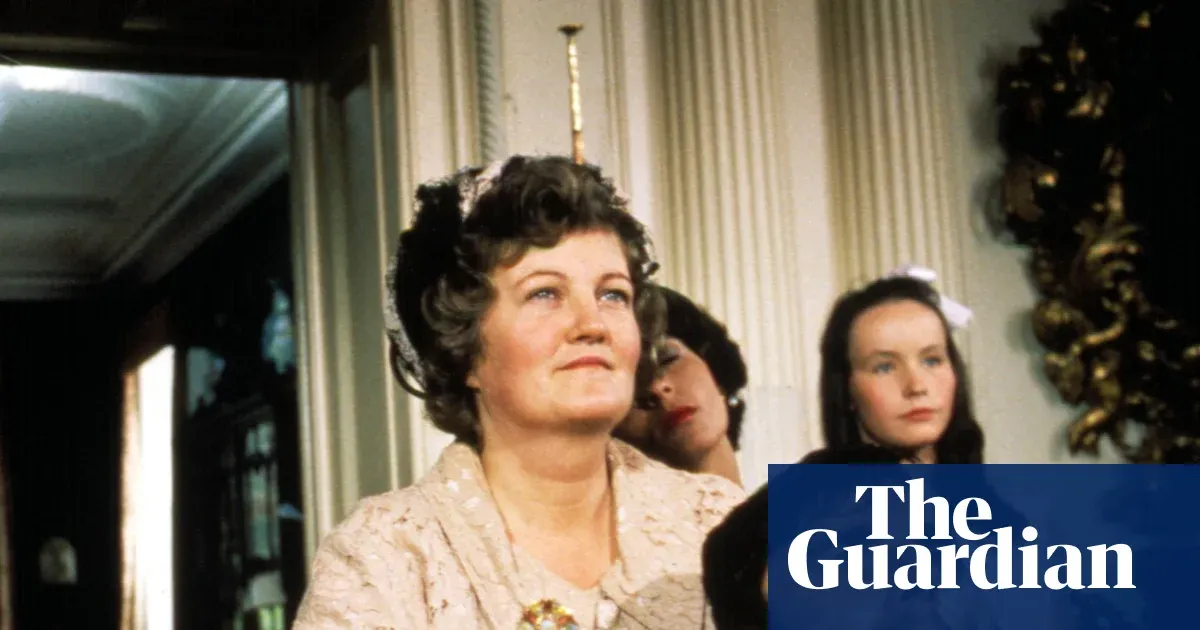
Brenda Fricker, who has died aged 81, was the first Irish woman to win an Oscar, for her 1989 role as Daniel Day-Lewis's mother in My Left Foot, after rising to fame in the BBC medical drama Casualty. Her career anchored both Irish screen prestige and early BBC-style character-driven TV, leaving modern producers and boards with a clear benchmark for impact.
Brenda Fricker, the Oscar-winning Irish actor behind My Left Foot, has died aged 81. She became the first Irish woman, and only the second Irish actor overall, to win an Academy Award, taking the Oscar for her role as Daniel Day-Lewis's mother in the 1989 film. That is already enough to stop the scroll. But what makes Fricker's story matter beyond film trivia is how she moved between two major screens at two different speeds: prestige cinema and mass-market television.
Fricker's Oscar moment did not arrive from nowhere. She had already shot to fame as part of the original cast of BBC medical drama Casualty. In the series, she played the nurse Megan Roach, described in the report as the “Mother Earth” of the fictional Holby City hospital’s A&E department during the programme’s first five series, from 1986 to 1990. The positioning is doing real work. It tells you she was not simply present in early Casualty, she helped define its emotional core.
For decision-makers in media, this is the kind of career arc that doubles as a case study in audience trust. Casualty started as popular TV, but it built longevity by feeling human, not just procedural. The source includes a quote from Casualty’s first producer, Geraint Morris, saying: “We knew the show had to have compassion.” He added, “We made Megan the person everyone could talk to.” That is a board-level lesson hiding in plain sight. In regulated, high-visibility genres like healthcare drama, the differentiator is often not production values. It is credibility and emotional access, delivered through a consistent character.
Fricker's role as Megan Roach functioned like a stabilizer in the A&E ecosystem. A&E is where stakes are immediate, scenes are compressed, and viewers tend to binge empathy and tension together. By anchoring the early seasons, she gave the show an interpersonal route through the institutional setting. That matters because viewers do not only follow plot. They follow who they believe will “hold” the room when things get messy. Morris's line makes that explicit: compassion was designed, and Megan was built as the conversational center.
Then comes the bridge to film, and the bridge is not just artistic. My Left Foot, released in 1989, is framed in the source as a “film classic,” and Fricker's Oscar win is the confirmation that the performance landed with the highest gatekeepers in Hollywood. She was recognized for embodying Daniel Day-Lewis's mother, a role that turned a single character into a reputational catalyst. In other words, her Oscar did not just add a trophy to her résumé. It validated that the kind of grounded, compassionate screen presence that worked on BBC TV could also translate into international prestige.
From an industry perspective, this is where second-order implications show up for executives and boards. When a performer who defined early “mass” television later wins at the top of “prestige” cinema, it signals something investors and studios usually like but rarely see proven so cleanly: talent transfer. It suggests that character-led performance can be a bridge between formats, rather than a one-platform phenomenon. That can shape development strategies. It can also influence how companies think about casting risk. If an actor can carry compassion as a narrative mechanism in both a hospital drama and an Oscar-winning film, then casting becomes more than star power. It becomes a reliability signal.
And there is a cultural stake too. The report emphasizes Fricker as the first Irish woman to win an Oscar, and the second Irish actor overall. That makes her milestone not only personal but structural. It highlights how representation can change what audiences and industry gatekeepers treat as possible. Boards and producers who care about talent pipelines can treat that as a measurable outcome: visibility at the highest level changes future hiring narratives, audience expectations, and how international buyers interpret Irish screen work.
So Fricker’s death is a moment for remembrance, yes. But it is also a practical prompt for anyone running a screen business: the characters that make people talk are often the ones that scale. The compassion-first design in Casualty, credited by Geraint Morris, and the Oscar recognition from My Left Foot are the same story told twice, on different stages. In a world where media teams chase the next format, Fricker’s legacy is a reminder that impact still starts with the simplest creative decision. Give viewers someone they can reach, and let that trust carry through.
This story's Key Insights and Take-aways are locked.
Create a free account to unlock Executive Actions for one credit.
Register to UnlockAlways free for Executives Club members. Join the Club
More in Entertainment

12TB Steam 'teraleak' goes beyond Valve: GTA 3, Mafia 2 prototypes exposed
A 12-terabyte dump of Steam data reveals prototypes and builds of third-party classics like GTA 3 and Mafia 2, plus unreleased Valve content, rewriting game history.

LinkedIn's romance problem: 1 in 4 workers say dating on it is fair game
A new survey shows a quarter of U.S. employees treat the professional network as fair game for romance, even as LinkedIn bans it and removes hundreds of thousands of offending posts.

Enhypen's first No. 1 album breaks K-pop's Billboard 200 streak
The K-pop group's 98,000-unit debut tops the chart while Dolly Parton's catalog reentry shows how death reshapes streaming.