
British Airways fire and IATA's “Save a Life, Not a Bag” rules collide
A cellphone battery fire in the cabin and a push to abandon luggage in emergencies: the two safety rules matter now.
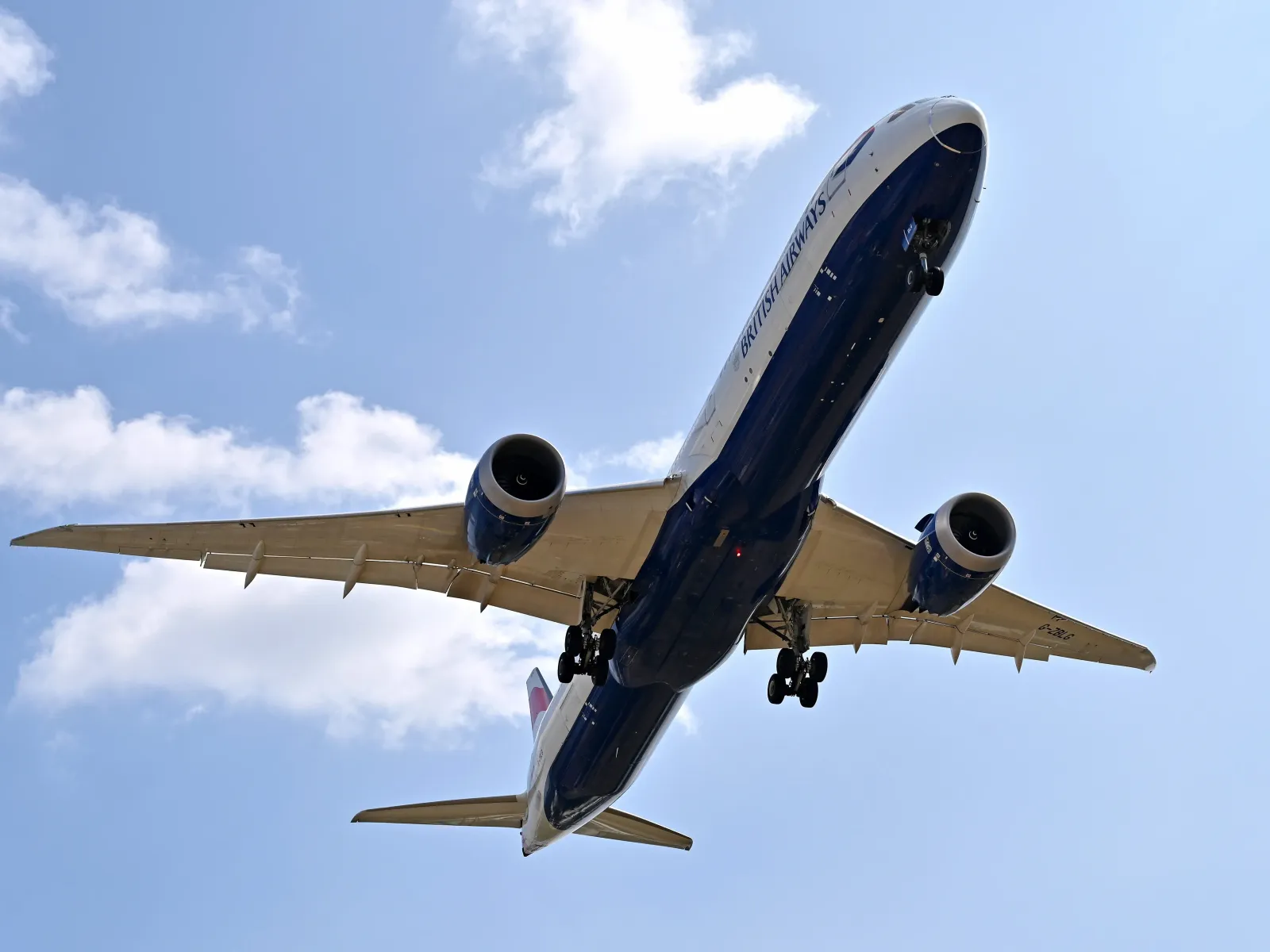
British Airways faced a cellphone battery fire on a London to Las Vegas flight after a pilot reported it had “scorched the inside of the cabin.” The Transportation Security Administration and IATA are using separate campaigns to push two behaviors: keep rechargeable devices in carry-on, and leave baggage behind during evacuation.
On a British Airways flight from London to Las Vegas, a cellphone caught fire and a pilot told air traffic control it “has scorched the inside of the cabin,” though it was under control. The key detail for passengers is not the firefight outcome, but what the incident reinforces: two safety rules aviation bodies are actively begging people to follow, right at the moment emotions and instincts spike.
That push has become louder this week because it is happening alongside a second, distinct risk that can turn a survivable emergency into a tragic delay. International Air Transport Association (IATA), a trade group for the world’s biggest airlines, launched a campaign titled “Save a Life, Not a Bag” after seeing continued reports and video shared across social and mainstream media showing people stopping during evacuation to retrieve luggage or to film instead.
Let’s start with the battery issue. After the British Airways incident, the Transportation Security Administration posted on X: “Travelers, please keep rechargeable devices in your carry-on, not checked baggage.” The TSA also added: “Follow your airline's power bank rules, and if a device overheats or starts smoking, tell a flight attendant immediately.” It is the classic mismatch between what a passenger expects to control and what lithium battery physics controls. Power banks, cellphones, and laptops all rely on lithium batteries. If the battery is damaged, it can rapidly increase in temperature and catch fire in a process called thermal runaway.
The carry-on guidance is about detection speed and crew response. Aviation bodies tell passengers to keep these devices in the cabin so the crew can notice a developing problem quickly and extinguish it with training built for these scenarios. This is also why the battery rule can sound repetitive, even if some flyers only half-remember it from an earlier trip. Historically, aviation safety messaging has been more focused on power banks because some may lack advanced circuitry that helps prevent overcharging in the first place. But the British Airways case signals the broader point: “all lithium-battery devices are susceptible.” In other words, the danger is not confined to the weird or rare edge case. It is embedded in everyday objects.
Now zoom out to the other campaign, which is aimed at a different behavior, but the same underlying theme: time. IATA framed its message with blunt urgency. “In an emergency, every second counts.” Yet IATA said passengers still stop to retrieve luggage and film when time is critical. Those actions, IATA warned, can block aisles, delay others, and put lives at risk.
IATA also backed up the claim with concrete references to what people have been doing. In May, videos appeared to show passengers taking bags down the emergency slides when a Frontier Airlines plane was evacuated after hitting a person on the runway. In that incident, flight attendants were heard pleading with passengers to “Please leave all belongings,” and adding: “Your lives are more important.” That moment is the cultural mirror of why the campaign exists. People behave as if they are managing their own personal priorities. In reality, evacuation is a coordinated, time-bound process that punishes hesitation.
The numbers IATA cited make the operational logic explicit. Aviation safety rules require airplanes with more than 44 seats to be able to be evacuated within 90 seconds. If passengers stop to retrieve items, they can block aisles and exits, slowing down the process by minutes. Minutes matter when the design assumption is a 90-second window. IATA added that its research found that 80% of passengers said they know what to do in an emergency, but only 61% correctly said they should leave everything behind. Put differently, nearly 4 in 10 passengers did not choose the safest action.
IATA’s campaign does not stop at “leave the bag.” It also says passengers should not film or photograph the incident and should be prepared by keeping items like passports or keys secured on their person. That framing matters for boards and executives because it changes how you think about training, signage, and accountability. The problem is not only one pilot call or one cabin fire. It is the mismatch between what passengers believe will help them, and what evacuation research shows will slow others down. Meanwhile, the British Airways spokesperson said the flight landed safely and customers disembarked normally, which means the immediate incident did not turn into a catastrophe. But normal disembarkation does not erase the systemic lesson: the safety rules are designed around preventing rare, high-consequence failures and buying the crew seconds when conditions turn.
For airline leaders, these two campaigns landing close together create a very clear message for how risk communications must work: passengers will tune out instructions until something forces attention, and then they will revert to instinct. The board-level stake is whether the company treats that as “customer behavior” rather than an operational input that must be managed with design, repeated prompts, and crew authority. Battery fires demand fast recognition and immediate action from the cabin. Evacuation demands unbroken flow. If the industry can get both messages to land in the same trip, it reduces the odds that passengers, even well-meaning ones, unintentionally become the delay that turns an emergency into a preventable loss.
This story's Key Insights and Take-aways are locked.
Create a free account to unlock Executive Actions for one credit.
Register to UnlockAlways free for Executives Club members. Join the Club
More in Business

Accenture’s $4.18bn play fails as AI fears spark a 20% worst-ever stock plunge
On Thursday, Accenture hit its biggest one-day drop on record after forecasting worries that AI could hollow out consulting.

SpaceX stock jumps 3% after it overtakes Amazon’s market cap
CNBC says SpaceX’s shares surge following its IPO Friday, forcing investors to reprice what “space” and “AI” are worth.

SpaceX’s first options day breaks U.S. records after a $85B IPO win
Big IPO, bigger options debut: what it means for investors, risk teams, and anyone benchmarking market appetite.