

BTS lights up World Cup final halftime with “Dynamite,” after Coldplay’s “We Dance” bid
The 2026 show stacked BTS, Madonna, Justin Bieber, Shakira (feat. Burna Boy), and Coldplay to chase unity and education funding.

BTS performed their 2020 Billboard Hot 100 No. 1 hit “Dynamite” at the July 19, 2026 FIFA World Cup final halftime show at the rebranded New York New Jersey Stadium (MetLife Stadium) in East Rutherford, New Jersey. The performance, plus Coldplay’s original “We Dance” with Global Citizen, ties mass entertainment to a $60 million-plus FIFA Global Citizen Education Fund.
BTS brought their high-voltage pop energy to the 2026 FIFA World Cup final halftime show on Sunday (July 19), performing “Dynamite” at New York New Jersey Stadium, the rebranded MetLife Stadium in East Rutherford, New Jersey. The South Korean septet went out on the world’s biggest stage with a choice that mattered: they were not announced ahead of time, but they delivered their very first Billboard Hot 100 chart-topper, “Dynamite,” which spent three weeks at No. 1 in 2020.
That detail is doing heavy lifting. “Dynamite” was a U.S. No. 1 in 2020, and the halftime show put it in front of a global audience with the kind of reach most music marketers can only dream about. BTS hit the pitch as the second halftime headliners after Madonna, wearing coordinated red, white and black outfits, then were followed on the field by Justin Bieber and finally Shakira (featuring Burna Boy) for their Global 200-topping 2026 World Cup anthem “Dai Dai.” In other words, it was not just a performance. It was a curated lineup built to maximize recognition across eras, geographies, and fan bases, with BTS anchoring the moment through a track that already proved it could dominate the U.S. singles chart.
Then came the connective tissue. After the main run, all four headliners returned to the field for “We Dance,” an original song written by Coldplay for the show. Coldplay, led by Chris Martin, performed it with New York’s PS22 Chorus and the Muppets. That matters because it turns a star-studded show into something structured, not random: the creators gave the halftime broadcast a “shared” centerpiece where different acts could converge rather than just take separate bows.
The show also came with the kind of production pedigree that signals intent beyond entertainment. Produced by Global Citizen and curated by Martin, the halftime set included conductor Gustavo Dudamel, the New York Philharmonic and the Simón Bolívar Symphony Orchestra of Venezuela, plus Bijan Mortazavi and Emmanuel Kelly. It also featured surprise appearances by soccer superstars Ronaldo and Ronaldinho, and by Jason Sudeikis and Brendan Hunt as Ted Lasso and Coach Beard. For executives watching these moments, the lesson is practical: the best global spectacles tend to blend mainstream pop, prestige institutions, and pop-culture IP into one narrative, so the broadcast feels like a cultural event rather than just a concert clip.
Layered into all of that was Global Citizen’s stated mission, which keeps the entire halftime show tied to a measurable purpose. Hugh Evans, co-founder and CEO of Global Citizen, said, “We set out with a bold ambition: to bring together the world’s greatest artists for what would be the most-watched halftime show in history.” He added, “I hope audiences around the world were massively entertained and inspired, and I hope they felt the message of unity and love at its core.” He also pointed to education access, saying he hopes “millions of kids around the world” receive access to education for years to come, tied to the FIFA Global Citizen Education Fund. Evans continued, “I look forward to meeting a young person years from now whose life was transformed because the world came together to invest in the FIFA Global Citizen Education Fund.”
The funding piece is not symbolic. As of Sunday, the FIFA Global Citizen Education Fund has surpassed $60 million raised for children's education worldwide. That is the kind of number decision-makers care about because it reframes viewership. Instead of treating entertainment as an advertising wrapper, the broadcast becomes an activation funnel with a destination. And the destination is positioned to compound: the more mainstream the show, the more mainstream the funding message, which can increase sponsor comfort, partner alignment, and audience willingness to move from “watching” to “supporting.”
For peers across sports media, live events, and music partnerships, the strategic stakes are clear. BTS are currently on their ARIRANG World Tour, which resumes next month at the very stadium they played Sunday night, Aug. 1 and 2 at MetLife Stadium. That creates a clean loop between one of the biggest weekly attention spikes in entertainment and the next physical revenue moment for the touring ecosystem. And it raises the bar for how sports rights holders and entertainment brands package headline performers: you do not just book a star. You build a storyline that can survive the first five seconds of a scroll, land in the first minute of broadcast tuning, and then carry through a campaign framework that has a real-world metric attached.
In this case, BTS didn’t merely perform “Dynamite.” They showed how a chart-proven U.S. hit can anchor a global sports spectacle, then seamlessly hand off to an original collaboration moment crafted by Coldplay for “We Dance.” And Global Citizen tied it all to a specific outcome: education funding that has already passed $60 million. If you are a board member, a CFO, or an operator designing the next mega-collab, that is the formula you watch, because it is repeatable: recognizable music for mass reach, a shared creative centerpiece for coherence, and a cause that turns attention into measurable impact.
This story's Key Insights and Take-aways are locked.
Create a free account to unlock Executive Actions for one credit.
Register to UnlockAlways free for Executives Club members. Join the Club
More in Business

Uber buys Delivery Hero for nearly $15B, vaulting to top food delivery outside China
The deal doubles Uber's dual-services footprint and pushes a ride-and-eats bundling play into 50 more markets.

Epic and Google drop settlement bid, forcing rival Android app stores by July 22
Google told the court it is ready to carry third-party app stores starting Wednesday, July 22.
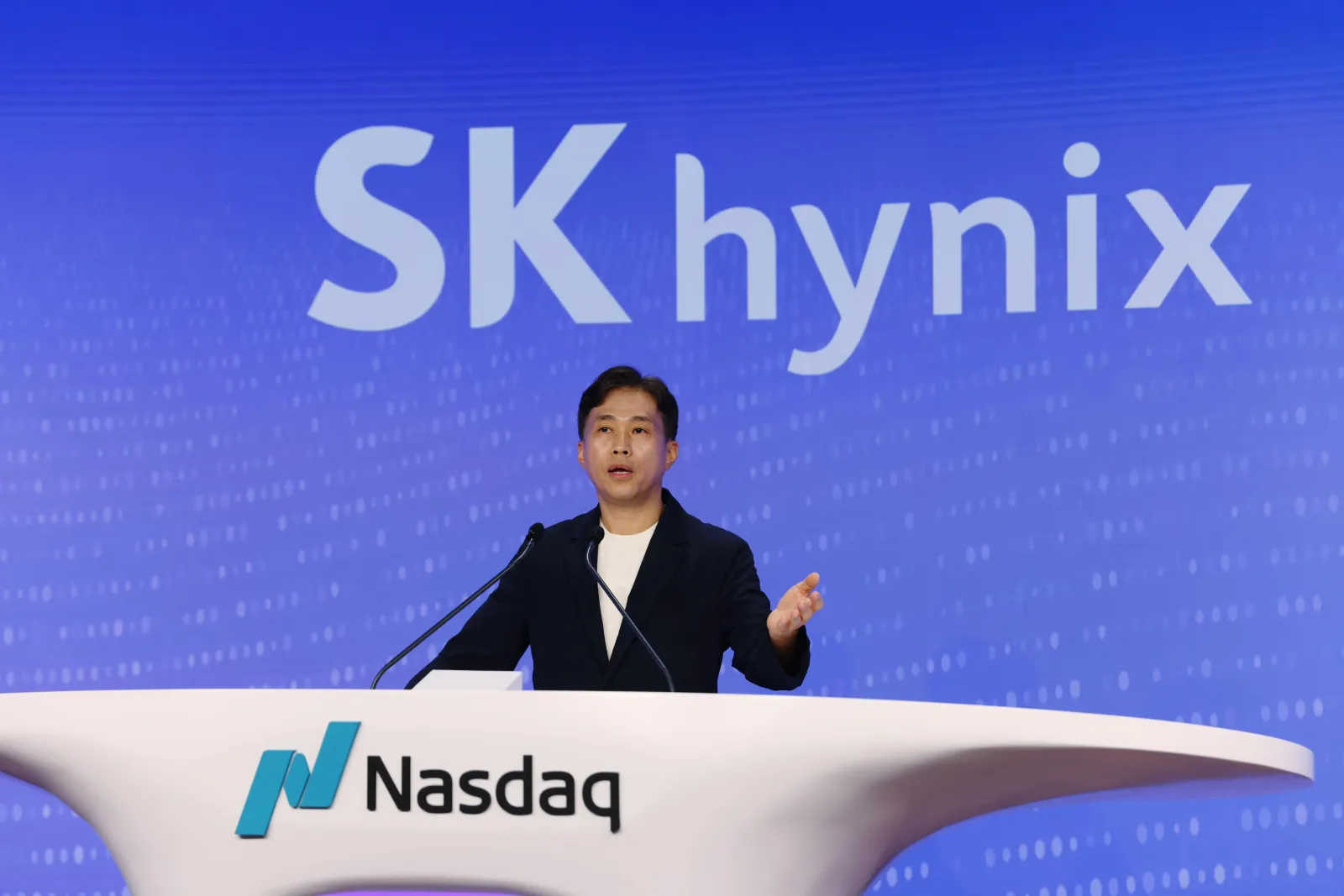
SK Hynix opens at $170, raises $26.5B, and tops foreign IPO records
In Friday's Wall Street debut, SK Hynix turns AI RAM demand into a $26.5B fundraising moment that rewrites comps.