
BTS turn Tottenham into a seven-year UK comeback with Army Bomb precision
The K-pop titan delivers engineered joy, while the show’s sponsorship cues reveal how labels monetize attention.
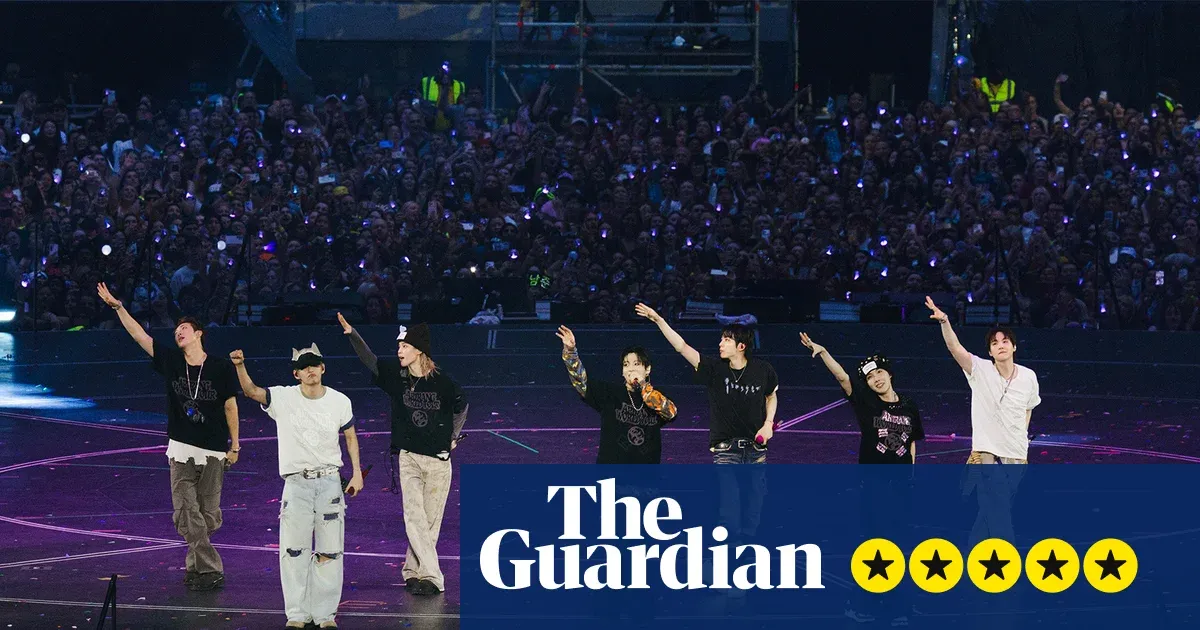
BTS returned to the UK for their first show in seven years at Tottenham Hotspur Stadium, staging a high-production set of hits for a London crowd and fans and cynics alike. For decision-makers, the spectacle is a live case study in how music labels, fandom platforms, and brand integrations convert mass attention into controllable, premium demand.
Tottenham Hotspur Stadium in London didn’t just host a BTS concert. It hosted a fully orchestrated attention machine, powered by pyro, in-the-round staging, and the crowd’s light-up "Army Bomb sticks" as BTS delivered an unbelievably enjoyable spectacle at their first UK show in seven years.
That seven-year gap matters because it reframes what the band’s team is really selling. This tour is the first since each member completed 18 months of compulsory military service following a three-year hiatus, and it comes with a new album called Arirang. In other words, BTS are not simply back on the calendar. They are returning with fresh output, returning with a capitalized fandom, and returning at a moment when the “live experience” is where the industry fights hardest for mindshare and margin.
It helps to understand why the show hits even the cynics. The Guardian’s framing leans into a tension that has always lived under pop spectacle: music as art versus music as industrial product. The reference point is the 2001 film Josie and the Pussycats, which is about America’s conflation of art and consumerism at the turn of the millennium. The body of the metaphor is not subtle. The film ends with “nefarious label execs” selling branded headsets that broadcast subliminal advertising messages directly into fans’ brains. Whether or not you take the dystopian satire literally, the movie captures a real concern: when production systems get efficient enough, they can look like they are optimizing everything, including your feelings.
And then BTS show up, lark their way through a catalogue that ricochets from hard rap to buttery pop, and complicate the accusation. On one hand, this is the biggest K-pop group in the world, with more than 40m albums sold, and a fanbase so fervent it is called the Army. That kind of scale is not casual. It implies a repeatable playbook: tight choreography, tight staging, tight audience cues, and songs engineered to land across multiple moods and tempos.
On the other hand, the show also makes the monetization mechanics visible, which is where executives should pay attention. The in-the-round staging is easy to dismiss as a ticketing tactic, giving more opportunity to sell expensive pit tickets. The blacked-out brands on water bottles onstage invite a different cynicism, too. The source even notes a likely interpretation: “clearly Fiji Water didn’t cough up sponsorship.” Then there are the “Army Bomb sticks.” If you are looking for a mind-control device, you might glance at a crowd lighting up in unison and think, are those mind-control devices?
But the most revealing detail is that BTS’s team uses these elements while delivering what reads as genuine “pure joy and astonishing versatility.” That blend is the real strategic point. Labels and promoters do not survive on vibes alone. They survive on systems that can repeatedly deliver a consistent emotional payoff at stadium scale, while still accommodating the realities of sponsorship, merchandising, and fan participation. In a live setting, that means the brand signals, the stage tech, and the audience choreography all coordinate into a single product.
There is also a regulatory and human-capital dimension hiding in plain sight. The tour follows each member’s 18 months of compulsory military service, described as part of a three-year hiatus. That matters because it shapes planning cycles, renews scarcity, and forces teams to build comeback arcs that feel both inevitable and special. For K-pop operators, the lesson is not only artistic. It is operational: when talent availability is constrained by law, the output schedule, marketing activations, and partner tie-ins need to be even more deliberate.
In London, the activations are described as “hailed,” including a London Eye takeover. That kind of mainstream placement is important because it expands the audience beyond the existing fandom without diluting the core show experience. It is also a reminder that the K-pop industrial complex is not just about artists and songs. It is about distribution of attention across media and physical spaces. Stadium shows are the headline act, but the surrounding campaigns build the demand that makes the stadium feel inevitable.
Second-order implications for decision-makers are immediate. If a boyband can turn a seven-year gap, a military-service hiatus, and a multi-genre setlist into both mass delight and a brand-forward audience ritual, then the competitive frontier for entertainment is shifting toward controllable, measurable experiences. The crowd is not just watching. They are performing along with the show. That is valuable because it is sticky, it is repeatable, and it turns spectatorship into collective participation.
The strategic stake for boards, label executives, promoters, and investor/operators in media is straightforward: live is no longer just “a performance.” It is a platform. BTS’ first UK show in seven years at Tottenham Hotspur Stadium shows how precision staging, fan instrumentation, and comeback narrative can scale joy while keeping monetization cues close to the surface. The question for everyone else is not whether you can sell tickets. It is whether you can engineer attention into something that feels like it belongs to the fans.
This story's Key Insights and Take-aways are locked.
Create a free account to unlock Executive Actions for one credit.
Register to UnlockAlways free for Executives Club members. Join the Club
More in Entertainment

Russell Brand's accuser 'bewildered and confused' as he denies 7 sex charges
The criminal case against the comedian is a live test of how media companies manage talent risk when serious allegations go public.

'It's a Magic Trick': Ballet Experts Say Rosalía's SNL Pose Is Impossible
Three ballet experts tell Rolling Stone Rosalía's gravity-defying SNL stillness shouldn't be possible - and why the debate is now part of the show.

Activision CMO: GTA 6 Will Boost Call of Duty, Not Bury It
Activision's top marketer says Rockstar's blockbuster will drive players back to consoles and into Modern Warfare 4, even as the company admits its recent strategy failed.