

Bubbles go noisy: Nature explains why some fizz louder, with high-speed cameras underwater
A new study uses high-speed imaging and underwater microphones to solve the sound puzzle behind why certain bubbles pop louder.
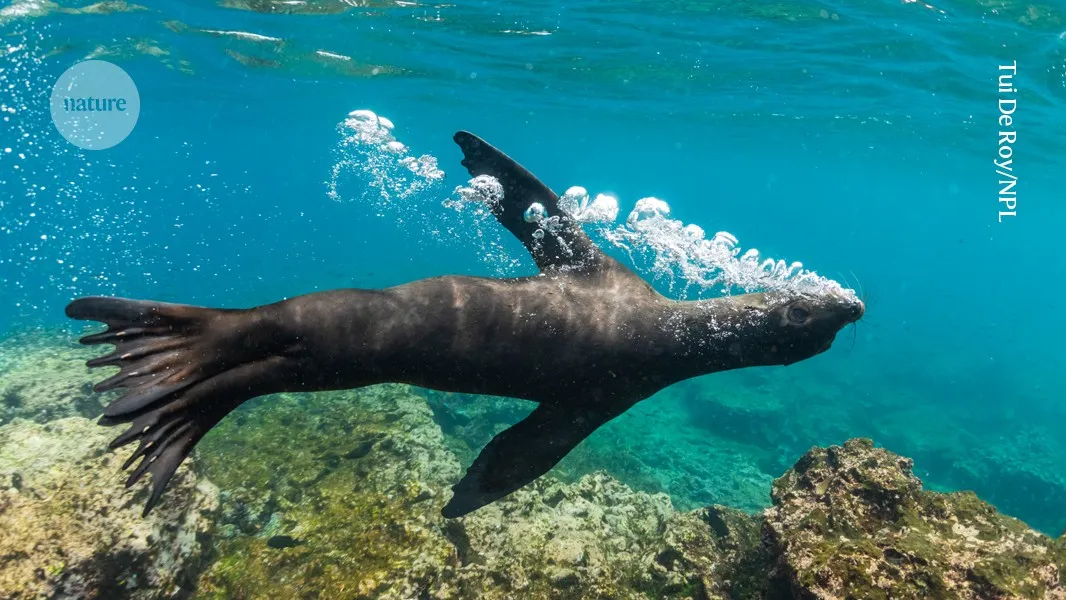
Nature published an investigation, online 31 July 2026, using a high-speed camera and underwater microphones to study a puzzle about bubbles. The findings matter for decision-makers thinking about sensing, communication, and any tech that depends on controlling bubble behavior and acoustic signatures.
Nature published an investigation online on 31 July 2026, doi:10.1038/d41586-026-02334-6, and it tackles a deceptively simple mystery: why some bubbles are louder than others. The researchers bring a high-speed camera and underwater microphones together specifically to investigate that puzzle about bubbles, pairing what happens visually with what can be heard.
If you are an operator, an engineer, or a board member funding “emerging physics” work, the headline-level takeaway is straightforward: bubble behavior is not just a passive byproduct, it is an acoustic event. The study’s core method is the clue. A high-speed camera lets scientists resolve rapid bubble dynamics that happen too fast for human observation. Underwater microphones then capture the sound produced, so the team can connect bubble “micro-moments” to the loudness you measure.
Why does that matter beyond academic curiosity? In real-world systems, bubbles show up in places that can be commercial, regulated, and financially material. Think of underwater environments, industrial processes, and any setup where gas-liquid interactions can change both performance and detectability. When bubbles make different amounts of sound, they also change how signals propagate, how equipment might be monitored, and how sensors might interpret events. In other words, loud bubbles can be a feature or a failure mode depending on the mission. The study matters because it is focused on explaining the physics behind an observable outcome, not just reporting that bubbles differ.
The “physics of fizz” framing in Nature also hints at a bigger point: bubbles are governed by multiple coupled effects, and loudness is not determined by one factor alone. A bubble is shaped by fluid dynamics at small scales, and its collapse or bursting can create pressure waves. Meanwhile, measurement itself imposes constraints: microphones and microphones-like sensing interpret sound through a particular bandwidth and sensitivity. By using high-speed camera footage and underwater acoustic recording together, the research design is trying to reduce the classic mismatch between what you can see and what you can measure. That combination is an operational best practice in experimental science: instrument the system in time-resolved ways so you can align cause and effect.
There is also a systems-incentives angle here, even though Nature is publishing a physics paper rather than a policy memo. Industries that care about acoustic signatures, environmental impacts, or underwater communication often face tradeoffs between performance and compliance. Regulatory framing in these domains tends to treat emissions and detection differently depending on context. For example, sound generated underwater can matter for monitoring and for environmental assessments, while bubble-related processes can be part of industrial throughput. If bubble loudness turns out to follow predictable physics, that can translate into better control strategies. Better control can then reduce surprises in operations, including those that trigger reporting obligations or incident investigations.
Second-order implications for boards and executives: if you are funding sensing or automation in wet or underwater environments, bubble loudness is not a nuisance detail. It can become a confounding variable in datasets, a trigger threshold problem in anomaly detection, or a calibration headache for systems that assume stable background conditions. Even if your product does not “generate bubbles” on purpose, bubbles can arise from plumbing, filtration, aeration, or mechanical mixing. The study’s approach implies a path to de-risking: measure both the dynamics and the acoustic output, then model the mapping. When that mapping exists, teams can tune processes to meet acoustic and performance constraints simultaneously.
For peers in similar roles, the strategic stakes are about predictability. Many technology programs fail not because the end goal is impossible, but because the underlying causal chain is too fuzzy. Nature’s report is explicitly about investigating a puzzle about bubbles, and it uses two complementary measurement tools. The message for decision-makers is that the next competitive advantage often comes from better instrumentation and better experimental design, which turns “mystery noise” into something measurable and, eventually, controllable. If bubbles can be engineered to be quieter or louder by understanding the physics, then the control knobs become real. That is the kind of technical clarity that funding committees and product leaders tend to reward.
Put simply: the study published by Nature on 31 July 2026 is not just about bubbles being interesting. It is about connecting what bubbles do in milliseconds to what microphones hear in the water. In systems where sound and fluid behavior intersect, that connection can become operational leverage, and leverage is what executives pay for.
This story's Key Insights and Take-aways are locked.
Create a free account to unlock Executive Actions for one credit.
Register to UnlockAlways free for Executives Club members. Join the Club
More in Science

Alaska's 1,580-foot tsunami had warning signs. Scientists just found them.
Rapid glacier retreat, heavy rainfall, and thousands of tiny tremors preceded Alaska's 1,580-foot tsunami, a warning for every coastal community in a warming world.

The rare mutation that lets high-risk brains dodge Alzheimer's
Scientists found a natural defense against protein buildup, opening a new path to preventive treatments.

3,000 steps a day may halve Alzheimer's decline, study finds
New research links a modest daily walk to less tau buildup and nearly half the cognitive and functional decline, even for those with early signs.