

Bubbles got a physics upgrade: scientists explain why some fizz louder than others
A Nature team uses high-speed cameras and underwater microphones to unravel how bubble sound changes in real water.
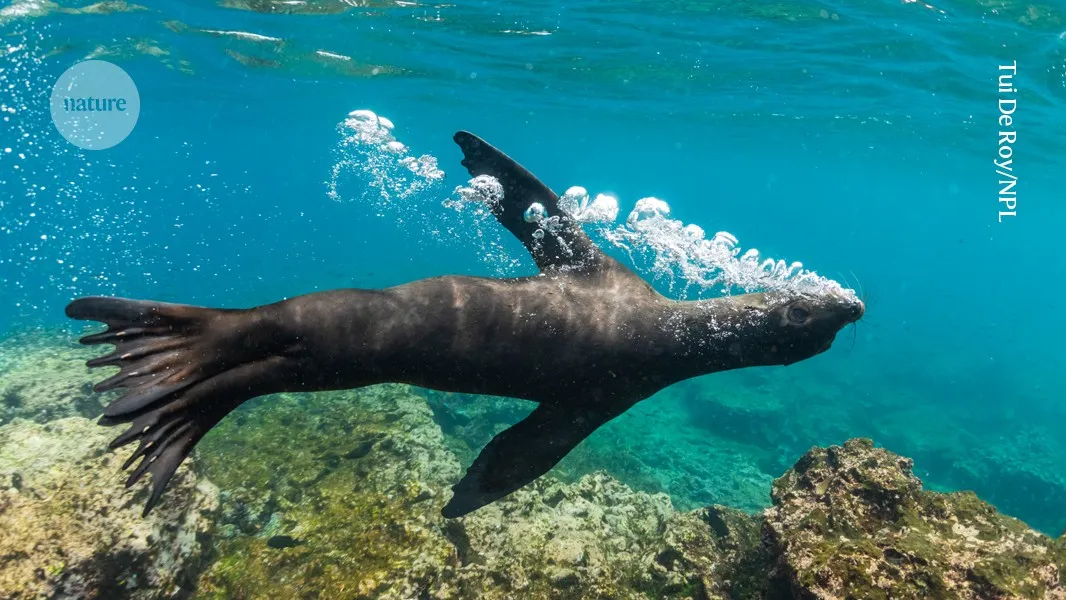
Nature reports new work using a high-speed camera and underwater microphones to study a long-running puzzle about bubbles. The consequence is practical: better control and prediction of bubble behavior can improve sensing, engineering, and safety in liquid environments.
If you have ever watched a carbonated drink fizz and thought, “Okay, but why does this sound so different from that?” you are not alone. Nature, in a report published online 31 July 2026 (doi:10.1038/d41586-026-02334-6), frames the problem as “the physics of fizz,” focusing on why some bubbles are louder than others. The headline puzzle is straightforward, but the underlying answer is not: bubble noise is not just about how much liquid is involved. It is about how bubbles form, evolve, and interact with their immediate watery environment.
To get past the guesswork, the researchers combine two measurement tools in the same study: a high-speed camera and underwater microphones. The first captures bubble dynamics in fine time detail, showing how the bubble changes second by second. The second listens for acoustic output while the bubble is doing its thing. That pairing matters. Without synchronized visuals and sound, you can observe that bubbles “look” one way or “sound” another way, but you cannot reliably link the cause to the effect. In other words, this approach turns a qualitative annoyance into a measurable, testable chain.
Why should executives care about bubble acoustics, even if your business is not making soda? Because bubbles are a universal ingredient in a lot of liquid systems. In industrial settings, bubble formation and motion show up in cooling, mixing, chemical processing, and many forms of gas-liquid separation. In field environments, bubbles can indicate changes in flow regime, contamination, or cavitation risk, depending on context. The sound dimension adds a new lever: audio signatures can sometimes be easier to monitor continuously than direct imaging, especially in harsh or confined environments. If you can explain what drives “loud” versus “quiet” bubbles, you can design better sensing, stronger diagnostics, and more robust control strategies.
Now zoom out to the governance and risk side. For companies that operate in regulated or safety-critical domains, the pressure is often less about curiosity and more about liability. If bubble-driven phenomena can contribute to performance degradation, equipment stress, or hazards, then being able to characterize them quantitatively becomes a competitive advantage and a compliance tool. Acoustic monitoring is also attractive because it can be integrated into existing instrumentation plans, but only if the physics is trustworthy. A finding like this, published in Nature and explicitly built around high-resolution observation plus microphone-based sensing, signals an effort to make bubble noise less of a black box.
There is also a second-order implication for boards and technology leaders: the difference between “we have a signal” and “we understand the signal.” In many sensing businesses and internal engineering programs, executives face the same frustrating reality. Early prototypes can detect something is happening, but they cannot reliably explain why it changes. That is where decision-making gets expensive. You end up running long trials, arguing over root causes, and struggling to set thresholds that hold up across real-world variability. By tying bubble loudness to measurable bubble behavior using camera and underwater microphones, this kind of work pushes the organization toward models that can generalize.
Even the date and the publication venue matter in the way capital allocators think. Nature reporting on this topic, with an explicit online publication date of 31 July 2026 and a DOI (10.1038/d41586-026-02334-6), indicates the research has passed a high editorial bar. That does not automatically translate to immediate commercial products, but it does raise the likelihood that other labs will replicate the measurement design and explore the mechanism. For peers building instrumentation, robotics for underwater systems, or fluid-processing tech, it is a prompt to reassess how much of their current bubble-related monitoring is empirical versus mechanistic.
The strategic stakes land on a simple executive question: can you reduce uncertainty in a liquid environment by listening better, observing more precisely, or both? This Nature piece argues for both. If louder bubbles correspond to specific, observable stages of bubble evolution, then microphones become more than a novelty sensor. They become a diagnostic window. That is the payoff your teams can aim for: fewer blind spots, faster troubleshooting, and control systems that react to physics rather than vibes.
This story's Key Insights and Take-aways are locked.
Create a free account to unlock Executive Actions for one credit.
Register to UnlockAlways free for Executives Club members. Join the Club
More in Science

Columnaris hits Brazilian fish farms as Flavobacterium appears for first time
Brazil becomes the new battleground for columnaris disease, expanding where a serious fish pathogen can show up.
Africa’s ghost lineage predates modern humans leaving, adding a third DNA contributor
A new “ghost lineage” in Africa suggests we interbred before modern humans left, reshaping the ancestry story.

AI finds 7 new quasar lens candidates in DESI data, published July 22
The seven gravitational lens systems could let astronomers study growing supermassive black holes without being blinded by quasars.