

Burnham promises biggest British politics shift in 40 years, but plan delivery unclear
In his first speech as Labour leader, Burnham pledges sweeping change, then leaves executives with unanswered execution questions.
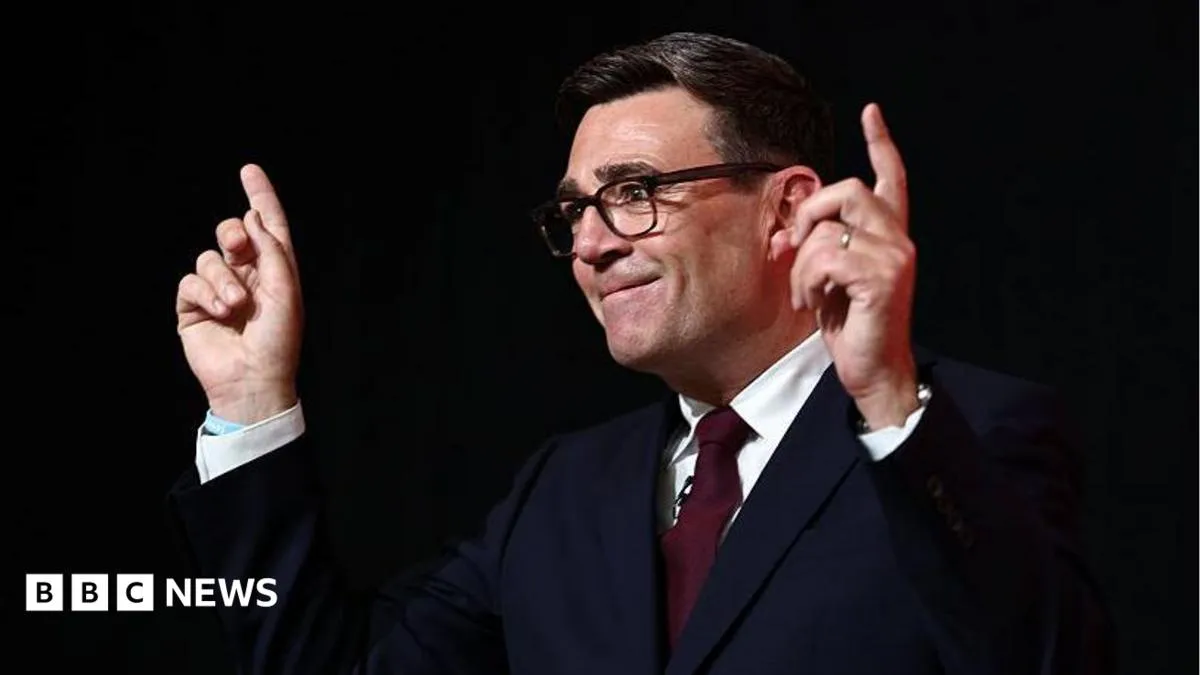
Keir Starmer? No, this piece is about Burnham, who promised the biggest change in British politics in 40 years in his first speech as Labour leader. The consequence is that leaders watching political risk get a promise of disruption without clarity on delivery.
Burnham opened his first speech as Labour leader with a promise that is hard to miss: the biggest change in British politics in 40 years. That is the kind of line that forces everyone from board members to policy watchers to lean forward, because “change” at that scale tends to ripple across regulation, public spending priorities, and the operating assumptions companies bake into budgets.
But the BBC note does not land on the promise alone. It flags that Burnham left questions about the plan to deliver it. That matters because executives do not just price politics as ideology. They price politics as timing, process, and enforceability. If the direction is loud but the mechanism is fuzzy, businesses face the uncomfortable mix of higher uncertainty and longer decision cycles. In other words, markets can tolerate a bold vision, but they struggle when “how” remains unaccounted for.
Zoom out to the political risk lens. In the UK, shifts in government leadership are not abstract. They can change the shape of regulation in areas like labor rules, competition policy, energy and infrastructure planning, and the government’s posture toward investment incentives. Even when a party’s first speech is more manifesto than law, it sets the tone for what comes next: internal party priorities, negotiations with stakeholders, and how quickly proposals move from speeches into legislation. The headline claim, “biggest change in British politics in 40 years,” signals an intention to rewire more than a single policy. That kind of pivot usually implies a broader agenda, which in turn increases the number of interfaces businesses need to monitor.
This is also where incentives get messy. In politics, leaders are rewarded for vision. In policymaking, delivery is constrained by institutions, parliamentary arithmetic, civil service capacity, and the need for workable policy details. Burnham’s approach, at least as described here, creates a natural tension: he can set expectations high early, but if the plan to deliver stays unanswered, critics, allies, and neutral observers have room to question competence before any concrete draft exists. For decision-makers outside government, that means you cannot simply map “promise equals policy.” You have to map “promise equals pressure,” meaning follow-on announcements, stakeholder consultations, and eventual legislative follow-through.
There is another second-order effect that executives should care about: volatility in planning. When a leader signals sweeping change and then leaves delivery details unclear, it can delay investment decisions. Boards may push management to build scenario plans, extend planning horizons, or re-run risk models. CFOs typically do not love uncertainty that cannot be quantified. Even if the overall direction is broadly supportive to a sector, the lack of specifics can affect procurement timelines, regulatory compliance schedules, tax treatment assumptions, or how quickly affected industries might need to adapt. The BBC’s framing suggests exactly that situation: a major promise, plus unanswered execution questions.
And the uncertainty is not only external. Within a party or governing ecosystem, early ambiguity can produce internal scramble. Different factions can interpret a sweeping pledge differently. That can slow alignment on policy design or create a tug-of-war over sequencing. For outside groups like trade associations, labor representatives, and large employers, the window between “vision delivered” and “policy drafted” becomes a period of intense lobbying and messaging. If delivery is not clarified quickly, those messages compete harder, making it even more important for businesses to track who has credibility and where policy detail is actually emerging.
So what is the strategic stake for executives watching from the sidelines? The BBC’s report essentially tells you this: you may be hearing “historic change,” but you are not yet hearing the operational blueprint. In that environment, the highest-value work is not reacting to the headline. It is preparing for the downstream timeline that typically follows a first leadership speech. That includes monitoring how the promised change translates into concrete priorities, which mechanisms are proposed to implement it, and how soon those proposals are likely to reach decision points.
Burnham has, according to the BBC, promised the biggest change in British politics in 40 years. The same BBC report simultaneously warns that the plan to deliver it still leaves questions. For decision-makers, that combination is the whole story: the magnitude grabs attention, but the unanswered delivery details determine how much uncertainty you carry into budgeting, compliance planning, and strategic moves over the next months.
This story's Key Insights and Take-aways are locked.
Create a free account to unlock Executive Actions for one credit.
Register to UnlockAlways free for Executives Club members. Join the Club
More in Politics

LA County: DOJ's 20,000 'noncitizen' voter list is 'unreliable,' includes U.S.-born
Preliminary review by Los Angeles County election officials finds errors in the federal list, raising the stakes for voter roll integrity ahead of November.

Trump's $1.5B Pentagon chip investment lands in North Carolina
A $1.5 billion defense infusion for North Carolina chipmaking signals a new era of Pentagon-backed reshoring - here's what it means for the industry.

Nigeria confirms first Ebola case in Abuja, a woman just off a Uganda flight
Health Minister Muhammad Ali Pate says the patient flew in from Uganda, putting Africa's latest outbreak on Nigeria's doorstep.