

Burry shorted Caterpillar after a 172% AI-fuelled surge. Analyst says it won't matter
The Big Short investor bets Caterpillar is overvalued, but one analyst argues the rally reflects a real shift in AI power spending.

Michael Burry, the famed investor from The Big Short, disclosed a short in Caterpillar after the stock jumped 172% over 12 months. One Freedom Broker analyst says the position is unlikely to move the shares because the price action is tied to a structural demand shift for AI data-center power.
Michael Burry just put real money behind a not-so-gentle thesis: Caterpillar is overvalued after an AI-linked stock rally. Fortune reports that Caterpillar climbed about 172% over the past 12 months and more than 77% this year alone before Burry disclosed his position. In his Substack post this week, Burry said, “Caterpillar jumped out at me,” and noted, “I have never shorted Caterpillar.” He then took the short at $1,060.98 per share on Tuesday.
That timing immediately mattered because the market moved. By Wednesday, Caterpillar shares closed down nearly 7%, and by Thursday they fell by as much as 4%, hitting their lowest point since mid-June at about $949 per share. Burry’s trade has gotten attention because it is unusual for him, and because it leans into his broader warning that markets can get carried away by hype. But the central question now is whether this bet is actually about AI froth, or about a durable business theme that investors are pricing in.
Here is the disagreement, and it is the whole story. Sergey Glinyanov, a senior analyst at Freedom Broker who covers Caterpillar, told Fortune that Burry’s short position is “not likely to affect the stock at all.” Glinyanov’s argument is straightforward: Caterpillar’s share price is not surging because investors are blindly chasing AI headlines. It is surging because the company is benefiting from what he calls a “structural theme” in infrastructure spending. Specifically, he points to growing demand for on-site power systems as AI data centers look for alternatives to an aging electrical grid that cannot always keep up with soaring energy needs.
If that sounds niche, it is also why this debate is so dangerous for anyone trading the theme. The thesis is that developers building bigger AI campuses are increasingly seeking diesel and natural-gas generator power systems to secure reliable power, and Caterpillar sells those systems. In Glinyanov’s view, Caterpillar’s positioning lets it capture a larger share of that spend. This is the part that turns “AI bubble” into “infrastructure conversion,” at least in the way the market is interpreting it. Burry has argued markets are in an AI bubble before, including in May when he said the market was “feeling like the last months of the 1999-2000 bubble.” But Glinyanov is saying the price action reflects something more tangible than sentiment.
The trade also sits inside a broader pattern of how investors express AI exposure without buying the chipmakers. Fortune notes that as AI has propelled chipmakers like Nvidia to record highs, investors have also lifted shares of other businesses that may benefit from hyperscalers and developers building out data centers. GE Vernova, which specializes in power generation, and Ohio-based Vertiv, which provides advanced cooling systems, are cited as popular “AI revolution” vehicles. Their shares are up more than 60% year-to-date for GE Vernova and up 70% for Vertiv over the same period. That context matters because it frames Caterpillar as another lever on the supply chain for AI scale-up, not as a random proxy.
Even so, valuation is the battleground. Fortune reports that Caterpillar’s price-to-sales ratio is now at its highest level in three decades, and Burry’s short is tied to the view that the run-up has made the stock overvalued. In other words, even if the theme is real, investors can still overpay for it. Meanwhile, Glinyanov’s pushback does not deny Caterpillar’s premium valuation. He argues the traditional business of selling and renting heavy machinery remains healthy, citing improving dealer inventories and holding-up retail demand. He also points to first-quarter results: sales jumped 22% year-over-year to $17.4 billion and beat Wall Street expectations.
But the structural theme comes with a condition, and it is the one that keeps this from being a clean “Burry is wrong” story. Glinyanov says Caterpillar’s premium valuation ultimately depends on the biggest AI companies continuing to spend aggressively on new data centers and power infrastructure. His firm’s price target for Caterpillar is $910, which he describes as indicating a “potential near-term pullback.” He also warns about what would happen if hyperscalers pull back. In his words to Fortune, deterioration in hyperscalers’ fundamentals, “particularly cash flow generation or debt burden,” could force a meaningful pullback in valuation multiples. That is the real operating lever under the stock, and it is also what makes Burry’s bet worth tracking beyond the headline.
For executives and board members at firms tied to AI infrastructure, the second-order takeaway is that “AI exposure” is no longer one trade, it is a stack: chips, power generation, cooling, and the physical equipment that supports reliability. If the market continues to believe AI spend is constrained by grid capacity and time-to-power, Caterpillar’s narrative can persist even when a short headline splashes across feeds. If hyperscalers slow capex or their financial profiles worsen, the exact same stack becomes vulnerable quickly, because premium multiples tend to compress fast when expectations slip. The Burry-versus-analyst fight, in other words, is less about whether AI exists and more about who controls the timing of spending and the pricing of certainty.
This story's Key Insights and Take-aways are locked.
Create a free account to unlock Executive Actions for one credit.
Register to UnlockAlways free for Executives Club members. Join the Club
More in Business
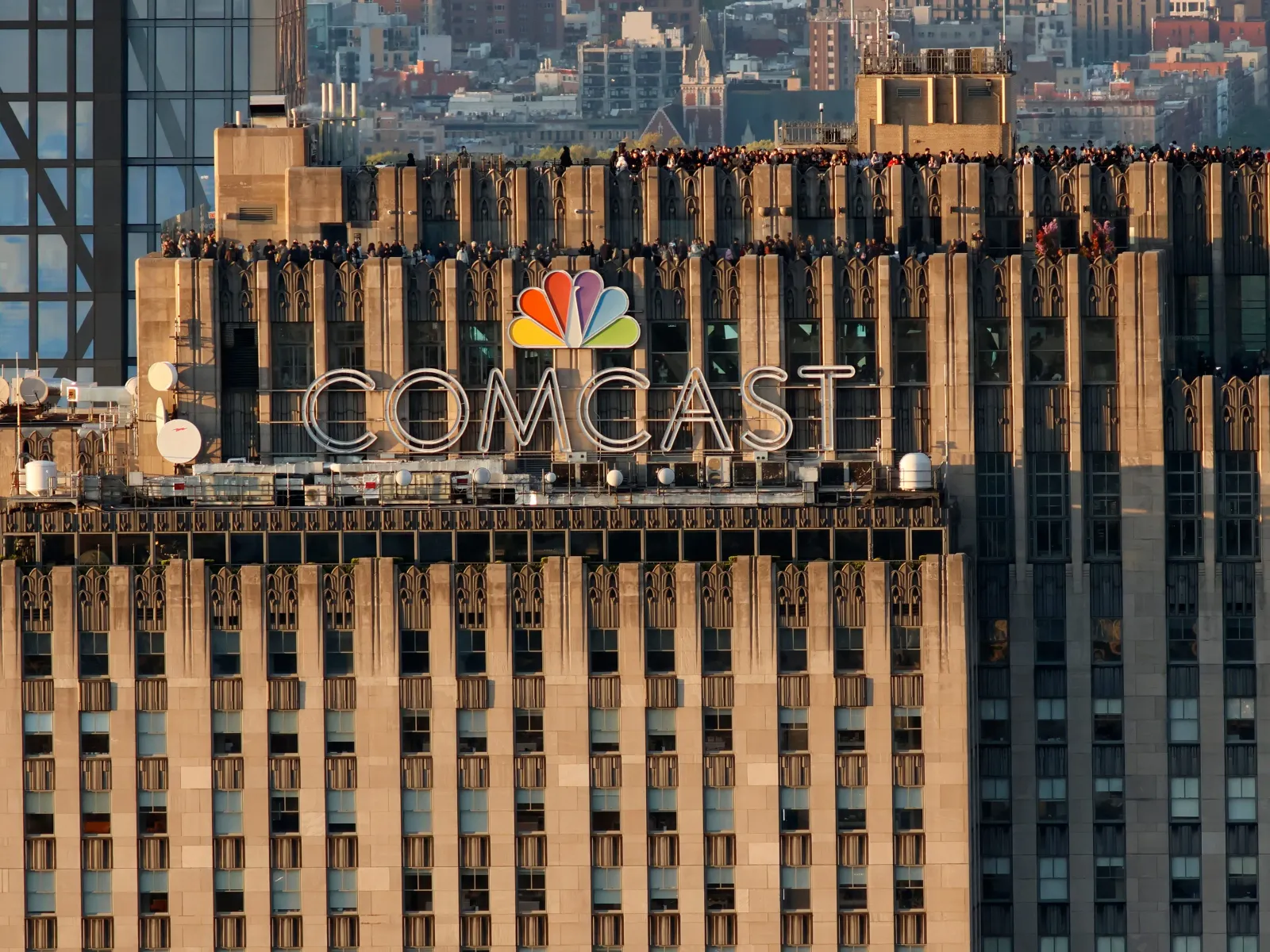
Comcast shares jump 25% as it plans to split NBCUniversal and Sky
The tax-free spin-off could reshape focus, funding, and competition across media and tech for years.

Bungie cuts most Destiny 2 staff as Sony says Marathon still matters
Herman Hulst confirms layoffs affecting most Destiny and some Marathon teams after Bungie admits Destiny fell short.

SK Hynix jumps 11% after seeking up to $29.4B in Nasdaq listing
The chip giant filed for a Nasdaq listing plan that could raise $29.4 billion, instantly reshaping investor expectations.