
BYD’s plug-in hybrid surge: 1 in 7 Germany registrations in May
BYD logged 6,169 plug-in hybrid registrations in May, up 232% year-on-year, reshuffling Europe’s biggest auto battleground.
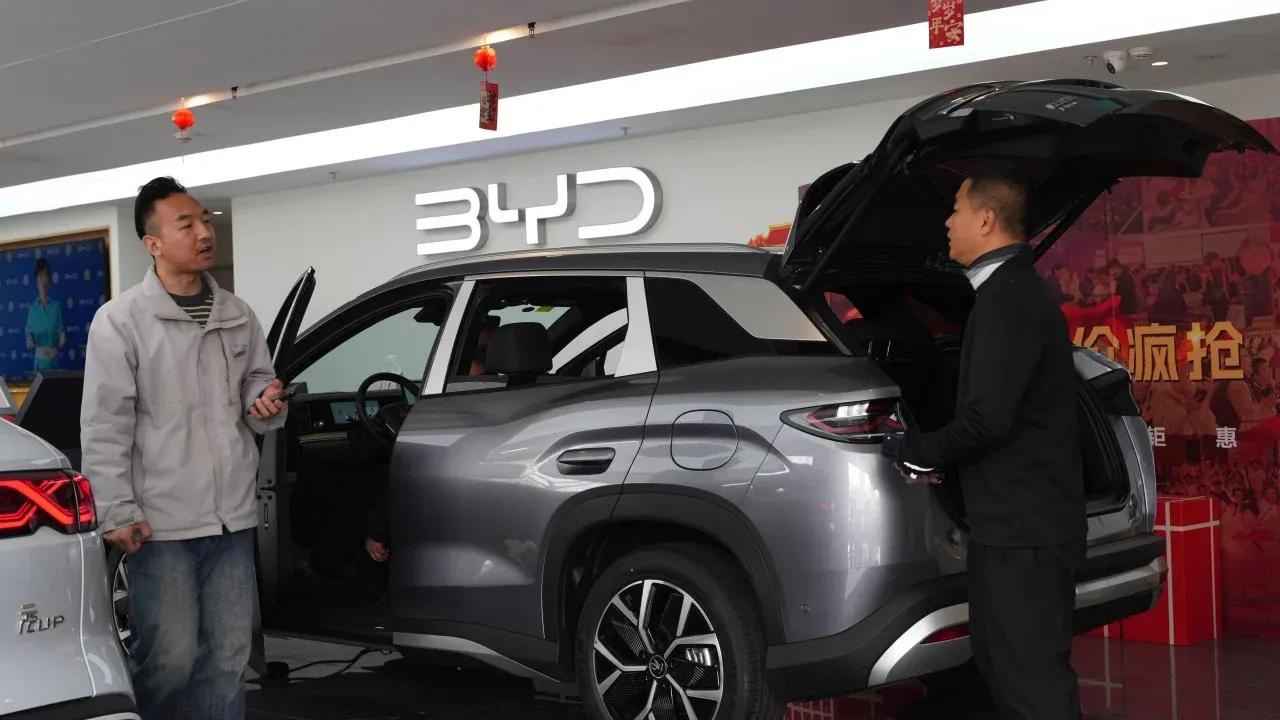
BYD says it has taken Germany’s plug-in hybrid crown, with May registrations jumping 232% year-on-year to 6,169 vehicles. The move matters because it changes competitive math for incumbent automakers in Europe’s largest car market.
BYD landed one out of every seven plug-in hybrid vehicles registered in Germany in May, using a surge that is starting to look like a market re-ranking rather than a normal brand uptick. The Chinese automaker registered 6,169 vehicles in Germany in May and held a 2.6% share of Germany’s new-car registrations, according to data from the country’s Federal Motor Transport Authority. From a year earlier, BYD’s registrations in Europe’s biggest auto market rose 232%. That is the headline number the incumbents have to explain to their boards: not only growth, but growth so fast it is pulling share toward a non-traditional challenger.
The plug-in hybrid slice is where the story gets sharper. Of BYD’s May registrations in Germany, 4,290 were plug-in hybrids. The model driving most of that momentum was the Atto 2 DM-i, which accounted for 2,113 registrations, making it the top-selling plug-in hybrid in the dataset referenced in the report. Put differently, this is not a “treat yourself to a niche” moment. The bulk of BYD’s German plug-in hybrid volume is concentrated in one platform and one product line, and that concentration is exactly what disruptors do when they find a winning configuration.
To understand why this matters beyond a single month, you have to look at what Germany and Europe reward. Germany is Europe’s largest auto market, so share gained there tends to echo across the region, not just because consumers talk, but because manufacturers and their supply chains plan capacity and production around where demand shows up. When one out of seven plug-in hybrids in a market is coming from a challenger, it pressures the pricing, incentive strategy, and inventory management of everyone else selling into the same category.
There is also the category itself to consider. Plug-in hybrids sit in a complicated space: they blend an internal combustion engine with electric operation, and they tend to become a bridge product for buyers who want some electrified driving without going all the way to a pure battery electric vehicle. That bridging function can be powerful during transition periods when customers, fleets, and regulators are still sorting out charging access, total cost of ownership, and policy direction. If BYD is winning that bridge segment in Germany, it suggests the company is meeting real buyer expectations quickly enough to show up in registration data.
The report’s numbers imply a competitive squeeze, and the squeeze can be second-order. Incumbent automakers that have historically relied on brand gravity and dense dealer networks are now facing a challenger whose volume is growing fast enough to matter at the category level. Board and executive teams should also watch how this affects planning assumptions. When a newcomer posts 6,169 registrations in a single month and sustains a 232% year-on-year increase, the question for peers is not “Will BYD sell cars?” It is “How much of the addressable plug-in hybrid demand in Germany is being recast, and what does that do to forecasts, margins, and factory utilization?”
Strategically, BYD’s message in the SCMP report is that it is not merely expanding. It is claiming leadership in a specific powertrain segment, and it is using measurable momentum in the market that counts most for European auto economics. For executives at other automakers, the stake is credibility of their own transition plans. If the Atto 2 DM-i is the top-selling plug-in hybrid by registration counts in May, that raises the bar for what incumbents need to offer in the same segment, on the same timeline.
For decision-makers, the practical takeaway is that Germany’s registration data is not abstract. It is a real-time feed into how markets allocate attention, subsidies and consumer interest, and ultimately how companies justify investments in powertrain roadmaps. BYD’s May performance, with 4,290 plug-in hybrids out of 6,169 total registrations and the Atto 2 DM-i leading with 2,113 registrations, forces a tough board-level conversation: how fast can the rest of the industry respond, and what happens to category leadership if the challenger keeps scaling at a 232% pace year-on-year?
This story's Key Insights and Take-aways are locked.
Create a free account to unlock Executive Actions for one credit.
Register to UnlockAlways free for Executives Club members. Join the Club
More in Business

SpaceX IPO: Wedbush calls a Tesla merger “holy grail,” Morningstar pegs $63 fair value
Trading starts June 12 at $135, but analysts are split over a $72-per-share “option premium” on orbital AI dreams.

Microsoft SkillOpt upgrades AI agent skills without changing model weights
Open-source framework turns markdown skill files into optimizable objects, boosting accuracy while keeping frozen model parameters untouched.

Britain’s regulator greenlights Novo Nordisk’s weight-loss pill on Thursday, needle-free win
Approval by Britain’s medicines regulator adds a new oral option and strengthens Novo Nordisk’s early lead versus Eli Lilly.