
ByteDance weighs Iluvatar AI chips talks to reduce Nvidia dependency
Talks with Shanghai GPU maker Iluvatar CoreX signal ByteDance is shopping for supply resilience beyond Nvidia.
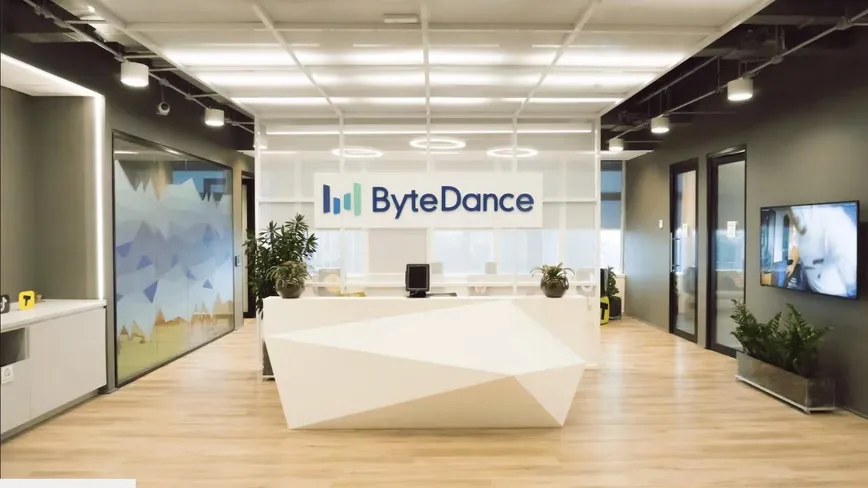
ByteDance is in talks to buy artificial-intelligence chips from Iluvatar CoreX, a Shanghai-based GPU maker, according to people familiar with the discussions cited by Reuters. The move highlights how far TikTok and Douyin’s owner is willing to go to lessen dependence on Nvidia.
ByteDance is in talks to buy AI chips from Shanghai-based GPU maker Iluvatar CoreX, according to people familiar with the discussions cited by Reuters. The point is not just procurement. It is about reducing how tightly the owner of TikTok and Douyin depends on Nvidia, the dominant supplier for much of the AI compute stack.
Why this matters fast: if you run AI workloads at scale, your “chip strategy” is really a strategy for continuity. GPU availability affects training timelines, product iteration speed, and the cost of running inference. Even when vendors do not publicly say “we are restricted,” supply and export realities can quietly tighten the screws. So when ByteDance explores alternatives like Iluvatar CoreX, it is effectively testing whether it can keep AI moving if the Nvidia relationship gets more complicated.
The Reuters-cited detail that Iluvatar CoreX “until recently sold almost entirely to government buyers” adds another layer for decision-makers. Government customers typically come with different procurement cycles, security requirements, and performance expectations than commercial AI. For ByteDance, bringing an AI chip vendor that has leaned heavily toward government use into a consumer-scale AI deployment is a shift. It also raises the question of how quickly Iluvatar CoreX could support the specific operational demands of a company like ByteDance, which runs large-scale AI for content ranking, recommendations, and other internal systems.
This is also a story about incentives, not just chips. ByteDance’s management has to balance performance and reliability against the political and supply-chain exposure that comes with relying on a single global supplier. Nvidia’s ecosystem has the benefit of maturity. But maturity comes with concentration risk. If regulation, licensing, export controls, or supply allocation tighten anywhere along the chain, the operational impact can land on ByteDance long before the market fully reacts.
And that brings in the broader regulatory backdrop that executives in AI and data centers live with every day. AI chips are strategic infrastructure, and regulators tend to treat them that way. Even when restrictions are not directly aimed at a specific company, they can ripple through manufacturing capacity, shipping lanes, and the availability of certain parts or tooling. For companies with global ambitions, including ByteDance’s platforms, the risk is not only technical. It is jurisdictional.
There is a second-order dynamic here too: procurement conversations like these often signal internal debates about optionality. Optionality is the quiet superpower for boardrooms. It means you are not forced to accept a vendor’s terms or timing because alternatives are underdeveloped. By speaking with Iluvatar CoreX, ByteDance is exploring whether a different supplier could reduce bargaining vulnerability. That matters at the board level because AI compute spend is not a rounding error. It is one of the largest controllable levers in AI capex and opex.
For other AI-heavy companies in similar positions, the implication is uncomfortable in the best possible way: if ByteDance is actively looking to lessen reliance on Nvidia, then “single-vendor dominance” is not a long-term strategy, even for players with huge resources. Competitors watching this would take note that supply diversification is becoming a core operational discipline, not a contingency plan. The companies that treat chip sourcing, integration, and workload portability as a continuous program will have an edge when constraints hit.
So while the Reuters description is specific to talks between ByteDance and Iluvatar CoreX, the bigger stake is strategic resilience. If ByteDance succeeds in incorporating AI chips from a different supplier, it could stabilize its roadmap and reduce exposure to Nvidia-linked bottlenecks. If it struggles, the episode still tells the market something useful: ByteDance is actively working to avoid a future where its AI plans are hostage to a dependency it cannot fully control.
This story's Key Insights and Take-aways are locked.
Create a free account to unlock Executive Actions for one credit.
Register to UnlockAlways free for Executives Club members. Join the Club
More in Technology

Nvidia's $89B data center quarter: the 9 companies cashing in
The AI buildout is minting fortunes beyond GPUs, and memory, cloud, and cooling suppliers are riding the same wave.

A YouTuber dissected the iPhone Duo and thinks he found crackgate's cause
CuriousHagi's teardown of Apple's foldable reveals a gear-like hinge that may explain why screens crack in the same spot within hours.

Google quietly links your phone number to every Android account on your SIM
Adding a SIM now ties your phone number to all Google accounts - and future accounts inherit it. Here's the security and privacy stakes.