

CAL FIRE tests five autonomous drones deploying 500-1,000 gallons of foam on July 15
Wildfire season is nearly year-round. Now agencies and XPRIZE backers are testing drones to crush small fires early.

CAL FIRE ran a field test on July 15 using five autonomous drones that worked together to deploy between 500 and 1,000 gallons of foam. The trials, supported by FireWERX and Seneca, are part of broader efforts to validate drone firefighting as wildfire risk stretches across much of the US.
California and Alaska have become testing grounds for a firefighting idea that sounds small until you picture the clock ticking: drones that can spray water and fire retardants might stop wildfires early, before they grow into disasters. This summer, that concept moved from concept and demos into field testing, as wildfire seasons in much of the United States are getting transformed into a nearly year-round risk. The point is not to replace huge firefighting aircraft. It is to help crews hit the smallest, most time-sensitive fires faster, when containment has the best chance of working.
On July 15, CAL FIRE, also known as the California Department of Forestry and Fire Protection, ran its own demonstration involving five autonomous drones working together to deploy between 500 and 1,000 gallons of foam for suppressing fires, according to TV station KPMH. That number matters because it signals scale for the segment. Most drones are significantly smaller than crewed aircraft and have shorter flight ranges, so they cannot deliver massive payloads to remote wildfires in the same way large airtankers can. But the operational question is different: if drones can reach early trouble spots and apply suppressants quickly, they can potentially prevent the “small fire becomes large event” sequence that drives cost, evacuations, and long-term damage.
This is why companies, fire agencies, and the organizers of the $11 million XPRIZE competition are testing drone firefighting as an early-response tool. The $11 million prize is a big neon sign that says this is not just about building hardware. It is about proving performance under messy, real-world conditions where the tradeoffs are brutal: limited range, shorter flight times, sensor reliability, and the need to coordinate with people already in command on the ground. For operators and decision-makers, the hardest part is usually not a single success. It is repeatability. Can drones work like a system, consistently placing the right suppressant in the right place before the fire changes behavior?
The CAL FIRE trial did not happen in a vacuum. The demonstration was organized with the help of FireWERX and the California-based company Seneca, which is making the drones commercially available starting in 2026. That commercial timeline matters for procurement and budgeting cycles. Even if pilots and competitive tests generate excitement, agencies and private partners still need a procurement path, maintenance planning, training, and integration with existing incident management workflows. If Seneca is targeting 2026 availability, that implies the testing and validation efforts are being shaped around what can realistically be deployed next, not just showcased.
Zoom out and you can see the broader market and regulatory shape of the problem. Wildfires are no longer a single seasonal weather event for much of the US, so the demand signal is steadier than it used to be. That changes how boards and investors think about wildfire tech. A one-off seasonal procurement is cyclical. A near-year-round risk environment is recurring. Still, drones for firefighting sit in a regulatory and operational gray zone that is tough to navigate: they have to operate safely, coordinate with responders, and deliver effective payloads without turning airspace into another hazard. The source does not spell out permits or approvals from regulators, but the presence of public agencies running field tests strongly suggests that the validation phase is being treated like a prerequisite to broader adoption.
There is also a strategic reason these pilots focus on smaller fires. In firefighting, response speed is often everything, but bigger assets are typically slower to mobilize and harder to position. Drones, with their smaller size and shorter range, are not designed to “outairlift” airtankers. They are designed to shorten the time between detection and suppression for the early phase of an incident. If that works, the payoff could be outsized: fewer fires reaching destructive stages, reduced resource strain on crews and aircraft, and potentially lower downstream costs for rebuilding and mitigation.
For executives and boards, the second-order implication is that this is likely to drive a new type of spending: less purely reactive, more “readiness and response systems.” If agencies can justify early suppression capabilities, budgets can shift toward faster dispatch hardware, training, and integration rather than only funding last-mile emergency actions. The challenge for vendors is to treat firefighting outcomes as measurable, not marketing. Between coordinated drone operations, foam deployment effectiveness, and a clear commercialization target of 2026 from Seneca, the industry is moving toward proof points that decision-makers can take to their procurement committees.
In the end, the story is not “drones will replace wildfire response.” The story is that drones might become the first domino in stopping wildfires from escalating, and CAL FIRE’s July 15 trial is a concrete early signal. When wildfire season behaves like nearly year-round risk, the winners are the systems that compress reaction time and make early response practical. That is the stake, and it is why $11 million competitions, public agency tests, and commercialization roadmaps are converging right now.
This story's Key Insights and Take-aways are locked.
Create a free account to unlock Executive Actions for one credit.
Register to UnlockAlways free for Executives Club members. Join the Club
More in Business

Uber buys Delivery Hero for nearly $15B, vaulting to top food delivery outside China
The deal doubles Uber's dual-services footprint and pushes a ride-and-eats bundling play into 50 more markets.

Epic and Google drop settlement bid, forcing rival Android app stores by July 22
Google told the court it is ready to carry third-party app stores starting Wednesday, July 22.
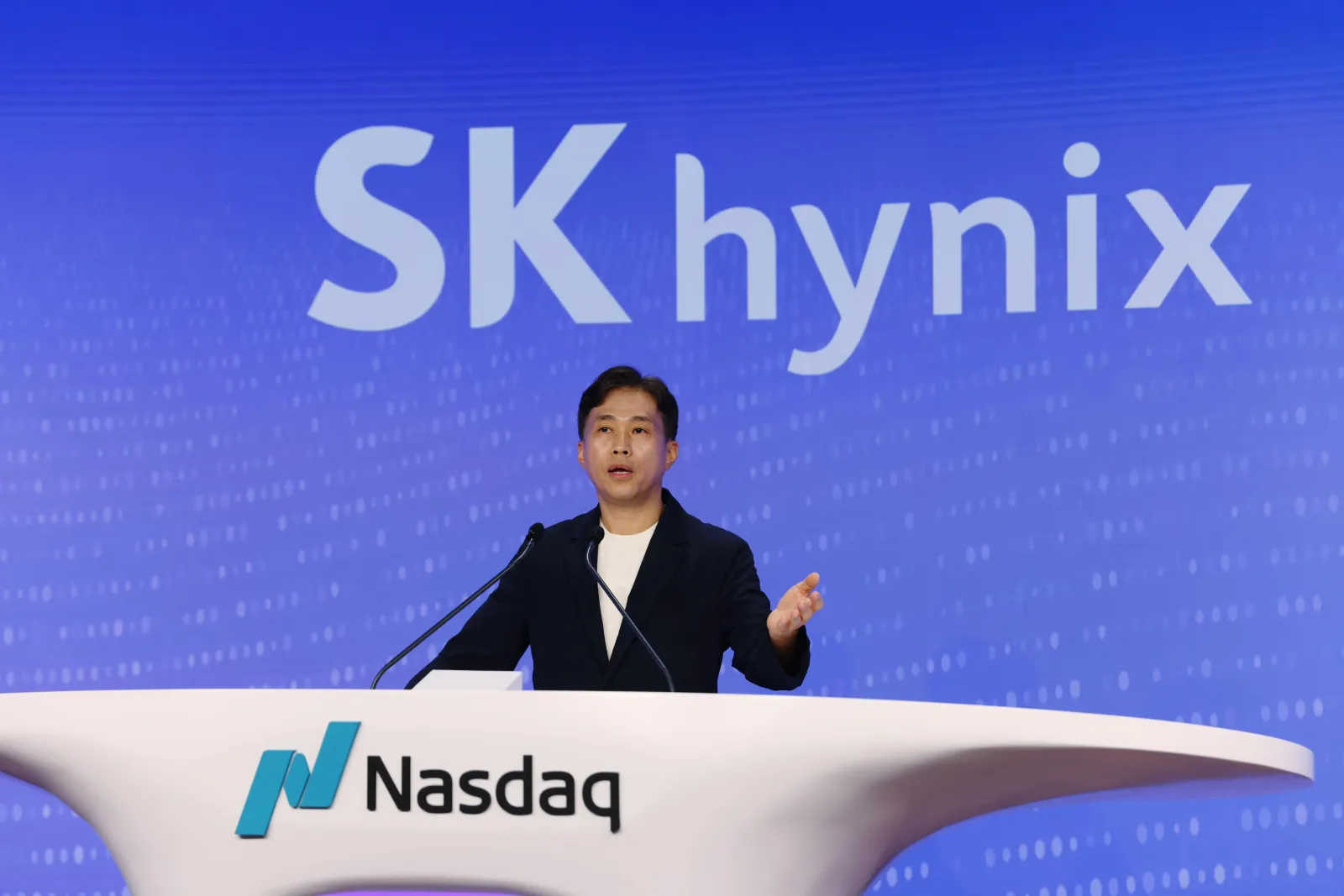
SK Hynix opens at $170, raises $26.5B, and tops foreign IPO records
In Friday's Wall Street debut, SK Hynix turns AI RAM demand into a $26.5B fundraising moment that rewrites comps.