
Caliskan’s 55% silver “missing” is back in the sun, after July 2026 modeling
New simulations with non-equilibrium physics suggest the Sun actually contains 55% more silver than measured.
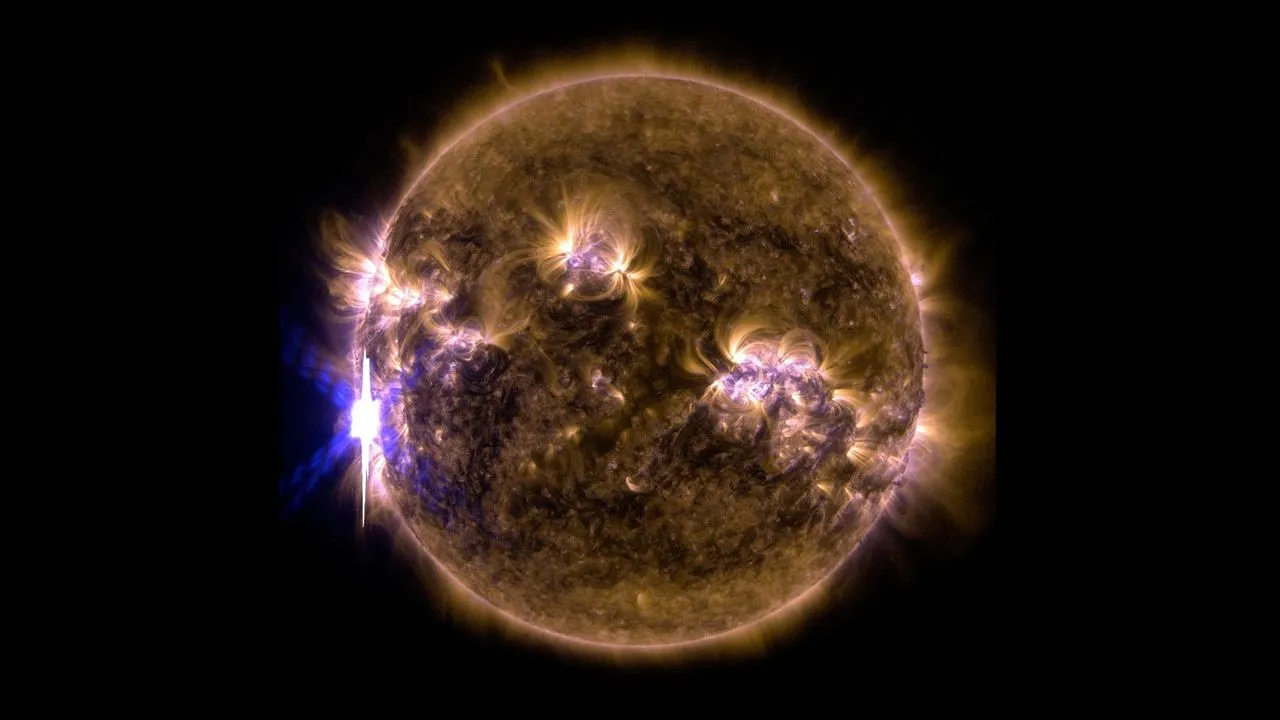
Sema Caliskan, a postdoc at the University of Liège, and colleagues published research in Astronomy & Astrophysics in July 2026 arguing the Sun’s “missing silver” was misread due to non-equilibrium effects. For decision-makers who track how scientific models get interpreted, it’s a reminder: the measurement mismatch can be physics, not a new anomaly.
Scientists studying the Sun have long reported a weird mismatch: when they analyze the Sun’s outer layers, they seem to find significantly less silver than expected. Now, newly published research says the missing silver may not be missing at all. Instead, the Sun may hold 55% more silver than astronomers have measured, calculated through computer simulations that include non-equilibrium effects for the first time for a silver atom.
This is where the plot pays off. Caliskan and her colleagues could not “visit the Sun” directly, but they built simulated Suns with different silver content and asked a specific question: would the Sun’s spectral lines still look like the low-silver measurements if the Sun really had high silver? Their answer, published in Astronomy & Astrophysics in July 2026, is that non-equilibrium physics can make a high-silver Sun look spectrally like a low-silver Sun. In other words, the silver is hidden in the way the light is absorbed, not necessarily in some distant hiding place.
If you are thinking, “Why are we even looking for silver in the Sun,” you are in good company. The Sun is dominated by lightweight hydrogen and helium, which make up 98.5% of its mass. Silver is only a tiny fraction of the remaining 1.5%, along with trace heavy elements like iron and copper. But those trace elements are not background noise. They act like historical markers. Silver is thought to be formed when dying stars explode as supernovas. So when astronomers detect silver in stars, they can use it to trace how heavy elements are produced and redistributed over cosmic time.
That matters because silver also shows up in utterly ancient meteorites called CI chondrites. These meteorites formed from the same primordial matter that created the Sun, about 4.6 billion years ago. The logic is straightforward: if the Sun and CI chondrites share the same early starting material, scientists expect silver levels in the meteorites to line up with what they infer from the Sun. Astronomers measure silver in the Sun from afar using the Sun’s spectral lines. As sunlight travels outward, it passes through the Sun’s outer layers, where atoms absorb light at specific wavelengths. The resulting spectrum has dark absorption lines, and different elements carve distinct “fingerprints” into that light.
The “missing silver” mystery is that the fingerprints appear to imply far less silver in the Sun than CI chondrites would indicate. That discrepancy had been a source of confusion in the Sun’s history. Caliskan and her colleagues suspected the issue might not be the Sun’s composition at all, but how the spectroscopy was being modeled. The challenge: building accurate simulations of atoms under stellar conditions is messy. When light strikes an atom, it does not interact in a simple, immediate equilibrium state. There are intricate non-equilibrium effects inside the atom that can alter how it absorbs light, which then changes how astronomers reconstruct element quantities from spectral fingerprints.
Previous modeling attempts had limited success partly because they were relatively simple, and past models had not accounted for many of these tricky non-equilibrium effects. Simulating them is far easier said than done because they are messy and complex, and they vary significantly from atom to atom. The key claim in this new work is that no known scientists had ever tried to simulate a silver atom with non-equilibrium effects before Caliskan and the team took on the challenge. They used the Tetralith supercomputer in Linköping, Sweden, and ran simulations to see whether non-equilibrium effects could reconcile high actual silver abundance with low inferred spectral signals.
According to their model, the Sun holds 55% more silver than astronomers have measured. It is not a perfect match to CI chondrites, but the gap is close enough for investigators to rule out any extraordinary cause. The implication is subtle and powerful: the missing silver might have been “right there” in the Sun all along, occluded from astronomers’ view by tricks of physics. That is exactly the kind of resolution that keeps scientific instruments honest without forcing scientists to invent new cosmic explanations when the error is in the modeling assumptions.
For executives and investors tracking high-precision measurement, this is not just an astronomy story. It is a case study in how measurement pipelines can break at the interface between “real-world physics” and “how the model interprets the data.” In fast-moving research ecosystems, credibility often hinges on whether mismatches are treated as signals of new phenomena or artifacts of incomplete physics. Here, the July 2026 publication argues for the latter. The second-order effect is that similar element-abundance studies across different stellar types may need upgraded modeling layers, especially where non-equilibrium effects can matter.
Caliskan and colleagues say the next step is to use the method to simulate other types of stars. If the approach holds, it could revise how scientists reconstruct elemental histories across the Milky Way, because heavy-element distributions depend on accurate spectral interpretations. And if you are in any role that funds, governs, or operationalizes scientific measurement, the takeaway is simple: when the data and the model disagree, the “missing piece” is often not an exotic new thing. It is the part of physics you did not model closely enough the first time.
This story's Key Insights and Take-aways are locked.
Create a free account to unlock Executive Actions for one credit.
Register to UnlockAlways free for Executives Club members. Join the Club
More in Science

1000 mathematicians pledge to shun AI in their research
A thousand researchers are publicly refusing AI tools, and the reason is a warning for every company betting on AI-generated answers.

Alaska's 1,580-foot tsunami had warning signs. Scientists just found them.
Rapid glacier retreat, heavy rainfall, and thousands of tiny tremors preceded Alaska's 1,580-foot tsunami, a warning for every coastal community in a warming world.

The rare mutation that lets high-risk brains dodge Alzheimer's
Scientists found a natural defense against protein buildup, opening a new path to preventive treatments.