
Cambridge professor transcribes Alan Turing’s final-year short story in richer detail
A newly transcribed handwritten story from Alan Turing’s final year reframes his legacy and what scholars can verify.
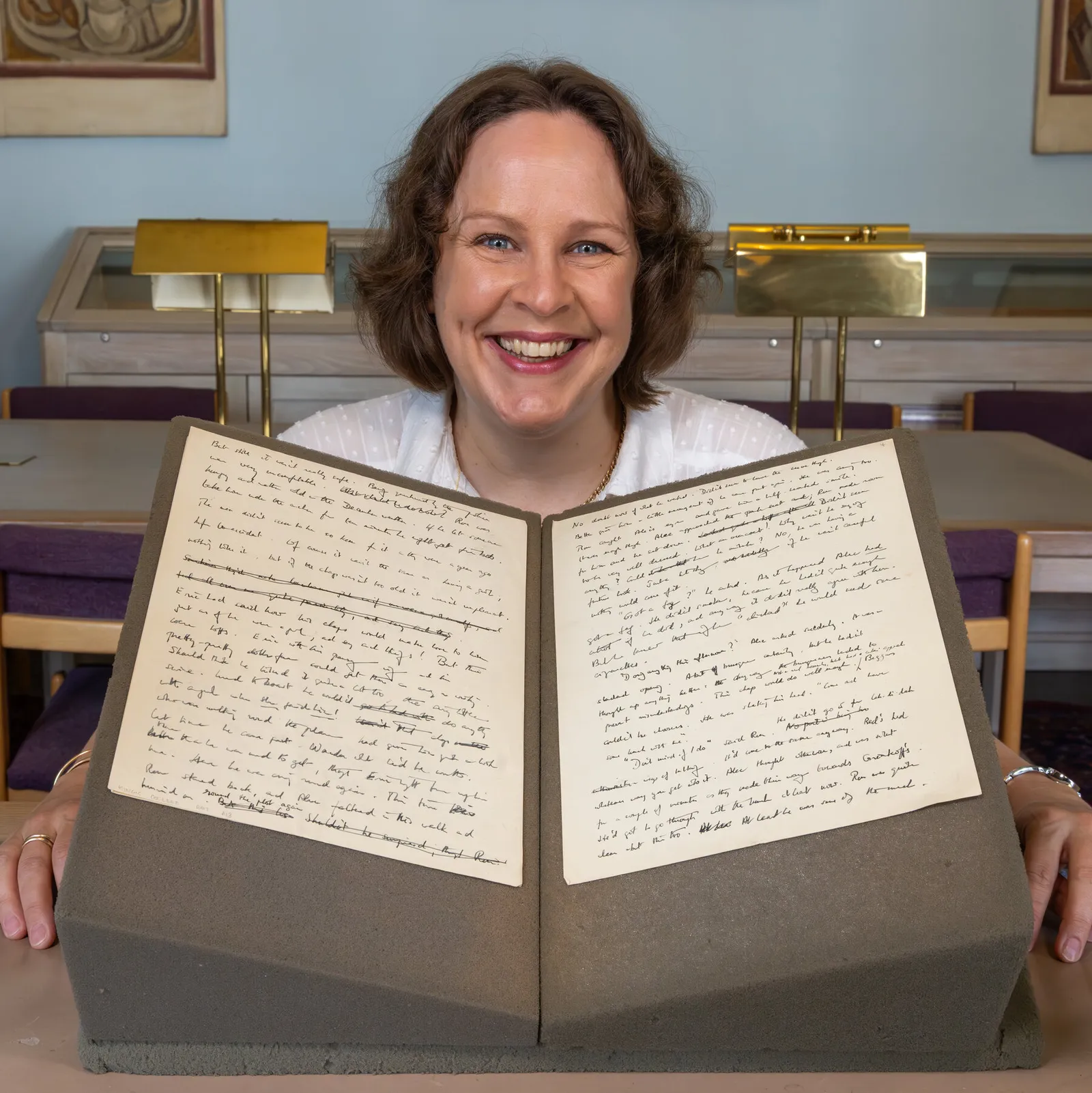
A Cambridge professor has transcribed a handwritten story that Alan Turing wrote in the year before his death, offering a different view of him. For decision-makers supporting research, archives, and institutions, it underscores how primary documents can reshape reputations and priorities.
A Cambridge professor has transcribed a handwritten story Alan Turing wrote in the year before his death, adding richer detail to a body of work that already casts a long shadow over computing, mathematics, and modern debates about security and identity. This is not just another reposting of a famous name. It is a fresh pass at the primary record, through transcription, that can change how readers interpret who Turing was in his last year and what that implies about his life and mind.
The immediate headline fact is simple and important: the story is handwritten, and it was written in the year before his death. The transcription by a Cambridge professor takes that manuscript-like material and turns it into something others can study, cite, and debate more directly. That “different side” claim matters because it signals that the story does not merely duplicate what people already think they know. Instead, it suggests a new angle on the man behind the theories, offering context that is closer to Turing’s own voice, albeit now mediated by the professor’s transcription work.
Why does this matter beyond academic curiosity? Because primary-source verification is the difference between a legacy that feels mythic and one that holds up under scrutiny. In science and computing especially, the public tends to flatten figures into slogans: the lone genius, the tragic martyr, the quiet mastermind. Transcriptions, when done carefully, resist that flattening. They make it harder to substitute vibes for evidence. In institutional settings, that can influence everything from how universities catalog special collections to how grant committees justify funding for archival work that does not always produce immediate, measurable outputs like a drug trial or a deployed product.
There is also a governance layer here, even if it is not framed like a policy story. Cambridge is an academic institution, but it exists within broader systems for research integrity, scholarly standards, and stewardship of historical material. Transcribing a handwritten story sounds straightforward until you appreciate what is at stake: handwriting can be ambiguous, context can be missing, and interpretation can vary. The transcription effort becomes a credibility bridge between the original artifacts and the wider community that cannot physically access every document. In other words, transcription is part of the quality-control pipeline for knowledge.
For boards, executives, and funders who support research ecosystems, this is a reminder of an old but often overlooked truth: the “soft” work of documentation can change the hard conclusions. A different side of a famous figure can shift how curricula are written, how museums present narratives, how scholarly debates are anchored, and how organizations justify the cultural value of their archives. It can also alter incentives. If a newly transcribed story opens new interpretive avenues, it increases demand for comparable work, more cataloging attention, and more investment in digitization and access. That can redirect budgets toward preservation and away from purely forward-looking initiatives.
Second-order implications extend into how technology communities talk about their own history. Turing’s legacy sits at the intersection of computation and societal questions, and stories from his final year can be read alongside the arc of his life. A transcription that introduces a different side may affect how later researchers and practitioners contextualize his contributions. It might not change the technical theorems on their own, but it can change the human narrative that shapes mentorship, public communication, and institutional culture. Those narratives matter because they influence what gets taught as “core” and what gets treated as “background.”
Finally, this story lands in a moment when audiences want more than official summaries. They want documents. They want traceability. They want to know what the source actually says, not just what a secondary retelling claims it says. A transcription from a Cambridge professor, rooted in a handwritten story written in the year before Turing’s death, is exactly the kind of primary artifact that can satisfy that demand. For decision-makers in research-adjacent roles, the strategic stake is clear: supporting rigorous access to originals helps ensure that institutions do not ossify into convenient myths. Instead, they keep the record alive, and they let new evidence, or newly clarified evidence, do the talking.
This story's Key Insights and Take-aways are locked.
Create a free account to unlock Executive Actions for one credit.
Register to UnlockAlways free for Executives Club members. Join the Club
More in Science

Alaska's 1,580-foot tsunami had warning signs. Scientists just found them.
Rapid glacier retreat, heavy rainfall, and thousands of tiny tremors preceded Alaska's 1,580-foot tsunami, a warning for every coastal community in a warming world.

The rare mutation that lets high-risk brains dodge Alzheimer's
Scientists found a natural defense against protein buildup, opening a new path to preventive treatments.

3,000 steps a day may halve Alzheimer's decline, study finds
New research links a modest daily walk to less tau buildup and nearly half the cognitive and functional decline, even for those with early signs.