
Canon EOS R6 III fixes the R6 II gap with 32.5MP, 40FPS, and CFexpress
A fast full-frame wildlife camera upgrade that keeps workflow simple, without forcing you fully into pro gear.
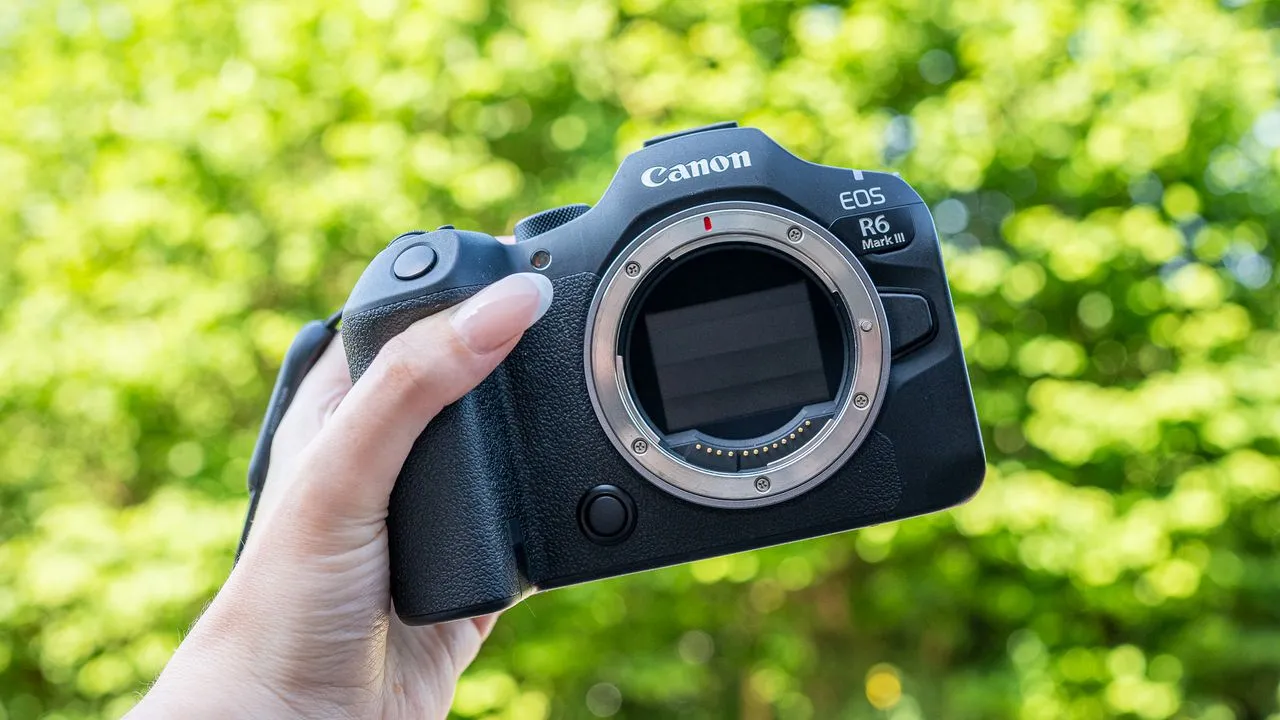
Canon’s EOS R6 III lands as an intermediate full-frame mirrorless camera built for wildlife photographers, with a 32.5MP sensor, 12fps mechanical, 40fps electronic burst, 7K 60p video, and CFexpress Type B support. For decision-makers in content, events, and field production, the question is whether this “in-between” body now replaces pro backups.
Canon’s EOS R6 III is basically an “upgraded-but-still-practical” answer to the EOS R6 II problem: it takes the same 32.5MP resolution step up that makes Canon’s lineup feel coherent, then adds speed and modern workflow features that wildlife shooters actually feel in the field. In testing, the camera paired with Canon’s RF 100-300mm f/2.8L IS USM lens delivered an autofocus experience that is generally fast and accurate, and it also competes on the things that matter when animals do not pause for your settings. Canon claims battery life of around 620 shots (CIPA), and the reviewer got around 6,000 Blackout-free burst photos up to 40FPS.
The core spec stack reads like a wildlife operator’s checklist: 32.5 megapixels, 12fps mechanical and 40fps electronic burst, and up to 7K video at 60p. Add in 8.5 stops of image stabilization, plus a design that is nearly identical to the R6 II in terms of grip and button layout, and this camera is positioned to feel like an upgrade rather than a new learning curve. For existing Canon users, that is not a small deal. In real deployments, retraining time is the hidden cost.
The R6 III’s design also makes one key workflow change: it adds a CFexpress Type B card slot alongside an SD card slot. That matters because CFexpress can move data faster, especially when you are shooting lots of high-frame-rate bursts or high-resolution video. At the same time, the review calls out a real tradeoff for intermediate shooters: CFexpress cards are more expensive than SD cards, and the question is whether two SD slots would have served most users better. In the reviewer’s tests, they used fast SD cards and did not hit write-speed or buffer issues, which suggests the “CFexpress tax” might not be mandatory for everyone, even if it is available.
Where the camera really tries to win wildlife money is autofocus and tracking. Canon builds on “more advanced AI-powered autofocus” that tracks people, animals, and vehicles more easily than the R6 II. In zoo conditions, autofocus was “generally very good,” and the big picture is that it was fast and accurate enough to keep composition as subjects moved. But the review also documents the failure modes, and they are the kind of edge cases that can ruin a day of high-stakes shooting. There were moments when the focus jumped between giraffe eyes, nostrils, and ossicones, and the camera could not quite decide what to focus on even when the animal faced the camera with eyes in view. There were also “unfortunate occasions” where the camera seemed to find and track an “eye” on the wrong end of the animal. If you run wildlife workflows that depend on consistent face or eye detection, those details matter because they tell you what to expect under imperfect angles.
Canon also makes a performance case that is hard to argue with on paper and easy to feel in practice: blackout-free shooting and pre-continuous options. Blackout-free shooting helps you track moving subjects because you are not losing visual continuity between frames. With the R6 III, the reviewer highlights up to a “massive 40FPS blackout-free,” which is well-suited to fast-moving wildlife. The warning is equally practical: you still need timing discipline, because otherwise you end up with lots of near-identical frames, what the review calls “spray and pray.” Pre-continuous shooting records up to 20 frames (about 0.5 seconds) before the shutter is fully pressed, which is useful for capturing fleeting moments in wildlife and sports. In operational terms, these features reduce the penalty of anticipation errors. They do not replace skill, but they cushion it.
Video capability rounds out the hybrid appeal. The R6 III can capture up to 7K 60p video, which means it can cover not just stills but also high-end motion work without forcing a separate body. That matters when you are an “all-rounder” team handling weddings, events, or multi-genre field production. The LCD screen and viewfinder are described as the “exactly the same as the Mark II,” so you get familiarity on the monitor and framing side. Meanwhile, Canon uses the upgraded LP-E6P battery, shared with the R5 II, which offers significantly more shots per charge than the LP-E6NH in the R6 II. There is a compatibility catch: if you are upgrading from a different Canon model, your existing spare batteries might not work, so you may need to buy new spares. Still, the reviewer’s testing suggests battery drain might not become an everyday emergency: they managed more than 6,000 photos without swapping batteries.
So should you buy the EOS R6 III? The review answers yes for a wide set of scenarios, including being a main wildlife camera or a backup body for weddings. The reasoning is straightforward: the 32.5MP sensor produces detailed images with minimal noise and accurate color reproduction; burst performance is lightning fast; and 7K 60p video rounds out the system. The one clear boundary is pro-level expectations. If you want maximum reliability and overall increased performance, the review points to Canon’s EOS R1 or EOS R3 instead. And if you want budget-friendly reach and still want 32.5MP, it suggests the EOS R7, noting the 1.6x crop factor for reach with full-frame lenses. If you want more resolution and pro video and burst potential tradeoffs, it points to the EOS R5 II with 45MP and 8K video.
The second-order implication is that this camera strengthens Canon’s “in-between” lane: a full-frame body that targets serious intermediate shooters and competitive pros who want a second body that feels consistent in handling. For executives and operators, that can change procurement logic. Instead of stocking multiple specialized bodies, teams may consolidate around one high-performing hybrid platform that can handle wildlife in the morning and event deliverables in the evening. In a market where every extra body increases training overhead and inventory complexity, that kind of consolidation is strategic, not just technical.
This story's Key Insights and Take-aways are locked.
Create a free account to unlock Executive Actions for one credit.
Register to UnlockAlways free for Executives Club members. Join the Club
More in Science

Alaska's 1,580-foot tsunami had warning signs. Scientists just found them.
Rapid glacier retreat, heavy rainfall, and thousands of tiny tremors preceded Alaska's 1,580-foot tsunami, a warning for every coastal community in a warming world.

The rare mutation that lets high-risk brains dodge Alzheimer's
Scientists found a natural defense against protein buildup, opening a new path to preventive treatments.

3,000 steps a day may halve Alzheimer's decline, study finds
New research links a modest daily walk to less tau buildup and nearly half the cognitive and functional decline, even for those with early signs.