
CAPSTONE 02 slips into lunar orbit with two 400kg spacecraft to prove cislunar rendezvous tech
NASA’s 2027 demonstration mission will test autonomous navigation, communications, and optical sensing to de-risk Artemis-era infrastructure.

NASA awarded a contract for CAPSTONE 02 to Advanced Space, with spacecraft supplied by Terran Orbital Systems, Inc., and the mission targeted for launch in 2027. The demonstration will use two approximately 400kg spacecraft in lunar orbit to validate rendezvous and proximity operations, autonomous navigation, and cislunar communications while also characterizing the Moon’s radiation environment.
NASA is pushing the next “you need this or you cannot dock” capability for Artemis into lunar orbit with CAPSTONE 02, a 2027-targeted mission designed around two nearly identical small spacecraft. Under a contract awarded to Advanced Space, NASA will launch two approximately 400 kilograms (882 pounds) spacecraft from Terran Orbital Systems, Inc. to demonstrate rendezvous and proximity operations, autonomous navigation, and cislunar communication capabilities. It will also continue to characterize the radiation environment at the Moon, while proving out a practical way to move from “we can do the orbit” to “we can operate reliably around the Moon.”
Here is the part that matters for decision-makers: CAPSTONE 02 is not just another technology demo in theory. It is a planned, in-space testbed for navigation strategies and software suites that future missions will depend on when crew transitions from cislunar orbit to the lunar surface. NASA says these techniques are more sophisticated than those typically used in low Earth orbit and are designed to support Artemis, Moon Base, and deep space exploration by enabling safe crew transfers to and from the lunar surface. CAPSTONE 02 will use ground tracking measurements and optical sensors, with one spacecraft locating and rendezvousing with the other using celestial bodies, and both spacecraft will switch between “chaser” and “target” roles to test operational scenarios under varying cislunar conditions.
To understand why NASA cares so much, it helps to zoom out. NASA’s original CAPSTONE mission, short for Cislunar Autonomous Positioning System Technology Operations and Navigation Experiment, became the first U.S. commercial mission to the Moon and the first spacecraft to operate in a near rectilinear halo orbit around the Moon. That orbit is nearly stable because of the interactive gravitational pull from both Earth and the Moon. NASA used the first CAPSTONE to validate communications, networking, and autonomous navigation capabilities, and to gain operational experience in cislunar space. CAPSTONE 02 is explicitly the next phase: it expands from orbit validation into demonstrations that should directly inform lunar exploration and infrastructure development.
This is where the “incentives and execution” storyline shows up, because flight testing is expensive and proving autonomy in space is hard. NASA frames CAPSTONE 02 as iterative, risk-tolerant demonstrations done in partnership with industry. The logic is straightforward: technology development through flight testing is how NASA converts “hard problems” into durable capabilities needed for a permanent presence at the Moon. That posture is particularly relevant in a world where cislunar infrastructure is becoming a shared playground for government missions and commercial providers. When you are building rendezvous, proximity operations, and navigation autonomy, you are effectively building the operational plumbing that everyone downstream will need.
Practically, CAPSTONE 02 will fly two identical spacecraft and conduct a series of rendezvous and proximity operations, plus loitering or formation-flying techniques in lunar orbit. NASA points to the need to understand spacecraft trajectories under the simultaneous influence of Earth and Moon gravities, described as three-body orbits. Since these conditions cannot be fully recreated on Earth, the mission must test in space. The mission will also apply navigation strategies similar to those planned for Orion’s approach to a lunar lander in deep space, with the stated goal of building confidence in those techniques for future exploration.
Another key detail: CAPSTONE 02 serves as an operational testbed enabling testing of three NASA-developed navigation software suites. Each application will collect data during CAPSTONE 02’s low energy transfer trajectory, which takes the spacecraft from Earth to beyond the Moon before settling into lunar orbit. The mission will carry an optical imaging payload from Lawrence Livermore National Laboratory to support the navigation demonstration and to capture imagery of the Moon. It will further mature the Cislunar Autonomous Positioning System navigation software first demonstrated on CAPSTONE, using a method of determining spacecraft position relative to other spacecraft without relying on Earth-based tracking. In plain English, the mission is trying to reduce how much the system “needs” constant ground assistance to stay on track.
Finally, the mission is built to be more deployable than one-off science experiments. NASA says the suites of technologies on CAPSTONE 02 are designed to automate routine navigation tasks, reduce reliance on traditional space-to-ground data, and enable new mission concepts derived from increased inter-satellite coordination. The spacecraft are also designed for cost-effective, rapid deployment, demonstrating a scalable and repeatable mission model. “This mission represents an important step in the maturation of cislunar capabilities,” said Sean Fuller, Moon Base CAPSTONE manager, emphasizing that expanding on lessons learned from CAPSTONE to demonstrate increasingly sophisticated operational concepts lays the foundation for lunar infrastructure and commercial services that support Artemis, Moon Base, and future missions to deep space.
For peers making capital and platform decisions in space, the strategic stake is simple: docking and crew transfer readiness depend on navigation performance you cannot reliably simulate on the ground. CAPSTONE 02 is NASA’s attempt to de-risk that dependency with flight-tested autonomy, optical sensing, and operational software suites. If CAPSTONE 02 delivers on its demonstrations, it tightens the operational loop between cislunar infrastructure and crewed lunar activities, and it gives industry a clearer target for what “works in space” looks like when two spacecraft have to coordinate in the real, messy gravity of the Earth-Moon system.
This story's Key Insights and Take-aways are locked.
Create a free account to unlock Executive Actions for one credit.
Register to UnlockAlways free for Executives Club members. Join the Club
More in Technology
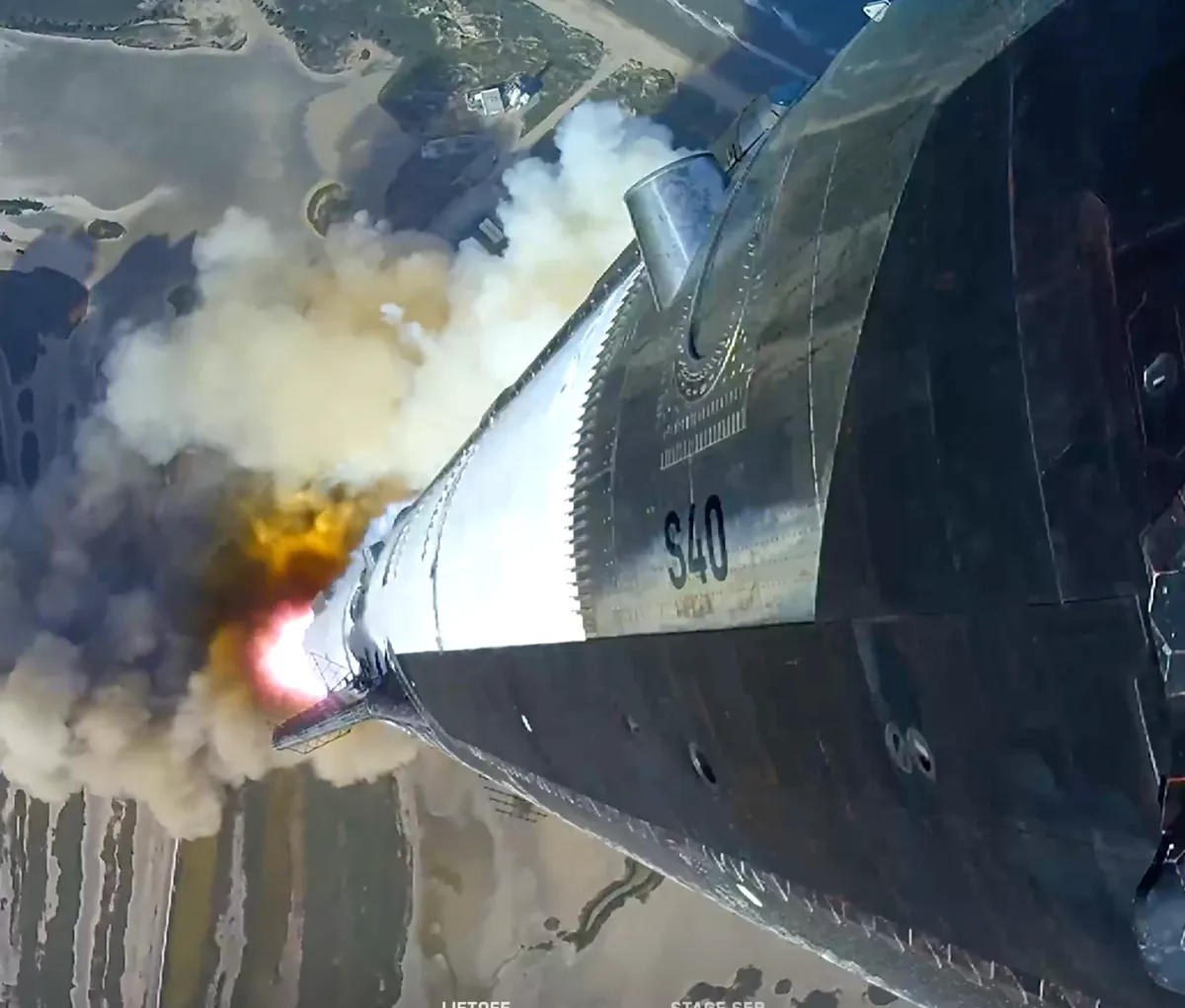
SpaceX adds more Starlink V3 wins, but another booster re-ignition failure interrupts progress
The second Starship V3 flight checks off goals, then stumbles again on relighting booster engines, raising schedule and reliability pressure.

SpaceX’s 13th Starship test lifts with 20 next-gen Starlink V3 satellites onboard
A clean cargo run for Starship doubles as a deployment step for Starlink’s next satellite generation.

Reid Hoffman’s AI lab Prentis seeks $100M to automate computer work
A new lab co-founded by Reid Hoffman and Mark Pincus is raising $100M, betting routine task automation beats coding.