
SpaceX adds more Starlink V3 wins, but another booster re-ignition failure interrupts progress
The second Starship V3 flight checks off goals, then stumbles again on relighting booster engines, raising schedule and reliability pressure.
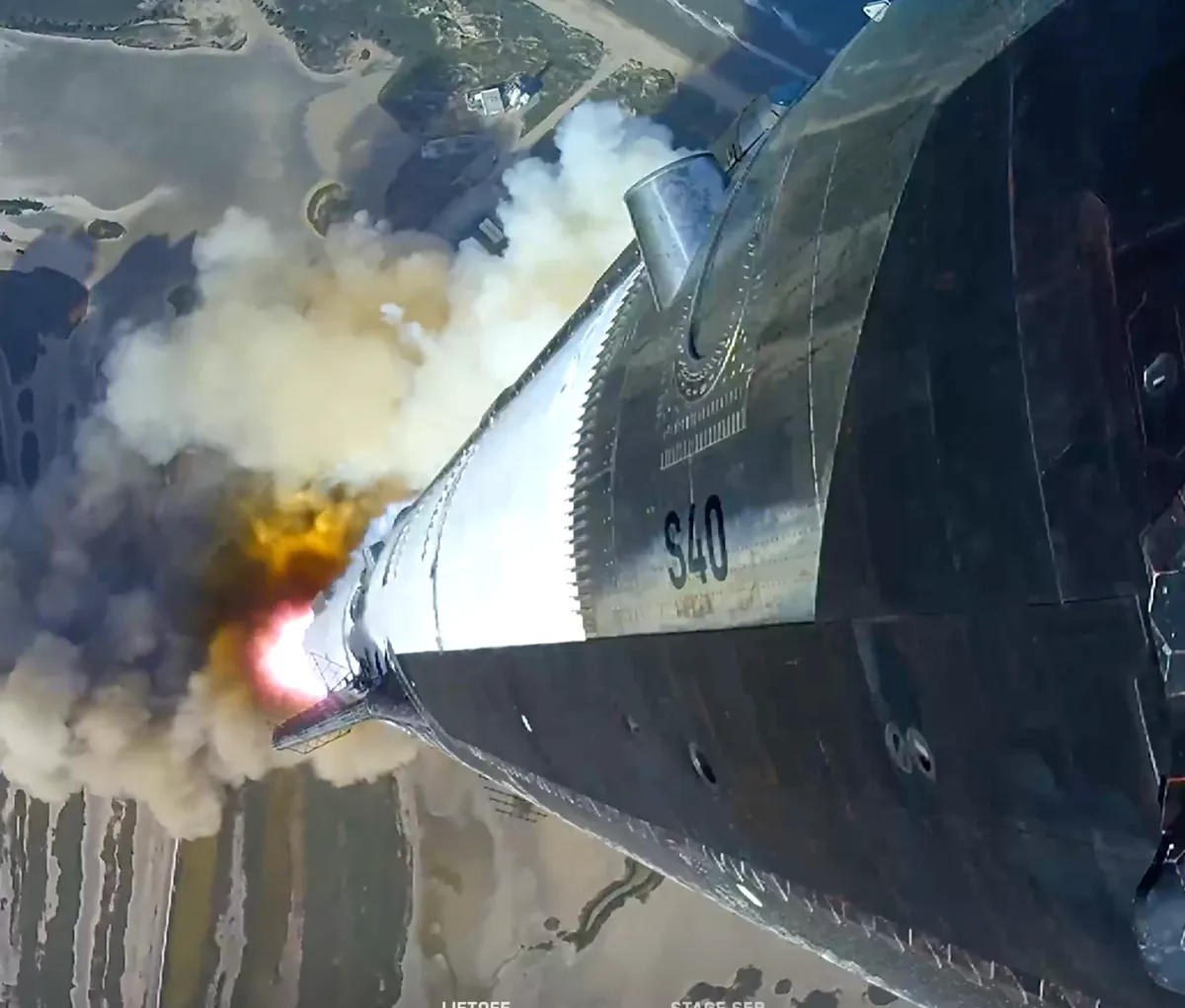
SpaceX launched a new batch of V3 Starlink satellites and completed more milestones on its second Starship V3 flight. The company also appears to have encountered another issue relighting the booster rocket engines, a reliability wrinkle that matters for deployment tempo and risk planning.
SpaceX just launched another set of V3 Starlink satellites, and the company managed to tick off “a few more boxes” on what it called its second Starship V3 flight. That is the good news, and it matters because each incremental success in Starship V3 points toward a faster, more scalable path for adding capacity to Starlink.
But the flight also appears to have suffered another problem: an issue relighting the booster rocket engines. In plain English, the booster engines had trouble restarting at the point where they need to come back to life for the next phase of the mission. That kind of failure, even when the broader flight sequence is moving, can complicate reuse plans, slow cadence, and force teams and stakeholders to recalibrate timelines.
For decision-makers watching SpaceX's cadence, the key is that Starlink V3 and Starship V3 are not operating in separate universes. Starlink constellation growth depends on how quickly and reliably SpaceX can move satellites into orbit, and Starship's booster performance is one of the mechanical chokepoints. Even small repeat issues can have outsized schedule impact because each attempt is a compound of planning, integration, launch window constraints, and post-flight engineering review.
There is also an investor-style reality check here. Reliability issues tend to convert operational uncertainty into financial and governance uncertainty. Boards and capital allocators care less about the existence of technical setbacks and more about what they imply for future performance. When a problem repeats, it becomes an underlying risk factor rather than an isolated glitch, which affects how leaders think about throughput, burn, and the probability distribution of outcomes.
From the standpoint of operational strategy, relighting failure modes are particularly scrutinized because they map directly to test design and future flight rules. Teams can often work around certain classes of issues after the fact, but if the same step in the flight sequence is repeatedly problematic, it changes what “normal operations” means. It also affects how managers set expectations internally, because the engineering group will be pushing for confirmation through additional data rather than rushing to treat the behavior as “handled.”
On the market side, Starlink sits at the intersection of telecom and aerospace execution. Competitors, enterprise buyers, and partners all plan around capacity timelines. Even if the satellites still get deployed, a booster anomaly can ripple into planning for subsequent launches and the ability to maintain a predictable deployment rhythm. Predictability is what turns technical performance into commercial confidence.
Regulatory context matters in a more subtle way. Satellite networks operate in an environment where approvals, filings, and coordination with authorities can be time-sensitive. Space operators generally want to show they can deploy and sustain service according to expectations. A repeated propulsion relight issue does not automatically trigger regulatory action by itself, but it can influence how regulators and partners view execution risk if delays stack up.
The second-order implication for leaders in adjacent roles, whether at satellite companies, launch customers, or firms building infrastructure around launch, is that they should treat booster reliability as a board-level input, not just an engineering detail. If SpaceX is still sorting out booster relighting issues on the second Starship V3 flight, that suggests the path to maximum operational tempo is still under active engineering pressure. The result is a living test program, and the market will watch whether “a few more boxes” keeps arriving alongside resolution, or whether the same failure step becomes a recurring drag.
In short: SpaceX advanced Starlink V3 deployment goals on the second Starship V3 flight, but appears to have hit another booster relighting problem. For executives, the headline is not just that there were more successes, it is that the same critical restart step still needs work. That combination creates both momentum and a credible reliability question, and it will shape planning for who can scale next and how fast.
This story's Key Insights and Take-aways are locked.
Create a free account to unlock Executive Actions for one credit.
Register to UnlockAlways free for Executives Club members. Join the Club
More in Technology

doubleAI's Maxwell rewrites code while it runs, claims 38x speedups
The Tel Aviv startup's code execution model formally verifies optimizations, turning AI into an agent for the hardware itself.
Saudi military official paid to fly OpenAI bugging suspect's family out, prosecutors say
A court filing says a Saudi military official funded the family's exit and Riyadh offered bail, putting foreign-influence risk squarely on AI boards.

AI researcher's 26,000-word claim: Neural nets aren't tangled after all
Nick Cammarata's Goodfire post has the AI world split - if he's right, monitoring frontier models just got a lot easier.