

Carlos "Indio" Solari dies at 77, ending Patricio Rey’s era of rebellion
Parkinson’s disease, a hometown vigil, and tributes from across politics and football mark the close of Los Redondos.
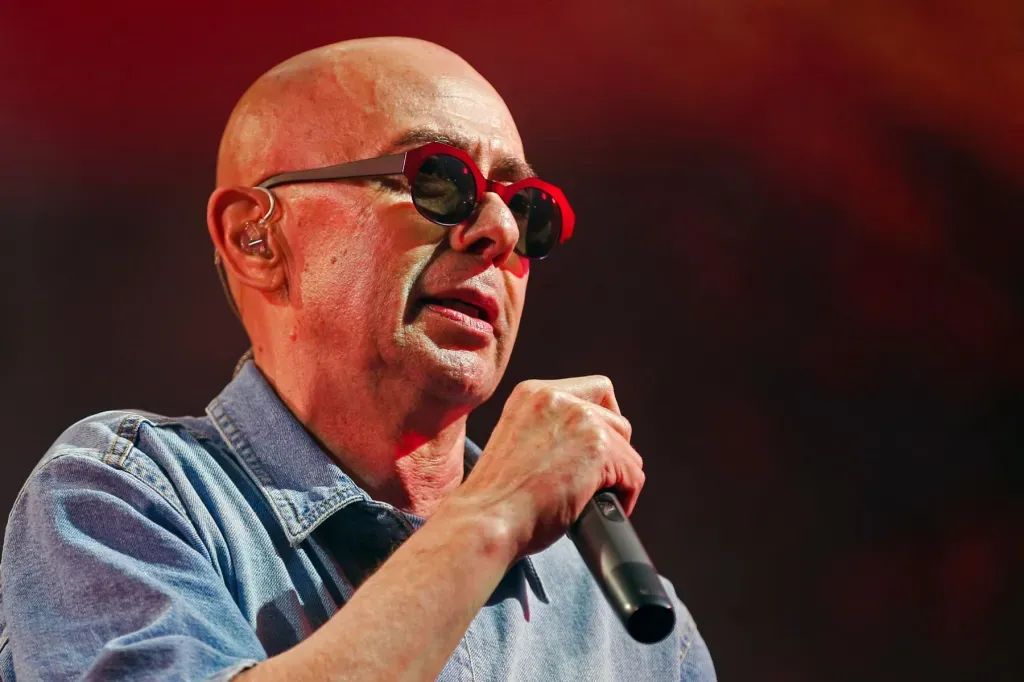
Carlos Alberto Solari, known as “the Indio,” the longtime leader of Patricio Rey y sus Redonditos de Ricota, died Friday (June 5) at age 77. His death, after at least a decade with Parkinson’s disease, is prompting a national reckoning with a rock catalog that helped define modern Argentine counterculture.
Carlos Alberto Solari, the Argentine singer-songwriter known as “the Indio,” died Friday (June 5). He was 77. Authorities said he was found dead near an indoor pool at his house in the provincial town of Ituzaingó, about 30 kilometers (18 miles) west of Buenos Aires, without identifying a cause of death, and his family confirmed the death on social media.
If you measure influence by how many people show up, Solari still had it. Fans began gathering at his home with flowers and T-shirts printed with his nickname, and crowds filled a large plaza in downtown Buenos Aires to mourn, commune and sing his hit songs. The response matters for decision-makers beyond music, because it is a rare, public example of a cultural brand that did not just entertain, it mobilized. When a national icon is gone, institutions have to decide what they preserve, what they monetize, and what they stop trying to replace.
Solari led Patricio Rey y sus Redonditos de Ricota, one of Argentina’s most popular and influential rock groups, known more simply as “Los Redondos.” As their lead singer, he became a countercultural icon for disaffected Argentines coming of age as the country transitioned from a bloody military dictatorship to a democracy marked by newfound freedoms, but also instability and hyperinflation in the 1980s. That timing is not trivia. It helps explain why his work landed like a mirror. In periods when people feel their options shrinking, songs that speak in cryptic, punchy confidence can feel like agency.
During Argentina’s consumerist frenzy of the 1990s, under then-President Carlos Saul Menem’s free-market policies, Solari’s classic rock anthems, punchy dance tunes, and cryptic lyrics gave voice to a spirit of rebellion against the excesses of capitalism and influences of foreign powers. For executives, this is a reminder that cultural movements can be market reactions, not just artistic expressions. When policy shifts reshape everyday economics, artists often become informal commentators, and fans become a kind of grassroots audience testing what words they can accept from their leaders.
The business model behind Los Redondos also contributed to their mystique. Solari’s band released 10 studio albums while eschewing major record labels to maintain artistic independence. That independence mattered when the mainstream tends to flatten edge into product. The band broke up in 2001, but Solari kept building his audience as a solo artist, releasing five more albums under his own name. Those later records mixed mainstream rock and electronic influences and drew hundreds of thousands of fans to parks and stadiums across Argentina.
Then came the personal and operational reality check. Solari struggled with Parkinson’s disease for at least a decade, and at a massive concert in 2016 he announced that he had been diagnosed. “Mr. Parkinson is nipping at my heels. But here I am,” he said, and the crowd went wild. He later retired from touring, speaking candidly in interviews about the debilitating effects of the disease. For industries that rely on human performance, this is the hardest constraint: even when demand is huge, bodies and mobility are finite. Health disclosures can shift how fans engage, how promoters plan, and how legacy catalogs are curated when the creator cannot physically replicate the old format.
After his death, tributes poured in from politicians, artists, and soccer stars across Argentina. The Argentine Soccer Association said Solari’s voice “became a popular rallying cry” and “echoed in the stands” of the soccer-crazed country. That detail is a signal to media and sponsorship teams: when music crosses into sport rituals, it becomes durable infrastructure. The Grandmothers of Plaza de Mayo, an activist group seeking relatives killed or “disappeared” by the 1976-83 dictatorship, said the singer “inspired society as a whole to doubt, to question and to think critically.” Cristina Fernández de Kirchner, Argentina’s former president serving a corruption sentence under house arrest, posted one of his famous lyrics on social media: “Just living costs you your life.” Solari’s reach was broad enough to be claimed by very different institutions, which means his legacy will keep being interpreted, not just remembered.
So what should leaders take from this, besides grief? First, Solari’s story is a case study in how an “independent” brand can still operate at massive scale. Los Redondos chose autonomy, released 10 studio albums, and built a loyal base without major labels. Second, his solo career showed that audience appetite can survive the format change when the creator remains credible and prolific. Third, the Parkinson’s timeline, including his 2016 announcement and retirement from touring, illustrates how real-world constraints force business decisions about touring, events, and long-term monetization of archives.
Carlos Alberto Solari is survived by his wife, Virginia Mones Ruiz, and 25-year-old son Bruno. The public mourning now becomes part of the product lifecycle of culture. For executives, boards, and investors watching entertainment, sports media, and creator-led brands, the question is not simply how to honor a legend. It is how to protect the integrity of a cultural engine while recognizing that the human source is finite. When the Indio is gone, the market will rush to fill the gap, but the value in his legacy is that it never behaved like background music. It behaved like a rally.
This story's Key Insights and Take-aways are locked.
Create a free account to unlock Executive Actions for one credit.
Register to UnlockAlways free for Executives Club members. Join the Club
More in Entertainment

Christopher Nolan’s “The Odyssey” posts his biggest Tuesday haul, surpassing “The Dark Knight’s” record
The film’s Tuesday breakout reframes Nolan’s box-office ceiling and forces competitors to rethink timing, budgets, and release strategy.

Kacey Musgraves cancels Aug. 20, 29, Sept. 2 Middle of Nowhere shows
Ticketmaster emails are telling fans refunds are coming, while the tour still starts Aug. 21 in Chicago.

Billie Joe Armstrong launches Epiphone Les Paul Junior and Marshall 1959BJA signature gear
Two limited releases turn decades of Green Day’s tone into branded hardware, including Marshall’s first artist amp in 14 years.