

Casey Harrell logs thousands of hours on a speech BCI, becoming the first power user
His ALS-linked brain implant now lets him speak more independently, surf the web, and work. Here’s what that unlocks.

Casey Harrell, who has ALS and is paralyzed, has had electrodes embedded in his brain for almost three years and has used his brain-computer interface to “speak” since 2023. The team behind the device says he is the first “power user” of a speech BCI, and they plan further enhancements.
Casey Harrell has had electrodes embedded in his brain for almost three years. He has ALS and is paralyzed, yet since first using his brain-computer interface to “speak” in 2023, he has clocked thousands of hours of use, and can now use the device largely independently.
That “power user” status is the headline here, and it is not a marketing nickname. Harrell is not just trying the technology, he is living with it in a way that looks closer to routine than prototype. The team behind the device calls him the first power user of a speech BCI, after adding new features and watching how someone uses the system for real tasks. Harrell also uses the implant to surf the web and perform his job.
For executives, the subtext matters: speech brain-computer interfaces have often been framed like science projects that prove feasibility. Harrell’s usage shifts the goalposts toward sustained, repeated, day-to-day utility. “Since then,” the story notes, he has clocked thousands of hours of use, and his team has added new features. That combination suggests iterative product development, not a one-off demonstration. And it implies an operational question many teams dodge early: what happens after the novelty wears off, when the system has to hold up under continuous human demand?
Harrell’s own stance gives the human stakes behind the engineering. He told MIT Technology Review, “Living with a disease like ALS, you are supposed to have diminished dreams. I do not.” If you are an investor, founder, or operator, it is hard to overstate how rare it is to hear a user characterize the ceiling of a product category this bluntly. In many tech cycles, early users push for incremental improvements. Here, the framing is more existential: the device expands what dreams look like when speech is otherwise lost. That makes adoption metrics feel less abstract and more direct.
Technically, the story keeps the details to what is known: Harrell’s electrodes are embedded in his brain, and the interface enables him to “speak.” It does not claim this is the end-state of neurotech, and it does not pretend every implant experience will match his. But the operational signals are strong: the device is already integrated into activities like web browsing and working, and it is being enhanced by the team with new features. In other words, the system has moved from a controlled lab function into something closer to a platform.
There is a broader market lesson hiding in the timing, too. This edition also points to a world where AI obsession is reshaping expectations for speed and capability, especially in South Korea, where optimism about AI is high and where embracing technology is seen as “integral to modernizing the country.” That context matters because BCI is part of the same big theme: technology that changes daily life. When societies decide they must stay ahead, the pressure on developers accelerates. If speech BCIs can become meaningfully independent for someone, it is not just a medical breakthrough, it is a bet on whether human communication interfaces become mainstream enough to demand rapid iteration.
Then there is the regulatory reality backdrop, even if today’s BCI item does not focus on rules. A system that sits in the body and influences communication has to navigate more than performance. It implicates privacy, safety, reliability over time, and long-term support. Executives in adjacent areas should treat Harrell’s “thousands of hours” usage as more than a milestone. It becomes evidence for product roadmaps, clinical validation narratives, and support models that can survive extended use. The second-order implication for boards is simple: sustained deployment changes everything about governance. You need oversight not just for initial trials, but for ongoing upgrades and user continuity.
So what should decision-makers take from this? First, product power is showing up in usage intensity, not just headlines. Harrell is described as the first power user of a speech BCI, and he can now use it largely independently. Second, the team is already adding new features, which hints that the roadmap is active and iterative. Finally, the story suggests that the bar for neurotech will rise quickly once there is a credible pathway to independence. Competitors and partners will be pushed to answer a harder question: can your technology move from proof to daily reliability, and can it keep improving as it gets used for thousands of hours?
This story's Key Insights and Take-aways are locked.
Create a free account to unlock Executive Actions for one credit.
Register to UnlockAlways free for Executives Club members. Join the Club
More in Technology

Nvidia's $89B data center quarter: the 9 companies cashing in
The AI buildout is minting fortunes beyond GPUs, and memory, cloud, and cooling suppliers are riding the same wave.
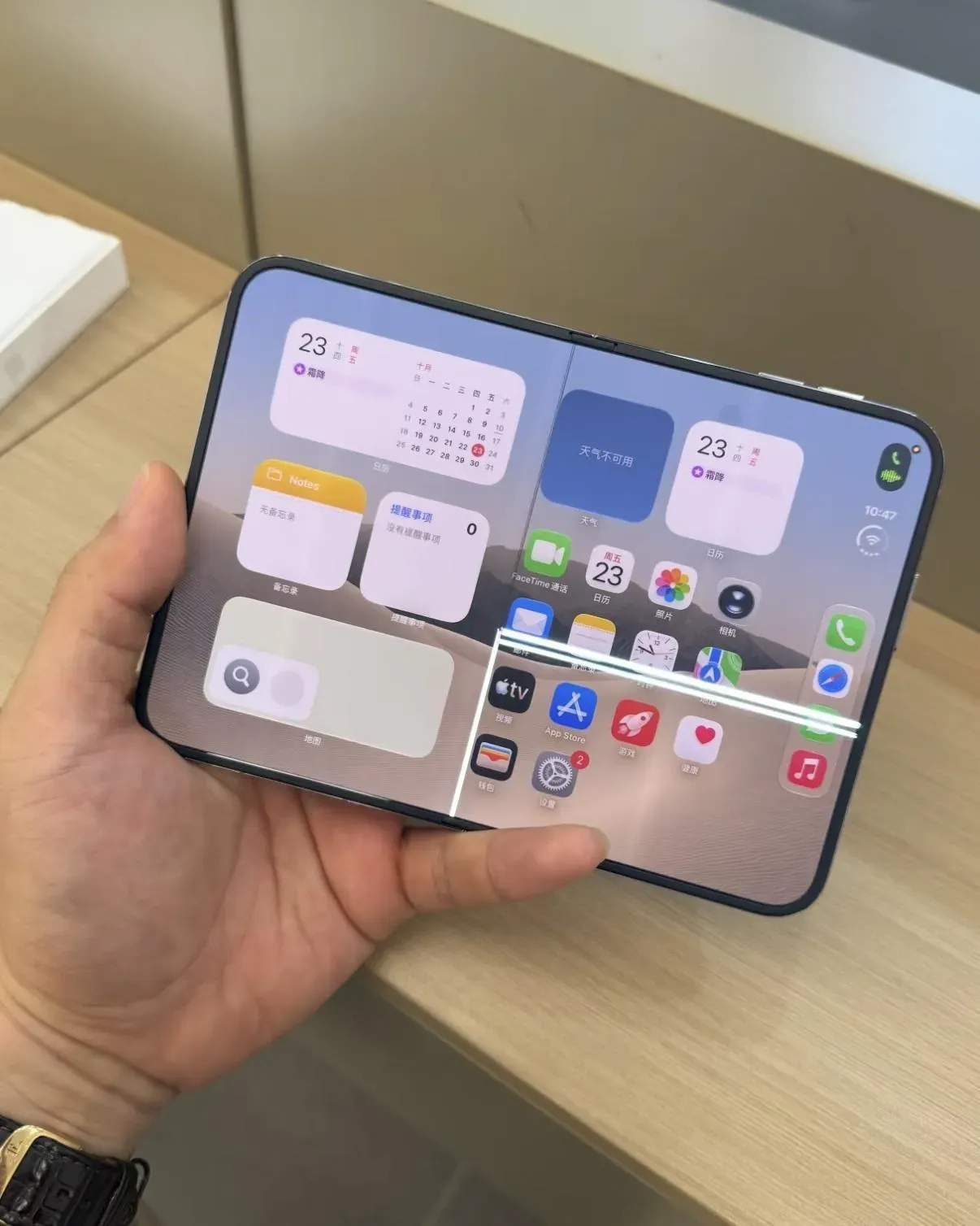
A YouTuber dissected the iPhone Duo and thinks he found crackgate's cause
CuriousHagi's teardown of Apple's foldable reveals a gear-like hinge that may explain why screens crack in the same spot within hours.

Google quietly links your phone number to every Android account on your SIM
Adding a SIM now ties your phone number to all Google accounts - and future accounts inherit it. Here's the security and privacy stakes.