
CD Projekt Red co-CEO Nowakowski says Cyberpunk fans’ faith may be lost indefinitely
A redemption arc has limits, and CDPR is already planning around the fallout while shipping Witcher and Cyberpunk sequels.
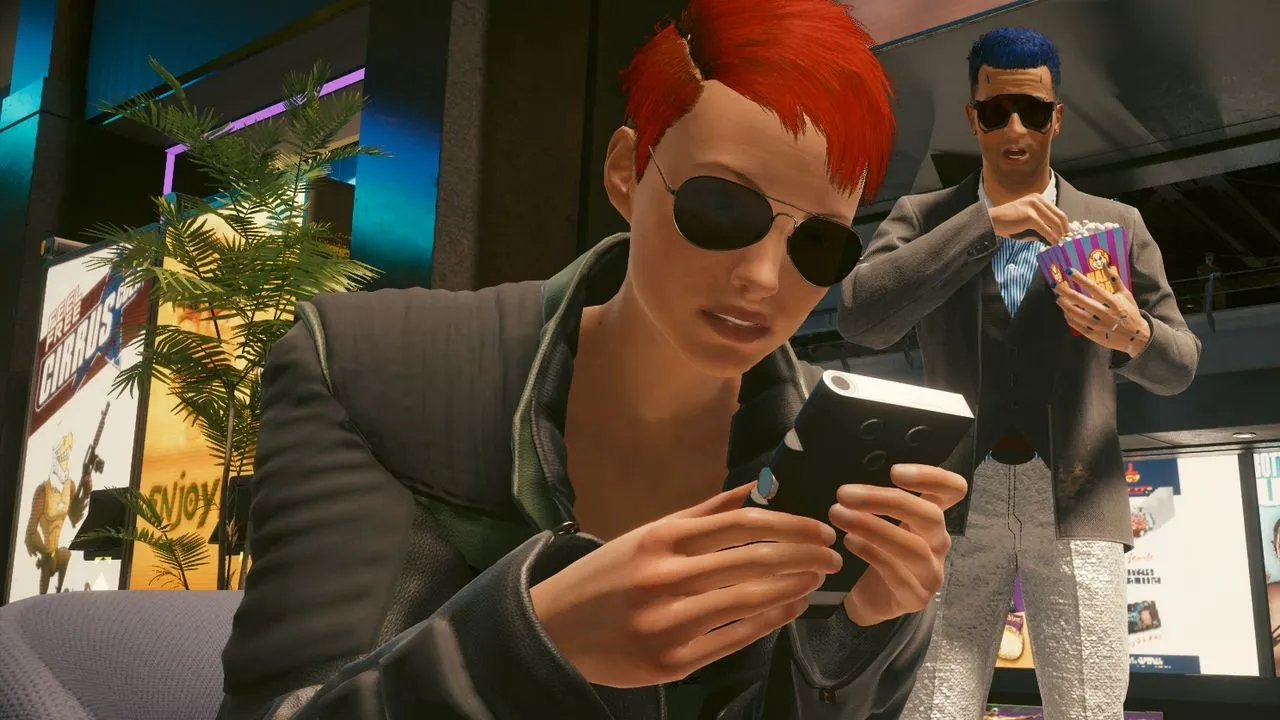
CD Projekt Red co-CEO Michał Nowakowski told DevGAMM Gdańsk (republished by Edge via GamesRadar) that some Cyberpunk 2077 launch-era fans may never return. The admission frames how the studio is rebuilding trust, funding multi-project ambitions, and pacing big releases.
Cyberpunk 2077 did the one thing every game studio quietly fears: it launched so broken that the PS4 version was pulled from the PlayStation store. CD Projekt Red has since treated the moment like a scar you never stop touching, but co-CEO Michał Nowakowski is also acknowledging something more painful than technical debt. In a live interview at DevGAMM Gdańsk, he said he is “not 100 per cent convinced we went through the full redemption arc,” and that he is “convinced that we lost the faith of some people indefinitely.”
That quote is the entire story in miniature. CD Projekt Red did recover in real, measurable ways, but Nowakowski is warning decision-makers and competitors that reputation repair is not a switch you flip. He added, “I do hope we will be able to make it back-if not with The Witcher 4, then with whatever comes next.” Translation: even if patches and expansions improve a game, the audience segment that felt burned at launch may carry the memory longer than the developer’s roadmap.
To understand why this matters, you have to remember what “disastrous launch” meant in practice. Cyberpunk 2077 shipped in a buggy, unoptimized, and “downright unfinished” state. Hype was at critical mass. The fallout was immediate and public: CD Projekt Red’s share price tanked, investors filed a class action lawsuit, and the company faced a reputational hit that left its brand “in tatters.” In most industries, that kind of response becomes a permanent tax on future launches. In games, where trust drives discovery and word-of-mouth, the damage can be even stickier.
And yet, Cyberpunk 2077 also turned into a “huge commercial success.” That odd combination is the key second-order reality behind Nowakowski’s comments. CDPR took profits from that runaway revenue and spent them fixing the very mess that caused the reputational crash. The 2.0 patch addressed many of the RPG’s problems, and the Phantom Liberty expansion was described as “excellent,” further turning around the game’s reputation and cementing it “as a roleplaying great.” For a studio, that is the best-case redemption arc: the product improves, the audience comes back, and the business survives the years it takes to earn trust.
But Nowakowski is not saying redemption was universal. He’s making a more nuanced point about how audiences behave after they feel betrayed. Some players may not be persuaded by retrospective quality, even when a studio performs the right engineering work afterward. The studio’s job becomes two-track: continue building the long-term brand and accept that a subset of customers, critics, or community members may simply not return. That matters for budgets and timelines because “repair” is not guaranteed to be proportional to effort.
Interestingly, Nowakowski also argues the experience left CD Projekt Red stronger internally. He said the studio was left with “seasoned, battle-hardened veterans,” plus leaders who could carry a “different kind of challenge on their shoulders.” That is not just morale talk. It has operational implications for a multi-project company, because companies that can survive a public failure often develop stronger risk management and clearer internal pressure points. According to Nowakowski, that capability is why CDPR has spread into a multi-project structure, with The Witcher 4 and Cyberpunk 2 currently in production, as well as “the mysterious Project Hadar.” The goal, he said, is to become more prolific, but not so fast it turns into a churn machine.
Nowakowski’s pacing philosophy is practical and very specific: “Our dream is to be making more games, although we never want to turn into the studio that's going to be launching a big game every year.” He said it “may happen,” but it’s “not the goal,” and CDPR has a “rough ten-year rolling plan” that is meant to avoid flooding the market with CDPR games. This is where the redemption-arc lesson collides with product strategy. When trust is uneven, you want each major release to feel deliberate, not like a panic response. You also want time to build and validate, because launch integrity is not just a technical issue, it is a brand issue.
If you’re tracking timelines, CD Projekt Red’s major releases appear to be spaced out enough to let reputational work and product development happen in parallel. The Witcher 4 “isn’t due until 2027 at the earliest,” with “more likely” 2028, according to the source’s framing. Cyberpunk 2 “may not arrive until 2030.” Meanwhile, CDPR has greenlit a third expansion to The Witcher 3: Wild Hunt, Songs of the Past. It’s being built by The Thaumaturge developers Fool’s Theory and is due for release “next year.” The expansion is expected to be similar in scope to Blood & Wine.
For executives and boards, the strategic stake is clear. Nowakowski is effectively saying: yes, you can fix the product and recover commercially, but you may not recover every customer sentiment immediately, or at all. That should change how you evaluate long-cycle game investments. The question is not only “can the studio redeem the game?” It’s “can the studio build a release strategy and organizational resilience that assumes some trust will never come back, and still produces wins that compound over time?”
In the end, CD Projekt Red is betting that multi-project scale and careful pacing will outlast the memory of a broken launch. But Nowakowski is making sure no one mistakes engineering recovery for universal forgiveness. Some people, he says, are gone indefinitely. The hard part now is proving the comeback is real enough for everyone else.
This story's Key Insights and Take-aways are locked.
Create a free account to unlock Executive Actions for one credit.
Register to UnlockAlways free for Executives Club members. Join the Club
More in Business

Accenture’s $4.18bn play fails as AI fears spark a 20% worst-ever stock plunge
On Thursday, Accenture hit its biggest one-day drop on record after forecasting worries that AI could hollow out consulting.

SpaceX stock jumps 3% after it overtakes Amazon’s market cap
CNBC says SpaceX’s shares surge following its IPO Friday, forcing investors to reprice what “space” and “AI” are worth.

SpaceX’s first options day breaks U.S. records after a $85B IPO win
Big IPO, bigger options debut: what it means for investors, risk teams, and anyone benchmarking market appetite.