
CD Projekt Red co-CEO says Cyberpunk fans’ faith is “indefinitely” lost
Marcin Iwiński admits the redemption story is not done after Cyberpunk 2077’s 2020 launch backlash.
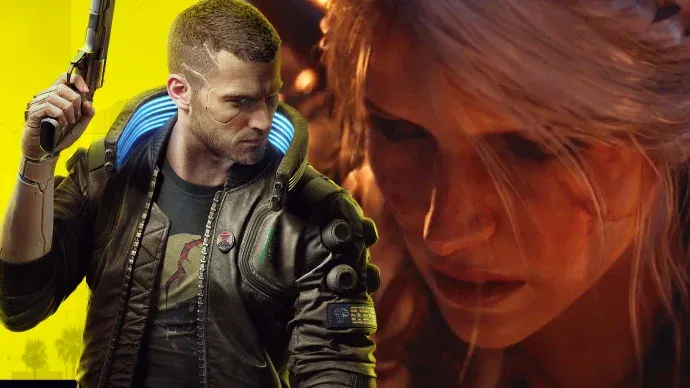
CD Projekt Red co-CEO Marcin Iwiński says the company has not finished its “full redemption arc” after Cyberpunk 2077’s disastrous 2020 launch. The admission matters because boards, investors, and competitors must treat trust repair as a long-running operational risk, not a marketing phase.
CD Projekt Red’s co-CEO Marcin Iwiński says the studio has “indefinitely” lost the faith of some Cyberpunk 2077 fans, and that the company is not yet done with its “full redemption arc.” In plain English: after the disastrous 2020 launch of the open-world action-adventure game, the trust deficit was not a short-term PR blip. It is still shaping how some players view the brand.
That matters because Cyberpunk 2077 is not just any release. It is a flagship, expectation-heavy project from a company that has built its reputation on high-quality single-player experiences, starting with The Witcher series. When a big mainstream release lands with technical, performance, and reputation problems, the consequence is not just worse reviews for one quarter. It becomes a prolonged credibility problem that shows up in community sentiment, future sales expectations, and how quickly customers are willing to forgive the next delay or rework.
Eurogamer’s report frames the situation around the gap between what CD Projekt Red says it wants to deliver and what players believe it has delivered. The co-CEO’s language is unusually direct. “Indefinitely” suggests there is no fixed calendar date when faith is restored for everyone. “Indefinitely” is a board-level reality check, because redemption arcs depend on sustained execution, not a one-time apology. Even when improvements are real, the perception that a company “moved too slowly” can linger. That is the kind of delay that can affect even unrelated future launches.
For decision-makers, the key is that trust repair is an operational project. It starts with shipping fixes and support, but it extends into process changes: development discipline, QA rigor, performance targets, and launch readiness criteria. Cyberpunk 2077’s 2020 launch backlash is the event in this story, but the continuing consequence is that executives now have to earn back legitimacy with measurable behavior over time. When the co-CEO openly acknowledges that faith is lost “indefinitely,” it signals that the company sees the remaining work not as optional, but as core to how it will survive the next release cycle.
There is also a capital and governance angle. Companies like CD Projekt Red do not just answer to players. They answer to investors who price in execution risk, and to boards who need to manage long-term reputation as an asset. A brand’s trust is a form of intangible capital, and it can be impaired faster than it can be rebuilt. The “full redemption arc” framing implies the board is effectively treating trust restoration as a multi-stage runway, not a single milestone. That can influence how leadership plans budgets for ongoing maintenance, how it prioritizes transparency, and how it communicates with stakeholders after an incident.
Regulatory and policy context is relevant here, too, even though the Eurogamer source centers on the co-CEO’s admission. In the broader games industry, consumer protection expectations, refund norms, and platform enforcement can tighten after a high-profile launch controversy. Public scrutiny tends to increase, and that can raise the operational cost of getting things wrong. When a launch goes badly, the downstream effect can include stronger oversight from marketplaces and more detailed documentation requirements internally, because companies want fewer surprises in the next cycle.
Then comes the second-order competitive implication. CD Projekt Red is working on The Witcher 4, and the company itself frames this as a redemption story. That means competitors will be watching not only technical performance, but also how CD Projekt Red handles uncertainty. Will it delay to protect quality? Will it scope down? Will it redesign launch plans? If the leadership team publicly concedes that some faith is lost “indefinitely,” it can also raise the bar for every future update, trailer, and release date. In other words, it increases the cost of overpromising.
For peers and other operators, the strategic lesson is blunt: a damaged launch reputation creates a long tail of scrutiny. The co-CEO’s statements suggest CD Projekt Red believes it has not yet completed the work required to close that trust gap. If you run a studio, a publisher, or any product team with a visible consumer community, this is a reminder that redemption is a real timeline question. You cannot sprint your way through trust repair with a single campaign. You have to keep delivering, keep fixing, and keep proving that you learned enough to avoid repeating the same failure mode.
This story's Key Insights and Take-aways are locked.
Create a free account to unlock Executive Actions for one credit.
Register to UnlockAlways free for Executives Club members. Join the Club
More in Entertainment

Russell Brand's accuser 'bewildered and confused' as he denies 7 sex charges
The criminal case against the comedian is a live test of how media companies manage talent risk when serious allegations go public.

'It's a Magic Trick': Ballet Experts Say Rosalía's SNL Pose Is Impossible
Three ballet experts tell Rolling Stone Rosalía's gravity-defying SNL stillness shouldn't be possible - and why the debate is now part of the show.

Activision CMO: GTA 6 Will Boost Call of Duty, Not Bury It
Activision's top marketer says Rockstar's blockbuster will drive players back to consoles and into Modern Warfare 4, even as the company admits its recent strategy failed.