
Celiana Cárdenas builds new visual tools for the ‘Cape Fear’ acid freakout
The cinematographer explains how changing lenses and aspect ratios sells the Bowden family's feverish bad trip.
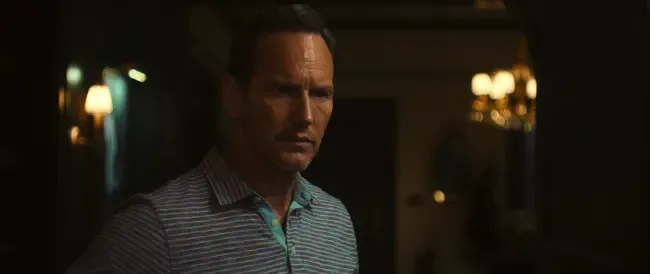
IndieWire spoke with cinematographer Celiana Cárdenas about the “Cape Fear” acid freakout and how she built its look for maximum intensity. Her approach centered on changing lenses and aspect ratios to visualize the Bowden family's feverish experience.
Cinematographer Celiana Cárdenas credits the intensity of the “Cape Fear” acid freakout to deliberate changes in lenses and aspect ratios, designed to make the Bowden family’s bad trip feel feverish instead of merely chaotic. In other words, the movie does not just “show” altered perception. It retools the camera language so the audience can feel the shift.
That matters because a psychedelic sequence is a high-wire act for filmmakers: if you get it wrong, it reads as stylization without sensation. Cárdenas’ solution is practical and technical, not mystical. By changing the lens choices and the aspect ratios, she can alter how the frame breathes, how edges land, and how quickly the viewer’s brain stops treating what it sees as stable reality. The Bowden family’s trip is not filmed like a normal scene with special effects bolted on. It’s filmed like perception itself is the plot.
Zoom out for a second, and this is bigger than one scene. The entire film industry is in an ongoing arms race between realism and controllable unreality. On one side are productions that chase “invisible” technique, keeping the camera’s behavior consistent so the audience can forget it’s being directed. On the other side are sequences like this one, where directing the audience’s visual attention is the point, and the camera becomes an instrument for emotional translation.
Cárdenas’ emphasis on lenses and aspect ratios is a reminder that many of the strongest “wow” moments in cinema come from fundamentals. Lenses influence perspective, distortion, compression, and focus falloff. Aspect ratios influence composition and perceived scale. Together, they can make the same character movements and blocking feel totally different. That is the kind of creative control productions want, especially when the story hinges on the audience experiencing a subjective state rather than just observing events.
There is also a second-order production reality here: changing visual tools is not free. Swapping lenses and aspect ratios can mean more planning on set, more tests with camera and lighting, and a bigger post-production choreography to ensure transitions land cleanly and the intended intensity stays coherent. That kind of control has budget implications, because it moves time and complexity into pre-production and post. But it can also de-risk the creative goal. If you can reliably manufacture a visual sensation, you are less dependent on unpredictable performance or luck.
For executives and creative leaders, the lesson is not “buy fancier gear.” It is that the most effective production strategies are often about choosing the right constraints. If a scene’s objective is to convey feverish disorientation, then the visual language must stop behaving like a standard narrative frame. In that sense, aspect ratio becomes a storytelling lever, not just a formatting decision. The camera toolset is aligned to the psychological objective.
Contextually, this kind of technique also fits the broader trend in modern filmmaking where audiences are more visually literate. Viewers today have seen enough cinematic experimentation that they can detect when a scene is merely “busy” versus when it is communicating a specific subjective state. A bad trip is not just bright colors or frantic cuts. It is a breakdown in the brain’s ability to organize reality. Lens choice and framing geometry can support that breakdown without needing to over-explain it.
The stakes for decision-makers are practical. When you greenlight sequences that rely on perception and emotion, you are really underwriting a user experience for the viewer. If the visual system is consistent with the character state, scenes like the Bowden family’s acid freakout become immersive, shareable, and memorable. If not, they become noise. Cárdenas’ approach is essentially a blueprint for making the camera feel like it is experiencing something.
So what should peers in similar roles take from this? Treat cinematography as a system, not decoration. When the story needs fever, build it with deliberate visual tools that can be measured through audience perception, not just by checking a box for “stylish.” In the end, the Bowden family’s bad trip is the test case, and Cárdenas shows that the camera can be engineered to deliver the fever, one lens and one aspect ratio at a time.
This story's Key Insights and Take-aways are locked.
Create a free account to unlock Executive Actions for one credit.
Register to UnlockAlways free for Executives Club members. Join the Club
More in Entertainment

Russell Brand's accuser 'bewildered and confused' as he denies 7 sex charges
The criminal case against the comedian is a live test of how media companies manage talent risk when serious allegations go public.

'It's a Magic Trick': Ballet Experts Say Rosalía's SNL Pose Is Impossible
Three ballet experts tell Rolling Stone Rosalía's gravity-defying SNL stillness shouldn't be possible - and why the debate is now part of the show.

Activision CMO: GTA 6 Will Boost Call of Duty, Not Bury It
Activision's top marketer says Rockstar's blockbuster will drive players back to consoles and into Modern Warfare 4, even as the company admits its recent strategy failed.