

Centcom says a U.S. service member died in Iraq during detonation of a downed Iranian drone
A controlled blast killed one and injured another, underscoring how drone warfare keeps creating lethal follow-on risks.

U.S. Central Command (Centcom) said a U.S. service member was killed in northern Iraq on Saturday during a “controlled detonation” of unexploded ordnance from a downed Iranian one-way attack drone. Centcom also said another service member was injured and is receiving medical treatment for a “minor” injury.
A U.S. service member was killed in northern Iraq on Saturday during a “controlled detonation” of unexploded ordnance from a downed Iranian one-way attack drone, U.S. Central Command (Centcom) said on Sunday. Centcom added that another service member was injured and continues to receive medical treatment for a “minor” injury.
This is the part many people miss when they think about drone strikes as a single moment of attack: even after a drone is downed, the threat can move into the aftermath. Here, the response required a “controlled detonation” of unexploded ordnance, and that process is what resulted in the fatality and the second injury, according to Centcom.
For decision-makers, the operational lesson matters, but so does the pattern. One-way attack drones are designed for persistent risk. They can be downed, but they can also leave behind hazardous material that forces units to choose between delays, redeployments, or technically complex disposal actions. When the disposal timeline slips, the safety picture can change fast. When the disposal action happens, it can still carry danger. The Centcom update is a reminder that the lifecycle of a strike includes more than the strike itself.
There is also a strategic communication element. Centcom is explicitly describing the event as a controlled detonation, not an additional strike or an uncontrolled explosion. That distinction is important because it frames accountability around the handling of unexploded ordnance rather than around an enemy weapon “landing” and triggering something immediately. In a world where information moves in real time and narratives get contested, even one sentence of characterization can affect how military activity is interpreted by allies, adversaries, and the domestic audience.
From a broader business and risk-management perspective, these incidents have second-order implications for industries that support defense logistics, emergency response, and hazardous materials handling. Controlled detonation operations depend on trained personnel, reliable procedures, and specialized equipment. When casualties occur in such contexts, it can tighten scrutiny on training standards, incident reporting, and the resourcing needed to keep disposal and remediation actions safe and repeatable. Even companies far from a battlefield can feel pressure through contract requirements, compliance checks, and procurement priorities that follow public incidents.
On the regulatory and policy side, governments typically translate operational incidents into updated guidance, safety protocols, and enforcement expectations. While the source here does not cite new regulations, it does highlight a concrete scenario involving unexploded ordnance from a downed Iranian one-way attack drone. In practice, those scenarios often feed into future rules around detection, storage, disposal, and field safety. The fact that the injury is described as “minor” does not eliminate scrutiny, because any fatality becomes a forcing function for reviews.
There is also an investor-grade takeaway for leaders thinking about defense-adjacent supply chains. When drone warfare evolves, the supporting ecosystem of detection, counter-UAS measures, and explosive ordnance disposal capabilities can see changes in demand. Those demand shifts are not only about new systems; they are also about sustaining the personnel and procedures required to neutralize residual threats. A downed drone is not the end state. It is an event that creates follow-on work, and in this case, follow-on risk.
Ultimately, this Centcom announcement is about two specific outcomes. One U.S. service member was killed during a controlled detonation in northern Iraq on Saturday. Another service member was injured and is receiving medical treatment for a “minor” injury. But the stake is wider: the continuing danger of unexploded ordnance means that drone conflict creates a longer tail of risk, one that can reach service members and systems long after the downing moment.
This story's Key Insights and Take-aways are locked.
Create a free account to unlock Executive Actions for one credit.
Register to UnlockAlways free for Executives Club members. Join the Club
More in Politics

LA County: DOJ's 20,000 'noncitizen' voter list is 'unreliable,' includes U.S.-born
Preliminary review by Los Angeles County election officials finds errors in the federal list, raising the stakes for voter roll integrity ahead of November.

Trump's $1.5B Pentagon chip investment lands in North Carolina
A $1.5 billion defense infusion for North Carolina chipmaking signals a new era of Pentagon-backed reshoring - here's what it means for the industry.
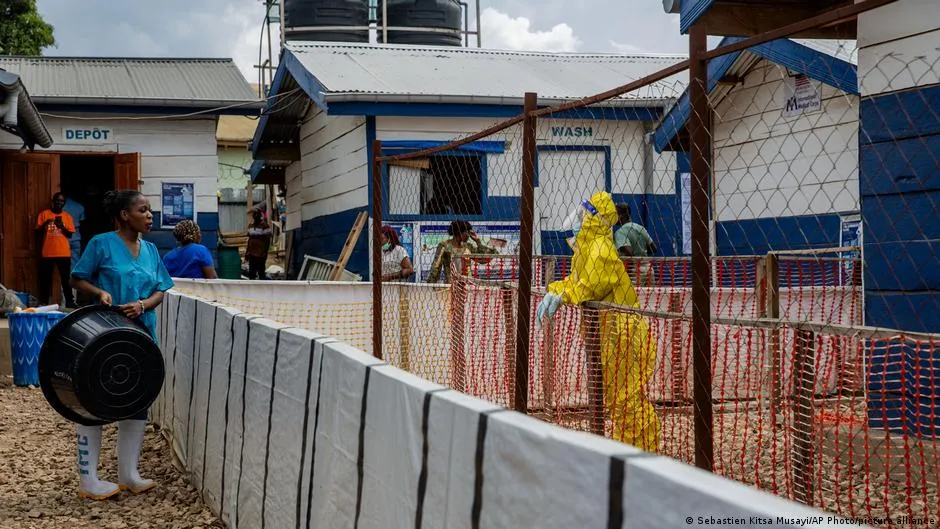
Nigeria confirms first Ebola case in Abuja, a woman just off a Uganda flight
Health Minister Muhammad Ali Pate says the patient flew in from Uganda, putting Africa's latest outbreak on Nigeria's doorstep.