
Chaotic pigeons upend a century-old learning law, forcing psychologists to rethink rewards
New pigeon experiments suggest consequences don't shape learning the way classic psychology says they should.
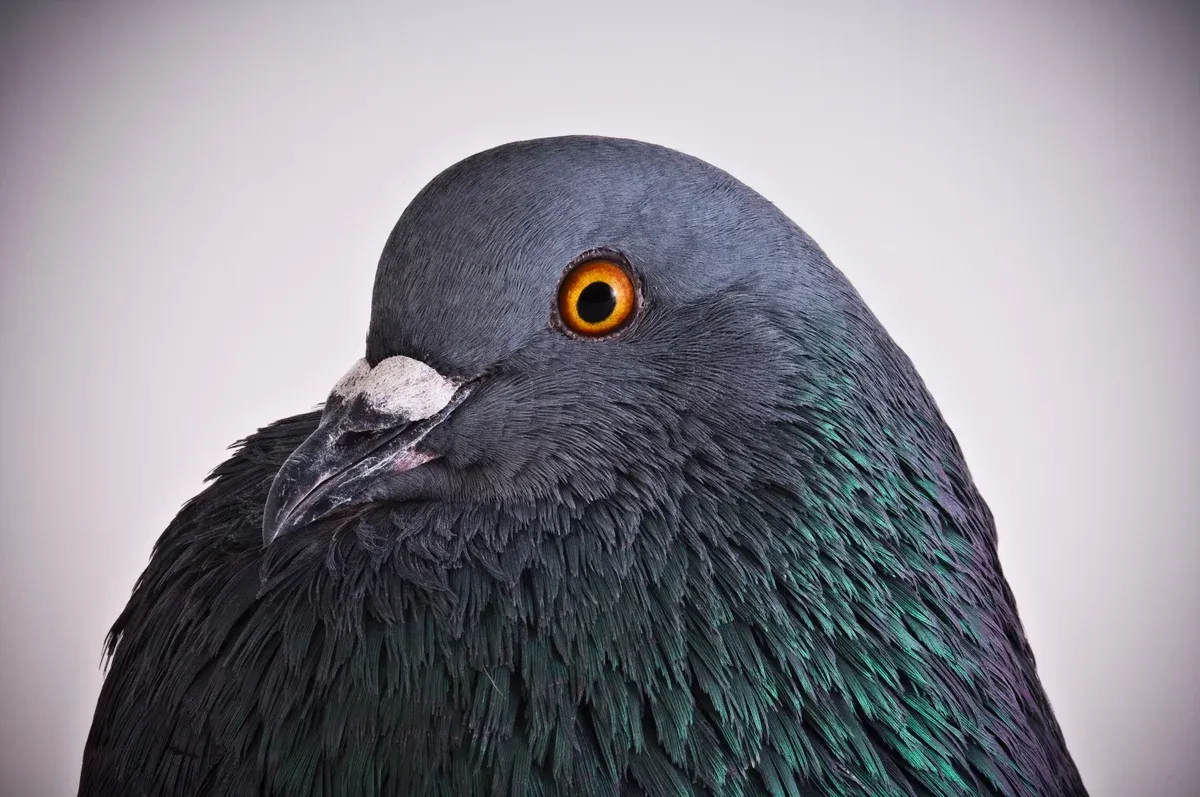
Experiments using pigeons are challenging a century-old psychology law about how rewards and consequences help animals learn. For decision-makers, it is a reminder that incentive models built on tidy rules can break under messy real behavior.
Pigeons, in messy real time, appear to defy a century-old psychology law about learning from rewards and consequences. The headline fact is simple: the birds’ learning does not follow the classic pattern that has influenced how scientists think about behavior for generations. And that is not just an academic footnote. When a foundational rule about incentives and learning stops holding up, every field that borrows those rules, from training systems to behavior design, has to ask what it has been assuming.
To understand why this matters, you have to know the old promise. For decades, psychologists have used reward and consequence to explain how learning happens. The “law” in question, as framed by Scientific American, centers on how consequences should shape learning over time. But the pigeon results suggest the real world is not politely sequential. Instead, “chaotic pigeons” appear to learn in ways that do not line up neatly with the century-old expectations about how outcomes steer behavior.
Why do pigeons make scientists nervous in the first place? Because pigeons are not trying to impress us. They are doing what animals do when the environment gives them cues, reinforces certain actions, and withholds others. In other words, they are a testbed for whether learning theories are robust or whether they are artifacts of the way we structure experiments. If the birds can behave in a way that looks like defiance, then the theory may be missing a key piece: how animals actually process feedback, how they generalize from limited experiences, or how variability itself changes what “learning” even means.
This is where the “chaos” becomes the point. In tidy models, rewards are like steering wheels. Turn the reinforcement knob and the learner obediently changes direction. In the pigeon studies described by Scientific American, the birds’ behavior looks less like clean steering and more like a system responding with noise, momentum, and imperfect calibration. That does not automatically mean rewards are useless. It means the relationship between rewards and learning might be more conditional, more context-dependent, or more entangled with the structure of the task than classic accounts assume.
For executives, the second-order implication is uncomfortable: many organizations build strategies around simplified incentive logic. In product, you set rewards to drive engagement. In operations, you tie outcomes to compensation and targets. In policy, you shape compliance using consequences. Those designs can work, but they can also fail when human or animal behavior becomes “chaotic” relative to the model. The pigeon work is a scientific illustration of a broader business lesson: learning systems do not always behave like the spreadsheets that describe them.
There is also a governance angle. In boards and leadership teams, incentive models often get treated as settled science. If a century-old psychology law about learning from consequences needs revision, it is a reminder that even respected frameworks can be out of date when tested under different conditions. Companies that rely on behavioral assumptions, especially those translating lab-style findings into real workflows, may want to validate whether their reward and consequence mechanisms operate the way theory predicts. Not because the birds are “like employees,” but because the mechanism, incentives, is the same abstract idea being stress-tested.
Finally, there is the culture and credibility piece. Scientific American is flagging that pigeons are “helping redefine what we know about learning.” That phrase is doing heavy lifting. It signals that the experiments are not merely adding a data point. They are nudging the field away from a legacy narrative, toward a more nuanced view of how consequences shape behavior. When that kind of shift happens, it can reshape what researchers measure, how new theories are tested, and what counts as a good explanation.
So what should decision-makers take from “chaotic pigeons”? Not that you should redesign everything tomorrow. The stake is bigger and more practical: if the underlying learning law can fail, then incentive systems are not guaranteed to be linear, stable, or universally predictive. The best leaders will treat any reward-based system as an experiment in disguise, monitor whether behavior matches the model, and be ready to update when reality refuses to follow the rules.
This story's Key Insights and Take-aways are locked.
Create a free account to unlock Executive Actions for one credit.
Register to UnlockAlways free for Executives Club members. Join the Club
More in Science

Alaska's 1,580-foot tsunami had warning signs. Scientists just found them.
Rapid glacier retreat, heavy rainfall, and thousands of tiny tremors preceded Alaska's 1,580-foot tsunami, a warning for every coastal community in a warming world.

The rare mutation that lets high-risk brains dodge Alzheimer's
Scientists found a natural defense against protein buildup, opening a new path to preventive treatments.

3,000 steps a day may halve Alzheimer's decline, study finds
New research links a modest daily walk to less tau buildup and nearly half the cognitive and functional decline, even for those with early signs.