

Chery plants EV production at a former Nissan factory in Barcelona
Europe’s idle capacity meets China’s pressure at home. Chery’s move could look like rescue or turn into a retreat.
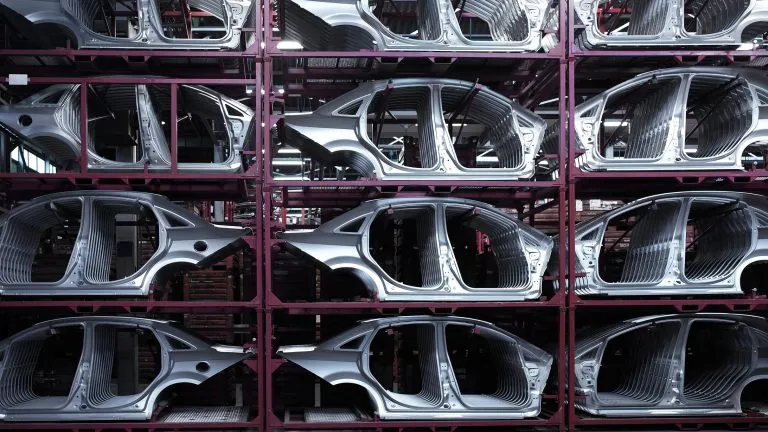
Chery will start building EVs later this year at a former Nissan plant in Barcelona, Spain, as China’s EV makers expand into Europe. For decision-makers, the shift pressures Europe’s car industry capacity, jobs, and supplier ecosystems, while raising the stakes of how governments respond to cheaper, faster-moving competition.
China’s EV makers are stepping into Europe’s unused factory space, and the first domino is landing in Spain. Chery will start building EVs later this year at a former Nissan plant in Barcelona. This matters because it is not just a new supplier testing waters. It is a major manufacturer wiring itself directly into the continent’s manufacturing footprint.
That setup creates an immediate tension for European auto players, especially those watching contracts and utilization rates. If Chery can produce at a facility that is already there, with a proven industrial base and a workforce trained for carmaking, the “cost to enter” drops. And when China’s EV industry is squeezed at home, “squeeze” turns into “export push,” which changes the competitive math for every OEM trying to keep European lines running.
To understand why this is more than a factory announcement, you have to look at the incentives behind it. European automakers and parts suppliers typically plan manufacturing around forecast demand, industrial policy, and long lead times. A plant takes years to become “fully committed,” not weeks. So when a China-based EV maker takes over an idle or underused site, it effectively compresses that timeline. The move can reduce uncertainty for the incoming manufacturer while increasing it for incumbents, because incumbents cannot easily add volume to match a sudden production ramp by a new competitor.
The background also sits at the intersection of industrial capacity and competitive pressure. The source is clear about the driver: China’s EV makers are squeezed at home. When a market tightens, companies search for new outlets that can absorb production. Europe, with its large consumer base and established supply chains, becomes an attractive destination, particularly when factories there are not operating as hard as they could be. Chery’s Barcelona plan shows how companies can translate domestic pressure into overseas manufacturing rather than only relying on exports.
There is also a regulatory and political subtext that decision-makers ignore at their peril. The European car industry is heavily shaped by rules around emissions, battery sourcing, and local manufacturing. Governments want investment and jobs, but they also want to manage the transition and protect domestic industrial strategies. When Chinese EV makers build inside Europe, regulators may feel two competing forces at once: welcoming industrial activity and defending the competitiveness of local incumbents and suppliers. That tension can influence how fast permits move, how subsidies are structured, and how quickly trade or product enforcement actions appear.
Now zoom out to the industry-level second-order effects. If Chery starts EV production at a former Nissan plant in Barcelona, it does not just occupy floor space. It pulls on the entire supplier chain connected to that kind of manufacturing. That can shift component demand, logistics patterns, hiring needs, and even bargaining power between suppliers and OEMs. For European boards, the threat is that competition might not stay limited to the showroom. It can migrate upstream into who gets paid, who scales, and who loses volume contracts.
It also forces competitors to ask an uncomfortable question: does this resemble a one-off manufacturing arrangement, or the start of a broader pattern? The source frames it as potentially “a rescue” that could “prove to be a retreat,” with Chery leading its rivals into “the heart of Europe’s car industry.” That wording is the warning label. If European OEMs see Chinese capacity as a temporary fix for idle plants, they may be surprised when it becomes a long-term competitive anchor that changes the market structure.
For executives making near-term decisions, the strategic stake is simple. If Europe becomes a manufacturing destination for Chinese EV makers under pressure at home, then planning based on stable regional capacity could become outdated. Boards that monitor utilization, supplier stability, and market share cannot treat overseas manufacturing moves as distant headlines. Chery’s later-this-year start in Barcelona signals that the competitive contest is about to play out inside Europe’s own industrial walls.
This story's Key Insights and Take-aways are locked.
Create a free account to unlock Executive Actions for one credit.
Register to UnlockAlways free for Executives Club members. Join the Club
More in Technology

Nvidia's $89B data center quarter: the 9 companies cashing in
The AI buildout is minting fortunes beyond GPUs, and memory, cloud, and cooling suppliers are riding the same wave.

Google quietly links your phone number to every Android account on your SIM
Adding a SIM now ties your phone number to all Google accounts - and future accounts inherit it. Here's the security and privacy stakes.

Hijacker AI 'Skynet mode' runs 100,000 attack steps against exposed models
Symantec caught a criminal AI agent that borrows other models, steals data, and mines crypto; the only relief is no confirmed victims yet.