
Chevron CEO: Oil buffers are 'drained' as diesel relief slips to 2027
Mike Wirth warns the world has run out of cushions before the midterms, with diesel prices staying high into 2027.
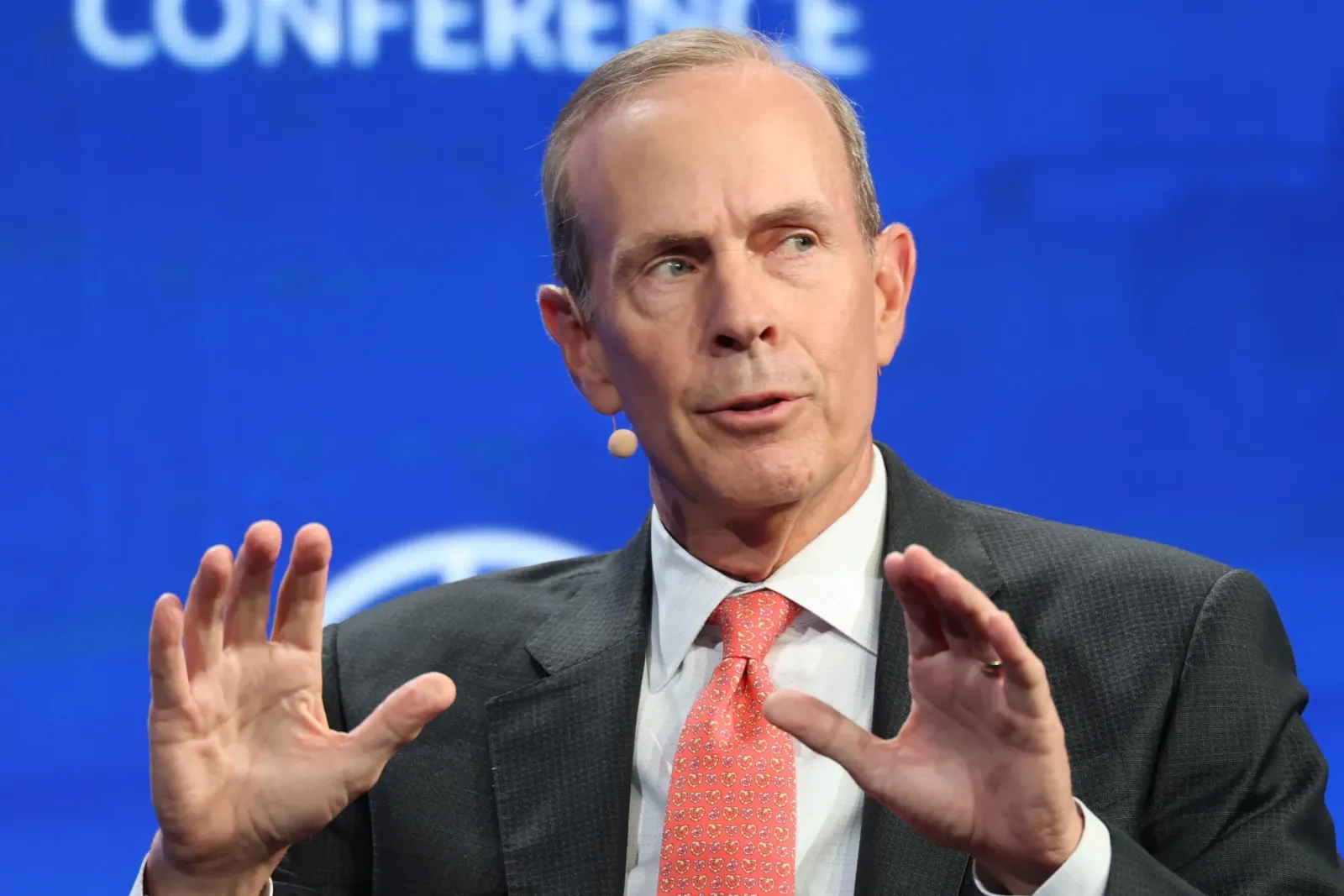
Chevron CEO Mike Wirth told CNBC that global oil buffers have been drained, leaving the system vulnerable to disruption. Diesel relief may not come until 2027, keeping fuel costs high for consumers and businesses.
Chevron CEO Mike Wirth delivered a blunt warning on Oct. 7: the world has run out of easy ways to absorb the Iran war shock. "Those are all buffers in the system that have bought us time, but they've been drained," he told CNBC's Squawk Box Europe. "And so we're at much lower levels of inventory right now, and it makes the system more vulnerable to disruption." The head of America's second-largest oil company said the world entered 2026 well supplied, but since the war began in late February, commercial stockpiles, government emergency reserves, and once-sanctioned barrels have all been tapped. He called it "a very serious situation."
Nowhere is the squeeze sharper than diesel, the fuel that moves trucks, trains, and farm equipment. The U.S. average hit a record $6.53 a gallon on Sept. 22, up from about $3.76 before the war, according to AAA data cited by CBS News. In California, the statewide average has topped $8 a gallon. The International Energy Agency's October Oil Market Report, released Wednesday, said the diesel market will stay tight well into 2027 and hinges on a recovery of fuel supply from the Middle East. Benchmark diesel prices have eased from September's records above $200 a barrel, but remain nearly double both crude prices and their pre-crisis levels. The IEA expects global oil supply to fall by an average of 5.8 million barrels a day this year, to 100.7 million barrels a day, before rebounding in 2027, and sees the market staying in deficit through year-end. It also forecasts that high prices will cut global oil demand by 2.6 million barrels a day in 2026, with diesel accounting for about a quarter of the drop.
With the Nov. 3 midterms less than three weeks away, fuel costs have become a political liability for the White House. An AP-NORC poll published Oct. 1 found that Americans disapprove of President Donald Trump's handling of the Iran war and blame him for higher prices. Trump has tried several levers. In late September, he floated a ban on U.S. diesel exports, telling a Fox News reporter on Sept. 27, "We're thinking about it very seriously," while acknowledging it could push gasoline prices up. Refiners warned the policy would backfire, arguing it could force plants to cut output and ultimately tighten domestic supply. Wirth called the idea "unwise," telling CNBC that "export bans, be they in the U.S. or in other countries, actually take supply off the global market and they run the risk of making the situation worse."
Trump shelved the idea on Oct. 2, after the Group of Seven, following a pressure campaign from his administration aimed at Europe, agreed to release 100 million barrels of crude and diesel from emergency reserves over four months, with a front-loaded diesel release in the first 20 days. "We're not going to be doing the export ban," Trump told reporters that day. Three days later, he signed an executive order letting truckers and farmers use red-dyed diesel - normally reserved for off-road equipment and exempt from highway fuel taxes - on public roads. The order defers, rather than eliminates, the 24.4-cent-per-gallon federal excise tax through Dec. 31, without interest or penalties, and directs the Treasury to explore ways to cancel the bill entirely. Analysts were skeptical: The waiver "doesn't add supply globally," GasBuddy's Patrick De Haan told Fortune.
Trump's latest move came Oct. 9, when he announced that Russian President Vladimir Putin had agreed to supply more than 4 million tons of diesel to global markets in stages. The Treasury Department simultaneously issued a general license waiving sanctions on Russian diesel through April 7, 2027. The deal drew bipartisan backlash in Congress and a sharp rebuke from Ukrainian President Volodymyr Zelensky, who wrote on X that "allowing Russia to sell petroleum products is an investment in a war that must be ended, not prolonged." It may not deliver much relief, either. Ukrainian drone strikes on Russian refineries have gutted the country's fuel output: Russian diesel and gasoil exports fell to about 144,000 barrels a day in September, a decade low, and some analysts doubt Moscow can deliver the volumes Trump announced. The IEA said in its latest report that easing Russian export restrictions is unlikely to materially change the global diesel balance, because the bottleneck is a lack of working refinery capacity.
That brings it back to Wirth's warning. Stockpile releases, sanctions waivers, and tax breaks can buy time, but they can't replace the oil and fuel that isn't flowing out of the Middle East. And with the buffers already spent, there's little left to cushion the next disruption. For executives across transportation, logistics, agriculture, and manufacturing, the message is clear: diesel costs will remain elevated well into 2027, and any new supply shock will hit a system with no spare capacity. The political scramble in Washington - export bans, emergency releases, tax deferrals, and Russian deals - is a series of stopgaps, not a solution. The only real fix is restoring flows from the world's biggest producing areas, and that is a geopolitical question, not an energy policy one. Until then, the global economy is running on fumes, literally and figuratively.
This story's Key Insights and Take-aways are locked.
Create a free account to unlock Executive Actions for one credit.
Register to UnlockAlways free for Executives Club members. Join the Club
More in Business

Elon Musk unveils a flying car, and SpaceX helped build it
The Tesla CEO's showcase at a SpaceX facility signals a future where road and rocket engineering converge.

Apple's $2,000 iPhone Duo opens preorders, taking on Samsung and Google
Apple's first foldable hits the market at a premium price, reshaping a category Samsung and Google have led.

Pope Leo XIV, first American pope, diagnosed with lung cancer
The 71-year-old Chicago-born pontiff underwent successful surgery on his right lung, and his diagnosis raises new questions about his AI-focused papacy and the Vatican's future.