

China evacuates nearly 2 million as Typhoon lands in Zhejiang, halting work and transport
Zhejiang suspends schools and cancels many transport services, forcing a fast risk response that ripples through supply chains.
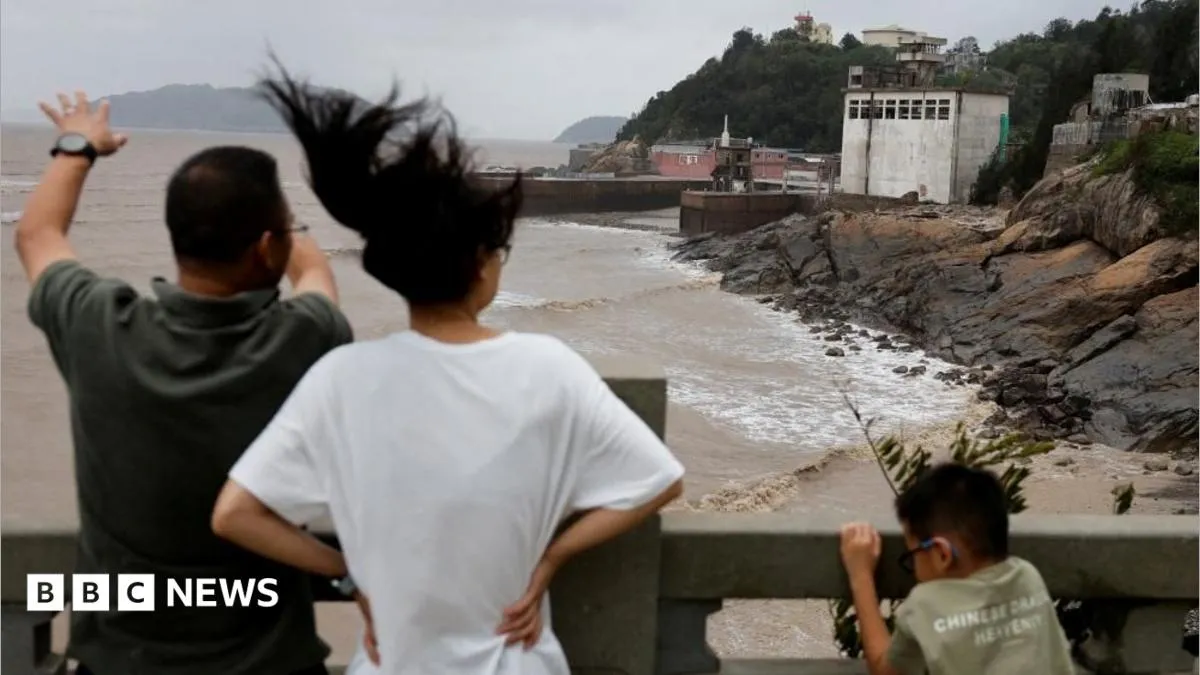
China evacuates nearly two million people as a powerful typhoon makes landfall in Zhejiang province. The immediate consequence is the suspension of schools, work, outdoor activities, and cancellation of many transport services.
China has evacuated nearly two million people as a powerful typhoon makes landfall, with Zhejiang province taking the blunt end of the storm. In response, schools, work, and outdoor activities have been suspended, and many transport services have been cancelled.
For decision-makers watching Zhejiang and the broader eastern China corridor, the operational message is simple but urgent: normal movement of people and goods is being shut down. That means staffing disruptions, delayed deliveries, and sudden inventory pressure, even for companies that are not directly in the storm zone. The evacuation scale is a reminder that governments treat major typhoons as a whole-system risk, not a local inconvenience.
Why this matters to executives is that typhoons like this do not only create immediate damage. They also change timing. When work is suspended and transport services are cancelled, schedules that are already tight in manufacturing, logistics, and retail can unravel quickly. Even if physical damage ends up moderate, the forced pause can still push production runs, shift handoffs, and shipping windows out by days. In fast-moving operations, that time is often more painful than the storm itself.
There is also a regulatory and governance angle. Suspension of schools and outdoor activities is the sort of government-led action that signals centralized emergency coordination. In practical terms, this affects who can travel, what sites can operate, and how quickly “business as usual” can return. Executives should assume that compliance and safety rules will be enforced alongside evacuation orders, rather than after the fact. Boards and leaders usually have to decide quickly whether to trigger internal continuity plans, adjust customer commitments, and reallocate resources to the most critical nodes.
Transport cancellation is the other domino. “Many transport services cancelled” is not a precise timetable, but it points to reduced capacity across roads, rail connections, and possibly other services that depend on safe conditions. For supply chain leaders, that typically means two problems at once: inbound inputs may arrive late, and outbound shipments may miss delivery cutoffs. For finance and treasury teams, delays can also affect cash collection cycles, especially when customers request rescheduling due to force majeure or similar circumstances.
The evacuation number, nearly two million, is large enough to reshape regional labor availability and transportation demand. Even for companies outside Zhejiang, the storm can ripple outward. Workers who live in affected areas may be unable to commute. Logistics providers may reassign trucks and crews to relief routes. If your vendors are clustered geographically, you are not just exposed to your own contingency plan. You are exposed to a regional bottleneck created by public safety actions.
Second-order implications show up in procurement and inventory strategy. When transport is interrupted, firms often discover that “just-in-time” is only as good as the local infrastructure and emergency conditions. Leaders may need to quickly adjust reorder points, expedite alternative lanes, and temporarily increase buffers for the most time-sensitive components. This can have cost implications, but it can also reduce operational thrash, which is usually the more expensive outcome.
Finally, there is the reputational and governance burden. Large-scale evacuations and suspended school and work activity make it clear that safety overrides productivity. Executives should align internal messaging with public guidance, ensure that employees understand what is expected during closures, and prepare for questions from customers, partners, and regulators about preparedness.
The strategic stakes for peers are straightforward: when a major typhoon lands, the winners are the teams that respond fast, coordinate clearly, and treat canceled transport as a planning fact, not a temporary hiccup. If you are operating in or dependent on Zhejiang and nearby provinces, this is a live case study in how quickly a regional emergency can force a wholesale reset of operations.
This story's Key Insights and Take-aways are locked.
Create a free account to unlock Executive Actions for one credit.
Register to UnlockAlways free for Executives Club members. Join the Club
More in Science

Alaska's 1,580-foot tsunami had warning signs. Scientists just found them.
Rapid glacier retreat, heavy rainfall, and thousands of tiny tremors preceded Alaska's 1,580-foot tsunami, a warning for every coastal community in a warming world.

The rare mutation that lets high-risk brains dodge Alzheimer's
Scientists found a natural defense against protein buildup, opening a new path to preventive treatments.

3,000 steps a day may halve Alzheimer's decline, study finds
New research links a modest daily walk to less tau buildup and nearly half the cognitive and functional decline, even for those with early signs.