
China quietly lifts parts of its Nvidia H200 boycott, letting Alibaba buy
Regulators are trying to reduce AI chip shortages without deepening dependence on US technology, and H200 access is the compromise.
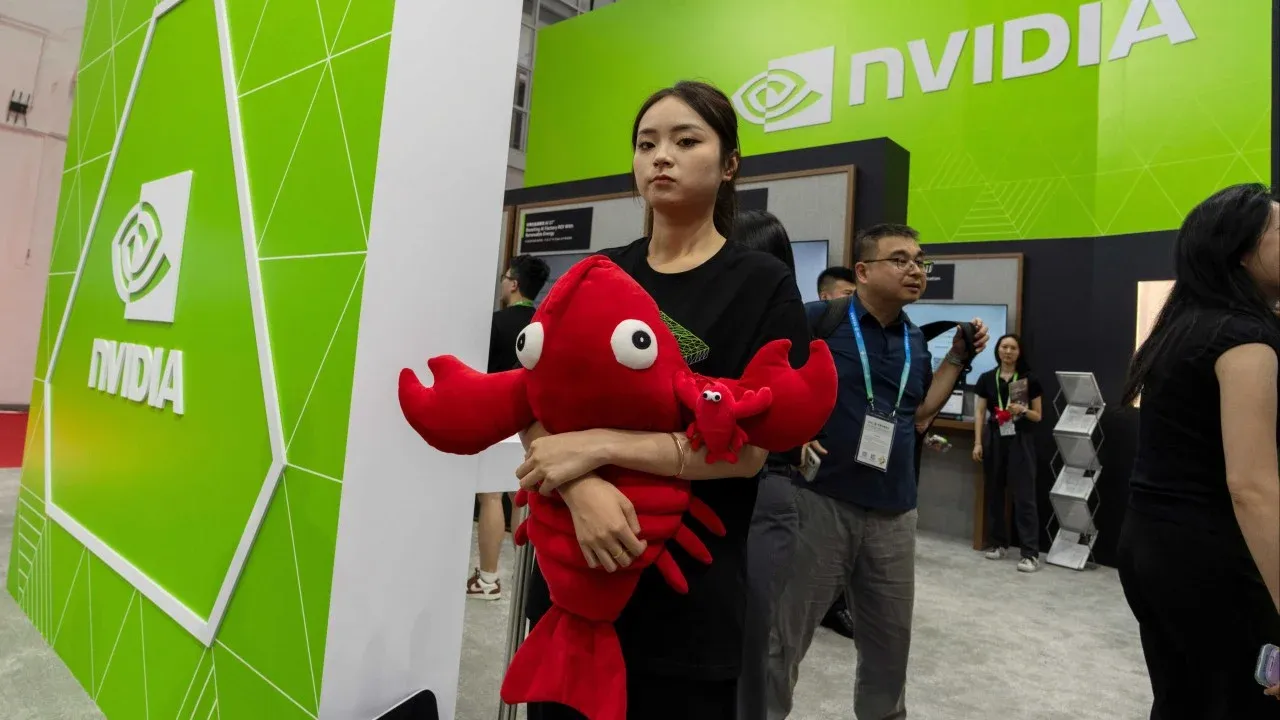
China has eased a boycott of higher-end Nvidia processors, allowing select firms to buy Nvidia's H200 AI chip. Alibaba is among the eligible businesses, alongside ByteDance developer ByteDance and AI start-up DeepSeek, according to reporting from the South China Morning Post and The Information.
China just turned down the heat on its Nvidia restriction, at least for higher-end processors. The South China Morning Post reported that China eased a boycott that previously limited access to advanced Nvidia chips, aiming to balance a very real risk of chip shortages stalling local AI development against the equally serious worry of over-relying on US technology. The specific lever in that compromise? The ability to buy Nvidia's H200, which the report describes as Nvidia’s second-best AI chip.
Alibaba is among the select businesses that will be eligible to buy H200s. The SCMP report, citing an unidentified source, also said TikTok developer ByteDance and AI start-up DeepSeek are on the list, with The Information adding that those companies are included as well. In other words, this is not a vague easing. It is a targeted carve-out for certain customers tied to certain chips, and those chips matter because they are designed for high-end AI workloads.
To understand why decision-makers should care, zoom out to what “boycott” usually means in this space. Semiconductor supply is not like ordering more of a commodity tomorrow. High-end AI chips have tighter production constraints and more complex qualification requirements. If restrictions bite too hard, domestic AI developers can hit a bottleneck where models get constrained not by software ambition, but by compute availability. That is the first half of China’s stated balancing act: local AI developers cannot build at speed if the hardware pipeline is blocked or unpredictable.
But the second half is just as important. Over-dependence on US technology is a national and commercial vulnerability. If the supply chain leans too heavily on one foreign supplier, a country becomes exposed to export controls, geopolitical escalation, and pricing power from outside partners. So policymakers face a classic trade-off: strict restrictions may protect strategic autonomy, but they can also slow down the very AI progress they are trying to enable. The carve-out around Nvidia’s H200 is a way to thread that needle. It acknowledges the operational reality that local AI players still need advanced chips while trying to limit how far the reliance goes.
There is also a corporate subtext hiding inside the list of names. Alibaba, ByteDance, and DeepSeek are not random companies. They represent different parts of China’s AI ecosystem: large platforms with significant model-building capabilities, consumer-facing product ecosystems with high compute demand, and smaller but ambitious AI developers pushing rapid iteration. When authorities allow these kinds of firms access, it can signal that the government is prioritizing throughput in the AI race. That is an executive-level issue because compute access often translates into faster product cycles, stronger model performance, and more negotiating leverage with enterprise customers and research partners.
For Alibaba specifically, the reported eligibility matters because the H200 sits in Nvidia’s lineup as its “second-best” AI chip, meaning it likely captures a large chunk of the demand that cannot be met by lower-end alternatives. If developers can buy enough H200s, they can keep training and deploying models without re-architecting everything around a less capable substitute. For ByteDance developers and DeepSeek, the effect could be even sharper. In fast-moving AI environments, compute constraints can quickly turn into opportunity costs, where competitors train better models, ship features sooner, and attract talent by proving they can run at scale.
This kind of targeted easing also reshapes how boards and finance leaders think about supply risk. When access changes in a controlled way, it reduces the worst-case scenario of an outright cliff, but it also creates new variability: companies can no longer plan as if access is fully open or fully closed. That forces more active procurement strategy, more diversified supply thinking, and tighter coordination between technical teams and compliance leadership. It also changes the question investors ask. Instead of “Can AI companies operate at all?” the question becomes “How reliably can they procure the compute that matches their roadmaps?”
Finally, the broader strategic stakes extend beyond Nvidia and beyond China’s internal debate. Nvidia is not just a chip supplier. It is a central node in the AI infrastructure stack, and any shift in access in one market affects competitor planning globally. If China eases a boycott for H200 purchases for select firms, peers elsewhere will watch for similar loosening or tightening signals, because those moves influence demand expectations and pricing power. For executives running AI businesses in any geography, the takeaway is straightforward: policy is starting to move from “all-or-nothing” toward “selective access,” and the winners will be the teams that adapt their procurement and product timelines to that reality.
This story's Key Insights and Take-aways are locked.
Create a free account to unlock Executive Actions for one credit.
Register to UnlockAlways free for Executives Club members. Join the Club
More in Technology

Google quietly links your phone number to every Android account on your SIM
Adding a SIM now ties your phone number to all Google accounts - and future accounts inherit it. Here's the security and privacy stakes.

Hijacker AI 'Skynet mode' runs 100,000 attack steps against exposed models
Symantec caught a criminal AI agent that borrows other models, steals data, and mines crypto; the only relief is no confirmed victims yet.

Nvidia's AI-financier shift faces its first big test as neoclouds stumble
A rout in neocloud stocks is forcing investors to weigh Nvidia's hidden exposure as both supplier and lender to the AI buildout.