
China’s 24-megawatt wind-powered underwater data center brings seawater cooling online
A first-of-its-kind build bets that wind generation plus seawater cooling can cut the cost and carbon of AI compute.
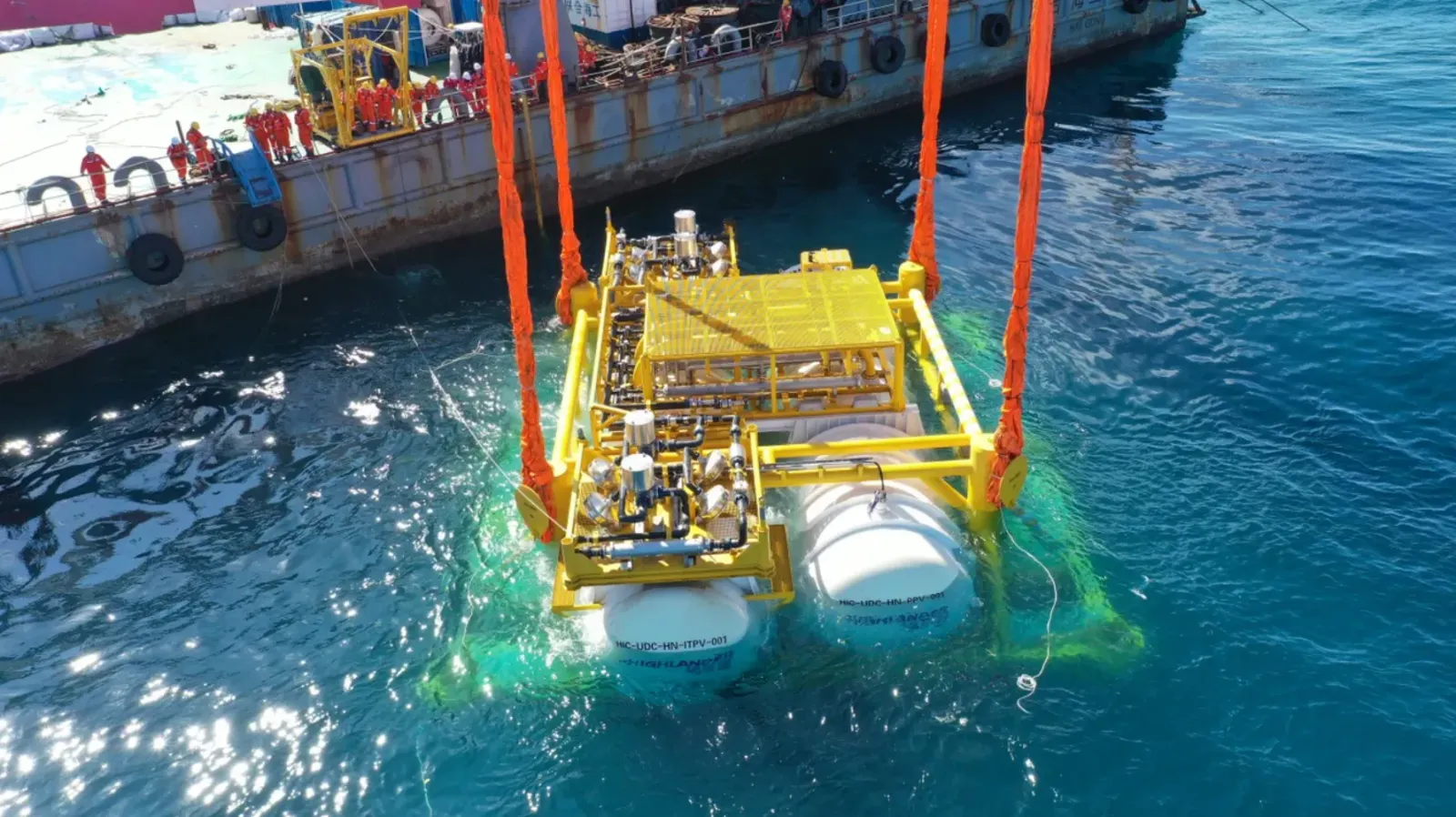
China has opened what’s being described as the world’s first wind-powered underwater data center, starting with an initial capacity of 24 megawatts. For decision-makers, it signals a new playbook for power sourcing and cooling that could reshape data center economics.
China just opened the world’s first wind-powered underwater data center, and it starts with 24 megawatts of capacity. The core idea is simple but bold: use offshore wind power for electricity, then use seawater as a natural cooling system instead of relying entirely on traditional air or mechanical cooling. In other words, this is not just another data center with a new location. It is a combined energy and infrastructure design meant to attack two of the biggest problems in running compute at scale: where the power comes from and how you keep servers from cooking.
Start with the headline number. 24 megawatts is the initial capacity, which matters because it sets a real operational footprint from day one, not a pilot that can afford to stay theoretical. The cooling approach is equally concrete: the facility uses seawater as a natural cooling system. Anyone who has followed data center buildouts knows cooling is where plans often go sideways, because heat loads increase, expansion timelines slip, and water and energy constraints start tightening. Seawater cooling is a direct attempt to reduce that friction by turning the local environment into part of the machinery.
Why does this matter beyond one impressive construction story? Because the industry’s big economic equation keeps coming back to energy and thermal management. Demand for compute keeps rising, and power availability often acts like a hard ceiling on growth. Even when grids can supply electricity, data centers still need to move and dissipate enormous amounts of heat. Traditional systems can work, but they come with power draw, operational complexity, and site constraints. Underwater placement plus seawater cooling is an attempt to reduce some of that overhead by shifting the cooling burden away from conventional methods.
There is also the wind side of the equation. Pairing the facility with wind power is a strategic signal to boards and investors that the data center business is trying to become more resilient to energy volatility and decarbonization pressure. When a project is designed around wind generation, the question for operators becomes how consistently supply aligns with compute demand, especially as workloads vary across the day and seasons. That is not a solved problem everywhere, but the existence of a functioning initial 24-megawatt facility suggests that developers believe the integration is feasible at real scale.
Regulatory and permitting dynamics are where these projects usually face the most friction, because “innovative” infrastructure has to clear multiple regulatory layers at once. Data centers sit at the intersection of energy policy, grid interconnection rules, environmental review, and local industrial and maritime regulations. An underwater facility is also likely to trigger additional scrutiny around marine impact, construction methods, and operational safety. While the source does not spell out the approvals, the fact that the center is now open implicitly confirms that it successfully navigated a complicated approval path, which is not trivial in the current environment.
Then there’s the second-order implication for the people who sign the checks. For an executive team, the main question is whether this is a one-off engineering stunt or the start of an extendable model. Underwater cooling could reduce the reliance on certain cooling systems, but it also introduces new engineering and maintenance considerations, from corrosion and biofouling to how equipment is accessed and serviced. Boards will care about lifecycle cost and operational reliability, not just the novelty of the approach. If the center performs well, it could become a reference point in procurement and capex planning, influencing what future facilities target in efficiency and energy sourcing.
For peers making similar decisions, this development changes the conversation. Instead of treating data center efficiency as something you optimize within conventional building types, it suggests that design choices across power generation, location, and cooling can be integrated. That can matter in competitive markets where capacity is scarce and time-to-deploy is a differentiator. The strategic stakes are straightforward: companies that can secure power and keep operating costs under control will have more flexibility to expand compute. Companies that cannot may be forced to accept higher costs or slower growth.
Finally, consider what a “world’s first” often does to an industry. It sets a benchmark narrative, even before it sets a technical benchmark. Customers increasingly ask about energy sources, emissions, and sustainable operations. A wind-powered underwater data center with seawater cooling is a clean story that maps to those concerns. If that story holds up operationally at 24 megawatts and beyond, it could accelerate interest in alternative cooling and power architectures across data center portfolios.
This story's Key Insights and Take-aways are locked.
Create a free account to unlock Executive Actions for one credit.
Register to UnlockAlways free for Executives Club members. Join the Club
More in Technology

OpenAI says 10,000 agents cracked a 90-year math problem in 88 hours
The company's claim is audacious, but one mathematician is pushing back. Here's what it means for AI-driven discovery.
Meta still serves child sexual abuse ads on Instagram in India - BBC report
A new report following the BBC Eye investigation says the ads are still there - what it signals for every platform with a self-serve ad engine.

White House yanks 'Build the Wall' game after Tetris Company copyright warning
The administration's arcade game vanished in hours - and the takedown playbook every brand can learn from.