
China's AI fuel now comes from a city known for cattle
Ulanqab, once a livestock hub, now powers China's AI boom with wind-driven data centers, reshaping the country's tech infrastructure.
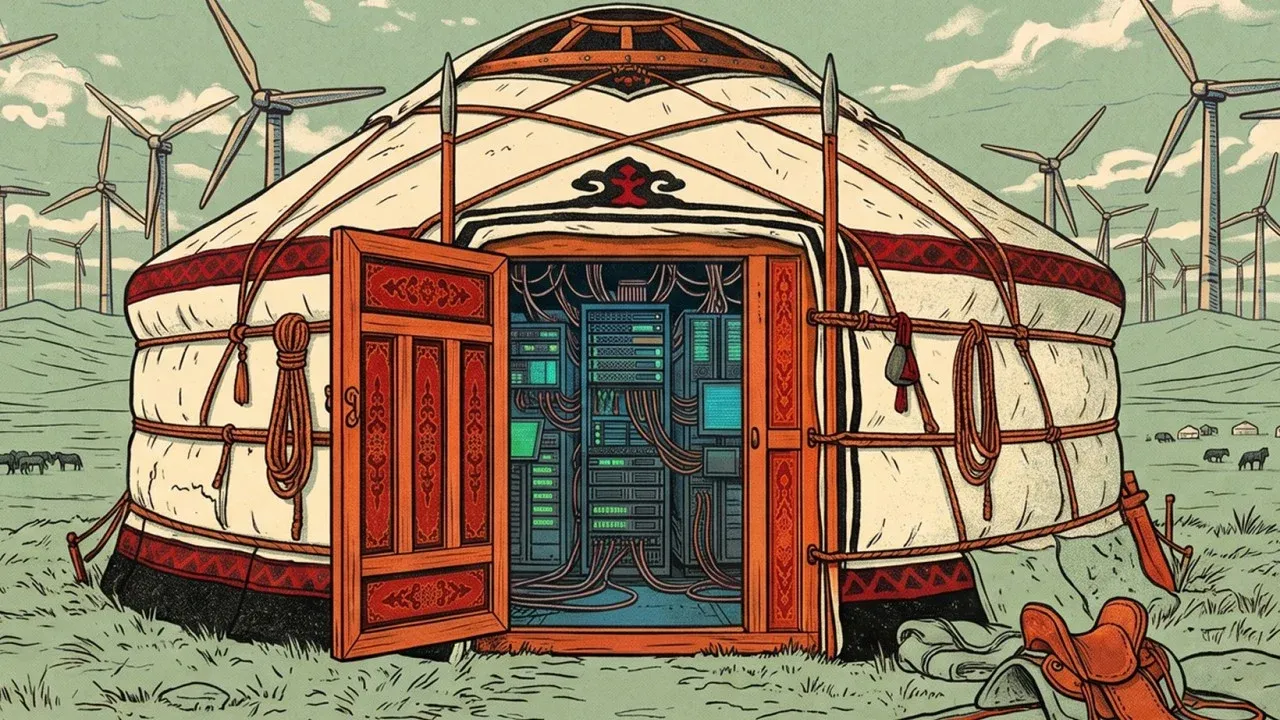
Ulanqab, a rural Chinese city historically reliant on livestock and potatoes, has become a key hub for AI computing infrastructure, leveraging its wind energy to power data centers. This shift underscores how renewable energy and strategic location are now critical assets in the global AI race, with implications for tech companies and investors.
For generations, Ulanqab - a city several hundred kilometres northwest of Beijing whose Mongolian name means "red cliff pass" - was known for its windswept pastureland, where cattle grazed and potatoes thrived under long hours of sunlight. Its economy hinged on the weather, driven by the cool, strong breezes sweeping through the Yinshan mountain range. Today, giant wind turbines stand next to livestock across those sloping grasslands. As the global artificial intelligence boom fuels a scramble for computing power, this rural outpost has found a new identity: a provider of the energy that powers AI's insatiable data centers. The same winds that once shaped a pastoral economy now spin turbines that feed electricity into server farms, making Ulanqab a surprising but strategic node in China's digital infrastructure. For executives watching the AI supply chain, this transformation is a case study in how geography and renewable resources are becoming as valuable as silicon and software. The city's pivot from cattle to computing is not a niche story; it is a signal of where the next generation of AI infrastructure will be built - not in megacities, but in places with cheap land, cool climates, and abundant green energy. As China races to expand its AI capabilities, Ulanqab's wind-powered data centers offer a template for sustainable growth, but they also raise questions about energy grids, data sovereignty, and the environmental cost of the AI boom. For decision-makers, the lesson is clear: the AI economy is not just about chips and algorithms; it is about the physical infrastructure that powers them, and the winners will be those who secure reliable, low-cost energy sources. Ulanqab's story is a reminder that the AI revolution is as much about energy policy as it is about technology, and that the next frontier of competition may be in the windswept plains of the world, not just in the boardrooms of tech giants. The city's evolution from livestock to AI fuel is a microcosm of a global shift, where the race for AI dominance is increasingly a race for energy security. As companies and countries invest billions in AI, the quiet transformation of places like Ulanqab will shape the economics of the industry for years to come. For those who dismiss rural regions as irrelevant to tech, Ulanqab is a wake-up call: the future of AI may be powered by the very winds that once drove cattle across the plains.
This story's Key Insights and Take-aways are locked.
Create a free account to unlock Executive Actions for one credit.
Register to UnlockAlways free for Executives Club members. Join the Club
More in Technology

doubleAI's Maxwell rewrites code while it runs, claims 38x speedups
The Tel Aviv startup's code execution model formally verifies optimizations, turning AI into an agent for the hardware itself.
Saudi military official paid to fly OpenAI bugging suspect's family out, prosecutors say
A court filing says a Saudi military official funded the family's exit and Riyadh offered bail, putting foreign-influence risk squarely on AI boards.

AI researcher's 26,000-word claim: Neural nets aren't tangled after all
Nick Cammarata's Goodfire post has the AI world split - if he's right, monitoring frontier models just got a lot easier.