
China’s postal regulator probes J&T Express, shares drop up to 11% Thursday
State Post Bureau opened a formal case over safety management failures, dragging J&T’s Hong Kong-listed stock sharply.
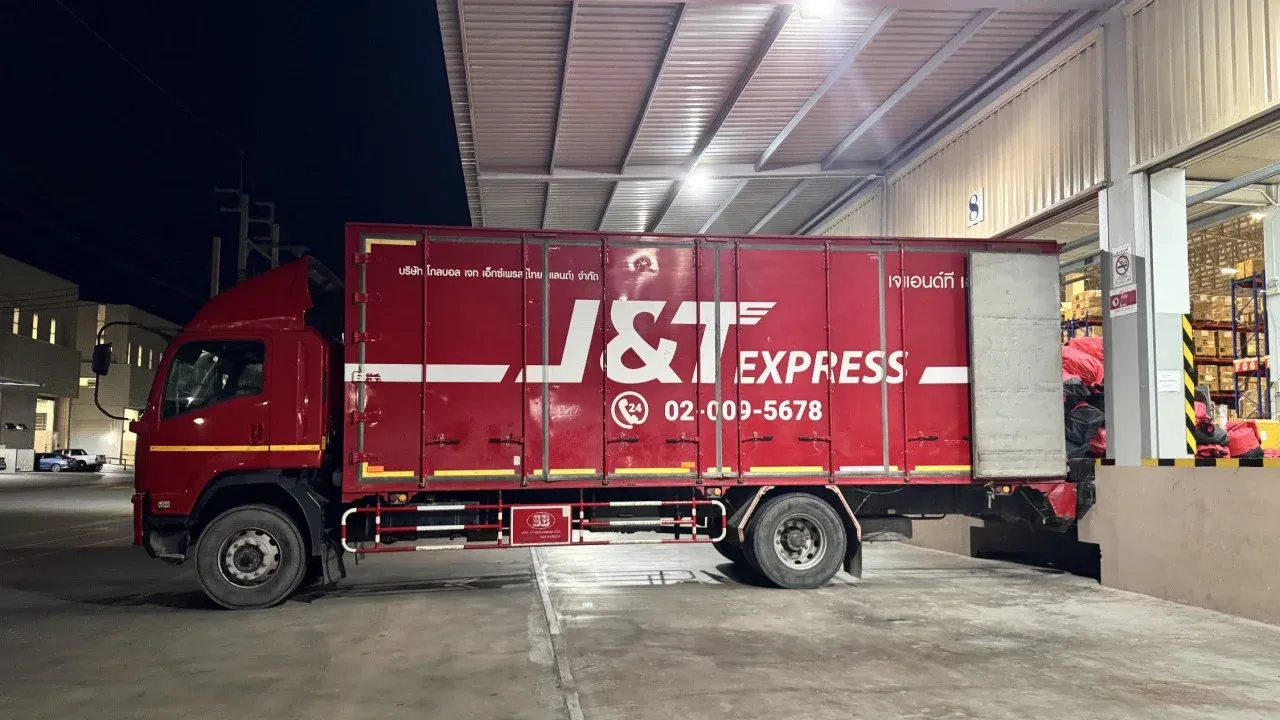
China’s State Post Bureau has formally launched a case against J&T Express Co for safety management failures, following multiple work process safety accidents this year at enterprises using the J&T brand. The probe has already hit J&T’s Hong Kong-listed shares, which fell as much as 11% on Thursday, raising immediate questions for boards and investors.
China’s postal regulator has initiated an investigation into J&T Express Co, and the market is responding like it smells a cleanup requirement coming. On Thursday, shares of the Hong Kong-listed courier fell as much as 11%. The trigger was not a vague compliance buzzword, but a safety management case tied to “work process safety accidents” this year.
The State Post Bureau said it had formally launched a case against J&T Express Co after multiple safety accidents occurred at enterprises using the J&T brand, business name, and delivery waybills. In other words, the regulator is drawing a line between incidents occurring across J&T-labeled operations and the company’s responsibility for how safety processes are managed under that branded footprint. That linkage is the reason the stock moved so sharply, because regulators do not open cases for small issues when they think they are systemic.
To understand why an investigation can hit the price before anything is proven, you have to look at how postal and last-mile logistics supervision typically works in China and why boards pay attention even early. Courier networks are operational networks. Safety management is not just an internal checkbox. It affects routes, packaging, loading and sorting processes, contractor or affiliate behaviors, incident reporting, and how quickly fixes propagate across sites. When an authority says “multiple” accidents happened this year at enterprises using the J&T brand, business name, and delivery waybills, it signals more than one isolated mistake. It suggests the risk is repeating across a branded delivery system.
The source also gives a clear snapshot of the market reaction: after trading as high as HK$8.87 earlier in the day, the stock slid to HK$7.85. That kind of intraday decline usually reflects a fast repricing of risk. Investors may be pricing in potential outcomes like mandatory rectifications, additional oversight, administrative penalties, or changes to how J&T’s branding and operational controls are enforced. Even if the case is just initiated and not resolved, the mere fact that the State Post Bureau has “formally launched a case” raises the probability of near-term disruptions. For a courier, disruptions can mean slower operations, added compliance costs, and strained relationships with the enterprises operating under the brand.
There is also a second-order issue lurking in the regulator’s phrasing: “enterprises using the J&T brand” and “delivery waybills.” That matters because branded last-mile businesses often sit in a gray zone between centralized control and distributed operations. If the regulator’s case covers multiple enterprises operating under the J&T identity, the company may face pressure to prove it has effective safety management across its network. Boards typically hate this kind of audit because it forces a hard inventory of who does what, how incidents are tracked, and whether corrective actions are actually implemented.
From an investor or governance perspective, this is the sort of headline that can change how diligence is done for logistics companies. Safety management failures are not just operational risks. They become regulatory risks, reputational risks, and sometimes financing risks if oversight leads to restrictions or increased costs. If the investigation expands or results in penalties, the market will likely connect the dots to cash flow and operating discipline, especially for firms that depend on high-volume delivery economics.
For executives at peer courier and logistics operators, the strategic stake is simple: regulators can turn safety procedures into financial outcomes quickly. When the State Post Bureau opens a formal case tied to the brand and the waybills, it sends a message that oversight is not limited to company-owned sites. It can extend to the broader branded ecosystem. That means boards should expect not only internal scrutiny, but also questions about network governance, contractor oversight, and incident prevention across all enterprises using a shared customer-facing identity.
And while today’s move is driven by Thursday’s share drop, the longer story is about what the case signals for how regulators may treat safety management going forward. Once an authority frames repeated “work process safety accidents” as a matter of failure in safety management, the company that sits at the center of the brand becomes the natural target. In the meantime, J&T Express now has to manage the immediate market reaction and the harder work of convincing regulators that the accidents are not a pattern they should worry about again.
This story's Key Insights and Take-aways are locked.
Create a free account to unlock Executive Actions for one credit.
Register to UnlockAlways free for Executives Club members. Join the Club
More in Business

SpaceX IPO: Wedbush calls a Tesla merger “holy grail,” Morningstar pegs $63 fair value
Trading starts June 12 at $135, but analysts are split over a $72-per-share “option premium” on orbital AI dreams.

Razer CEO Min-Liang Tan: AI mega-listings are 'just the start' before IPO wave
Min-Liang Tan says blockbuster AI IPOs are likely the opening act. Here is what that means for capital, governance, and timing.

UK Treasury delays decision on £1.7B Matrix ERP program until December
Workday finance and HR rollout slips again, and HMT may decide whether to join cloud-based shared services.